13 Thrift Store Decor Flips That Look Designer (2026)
There is a particular kind of satisfaction that no store-bought decor can give you: a guest points at something beautiful in your home, and you get to say, “That was five dollars at a thrift store.” The best thrifted rooms don’t look secondhand — they look collected, layered, and expensive. And that’s not luck. It’s a skill.
Here’s the direct answer: thrift store decor ideas work when you shop for bones, not finishes. Buy solid wood, real brass, heavy ceramics, and good proportions — then change the finish yourself with paint, stain, and new hardware. A $6 brass lamp plus a $14 shade plus ten minutes of cleaning looks like a $120 designer piece. This guide gives you the full hunting strategy and 13 specific flips with real costs.
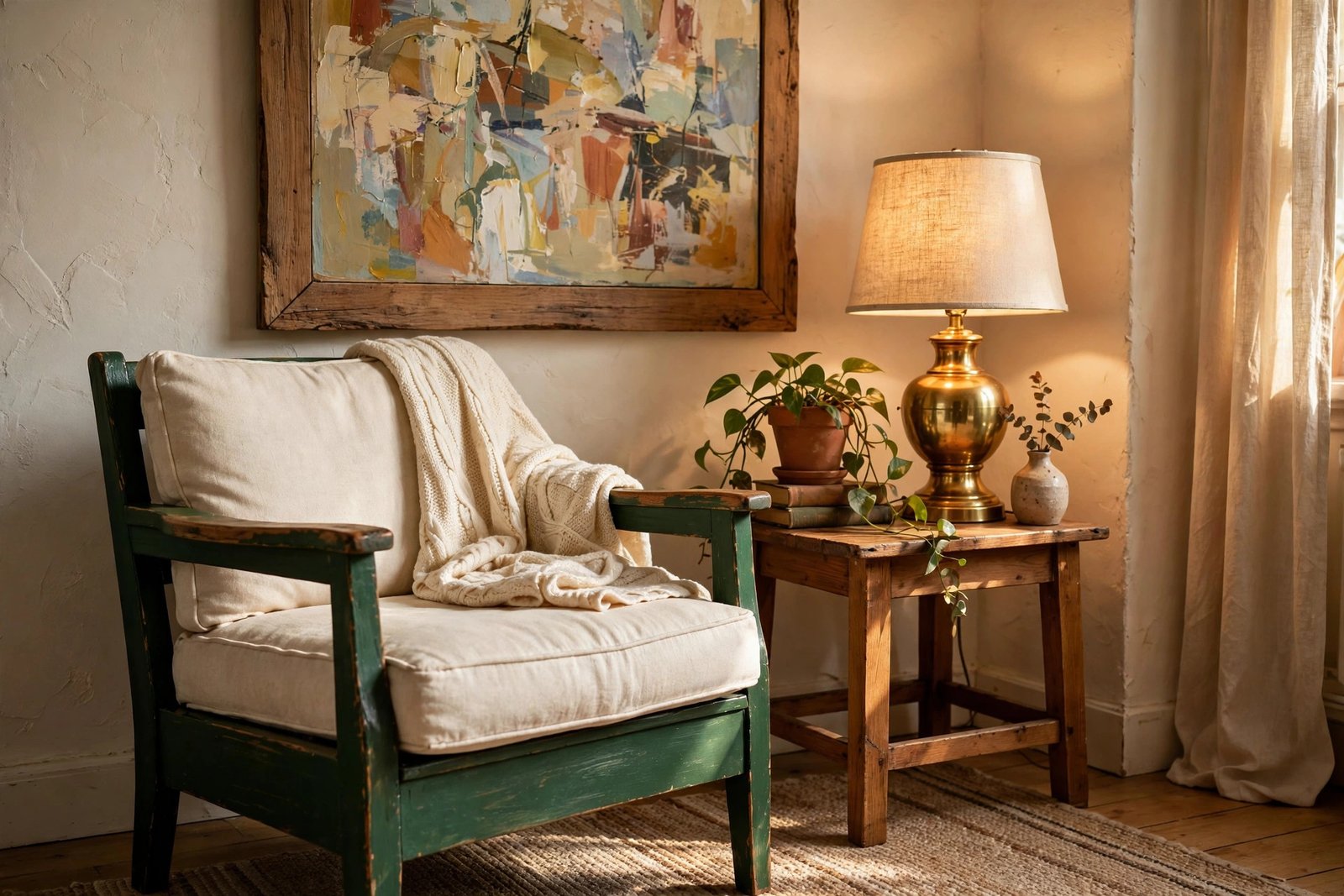
The Thrifter’s Strategy: How to Shop Like a Designer
Walk into any thrift store and you’ll see two kinds of shoppers: the ones who browse, and the ones who hunt. Hunters leave with the good stuff because they know what they want before they walk in.
Shop for bones, never for finishes. Ugly stain, scratched varnish, dated fabric — all fixable in an afternoon. What you can’t fix cheaply is bad structure, warped wood, or flimsy construction. Pick up the piece. If it’s heavy, solid, and doesn’t wobble, the bones are good.
Learn the 60-second evaluation. Before anything goes in your cart, run this check: Is it real wood, metal, or ceramic (not plastic pretending)? Are the joints tight? Does it have clean lines that would look good in a modern room? Could a coat of paint fix everything you dislike? If yes to all four, buy it.
Go on weekday mornings. Most thrift stores restock overnight or early morning, and the best furniture goes within hours. Tuesday through Thursday mornings are the sweet spot — weekend crowds have picked over the shelves, and fresh donations are out.
💡 Tip: Bring a tape measure and your room’s key dimensions saved in your phone. That “perfect” side table is only perfect if it actually fits beside your sofa.
Know what to always grab — and what to walk past.
Always buy: solid wood furniture (even ugly), brass and copper items, heavy ceramic vases, real-wood frames, glass decanters, linen tablecloths (they become curtains and pillow covers), and baskets.
Never buy: anything upholstered you can’t fully clean (mattresses, fabric headboards — bedbug risk isn’t worth it), particleboard furniture (it won’t survive a flip), scratched non-stick cookware, or anything with a musty smell you can’t identify. Smell means mold, and mold means walk away.
Clean everything before it enters your home. Hard furniture gets wiped with a vinegar-water solution, then inspected in daylight for pests. Ceramics and glass soak in hot soapy water with a splash of bleach. Fabric items go straight into a hot dryer cycle for 30 minutes — heat kills anything hiding in fibers. This fifteen-minute ritual is what separates confident thrifters from nervous ones.
Keep a $40 flip kit. Sanding sponge, small roller, angled brush, wood filler, spray primer, and a screwdriver set cover 90% of flips. Most of the transformations below need nothing more.
If you love the budget mindset behind all of this, our companion guide to DIY home decor ideas on a budget covers 15 more projects that look expensive for under $100.
13 Thrift Store Decor Flips With Real Costs
Every flip below follows the same honest math: what the find cost, what the transformation cost, and what a comparable new piece retails for. No fantasy numbers.
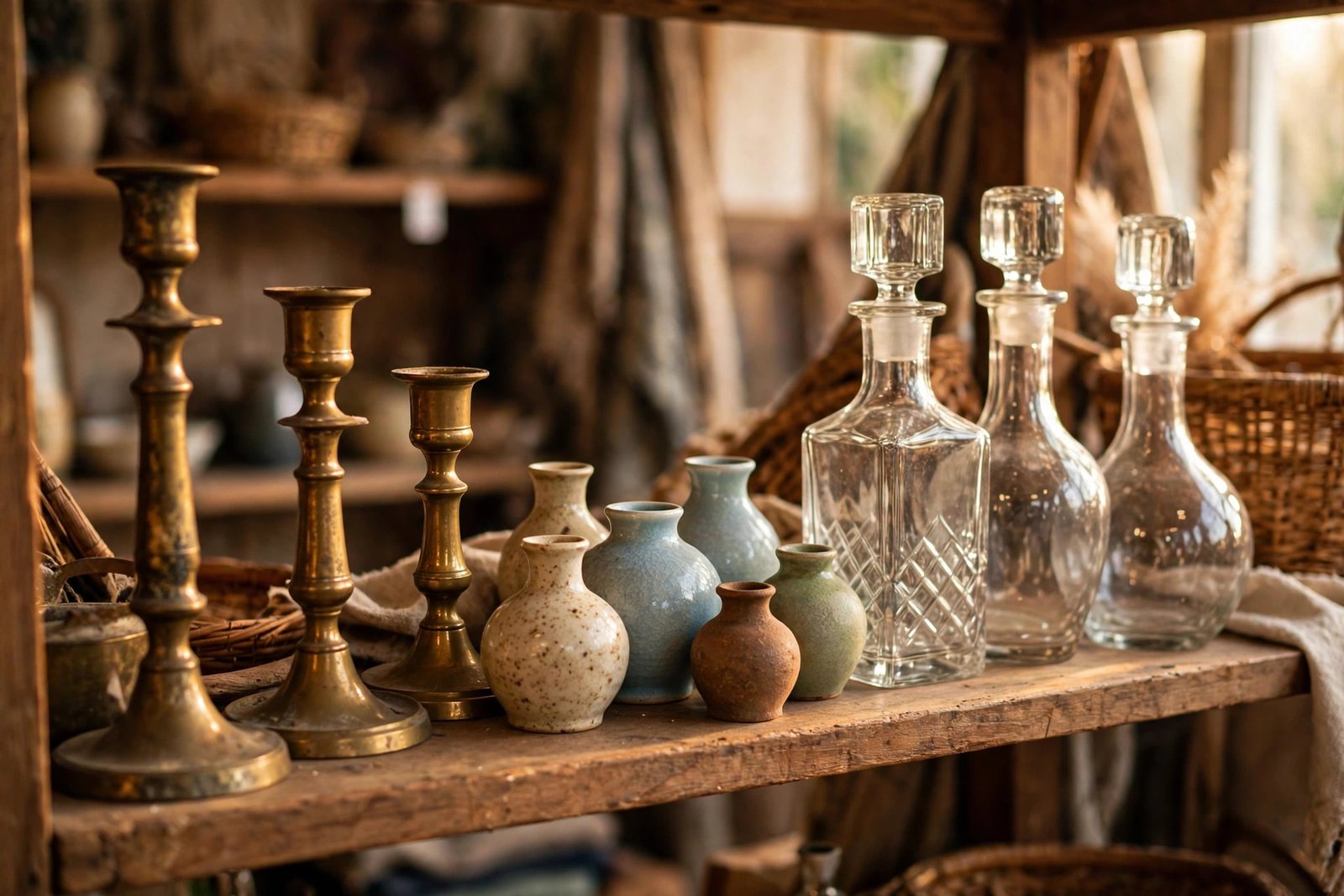
1. The Dated Wooden Chair Pair → Modern Dining Accents
Thrift stores are full of lonely wooden dining chairs — solid oak or maple, buried under 1980s stain. Buy two with identical silhouettes (matching sets are rare; matching shapes are enough). Sand lightly, paint in a deep saturated color like forest green or ink black, and re-cover the seats with a $6-per-yard fabric stapled over the old padding.
Find: $8 for two → Flip: $22 (paint, fabric, staples) → Retail equivalent: $140+. Two painted chairs flanking a console or pulled up to a small desk look intentionally curated, not secondhand.
2. The Tarnished Brass Lamp → Sculptural Statement Light
Brass lamps are the thrift store’s best-kept secret — heavy, well-made, usually $5–8, abandoned because the shade is hideous. Ignore the shade entirely. Polish the base with a $4 metal polish, or spray it matte black for a modern look, then top it with a simple drum shade ($12–16 new). The silhouette of a 1970s brass lamp under a clean modern shade is exactly what expensive lighting showrooms sell.
Find: $6 → Flip: $20 → Retail equivalent: $120.
💡 Tip: Always test lamps in the store. Most thrift stores have an outlet near the lighting section — plug it in before you buy. Rewiring is doable but a $12 rewire kit eats your savings.
3. The Ugly Landscape Painting → Moody Abstract Art
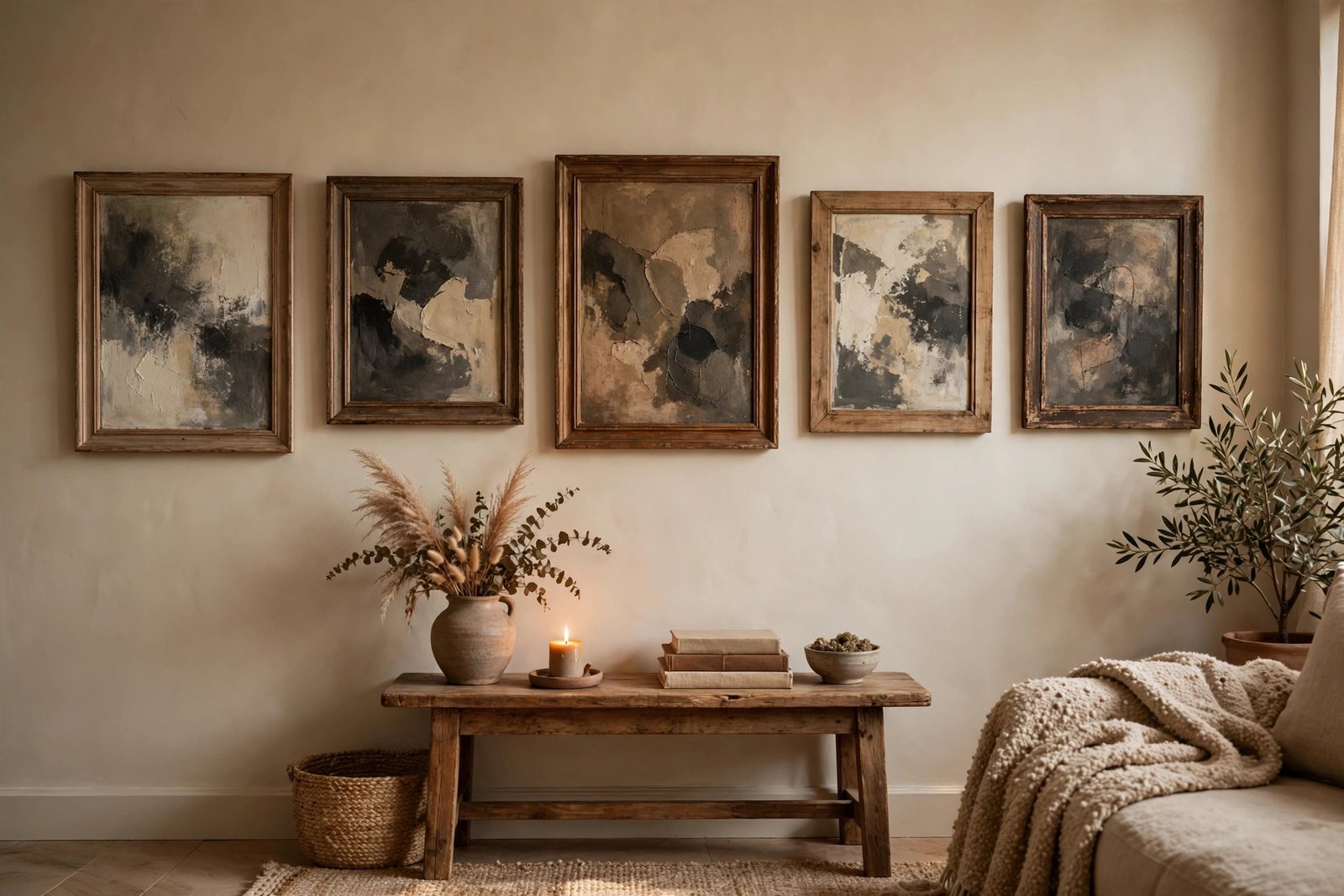
That muddy-brown landscape in a heavy wood frame? You’re buying the frame and the canvas, not the painting. Gesso over the old art (or just paint directly — thrift canvases are forgiving), then paint loose abstract brushstrokes in two or three muted tones: clay, cream, charcoal. You don’t need skill; abstract art rewards confidence, not technique. Big canvases in thrift stores run $4–10 and the frames alone are worth that.
Find: $7 (large framed canvas) → Flip: $8 (sample paint pots) → Retail equivalent: $80–200 for similar-sized abstract art.
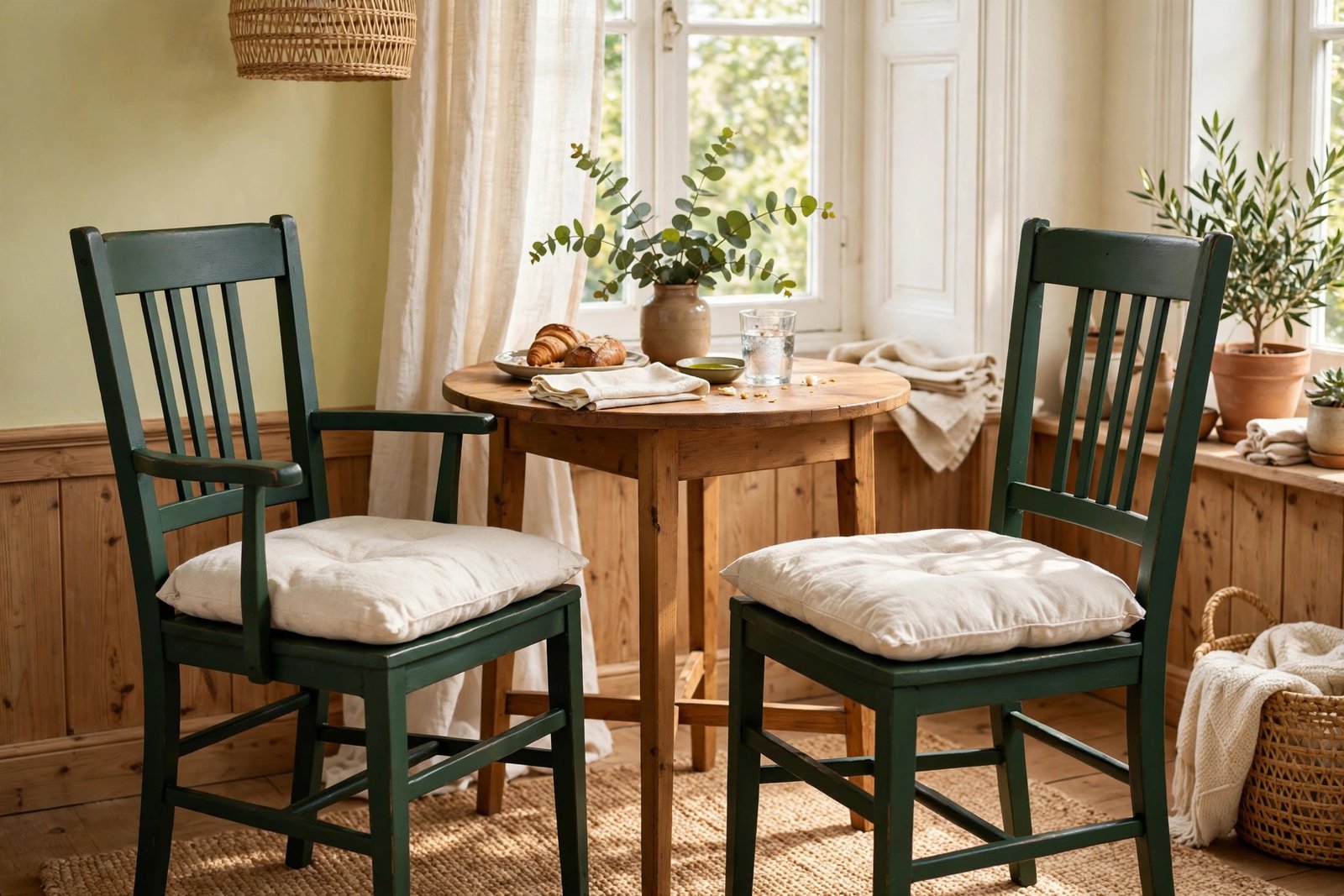
4. The Scratched Coffee Table → Faux-Travertine Centerpiece
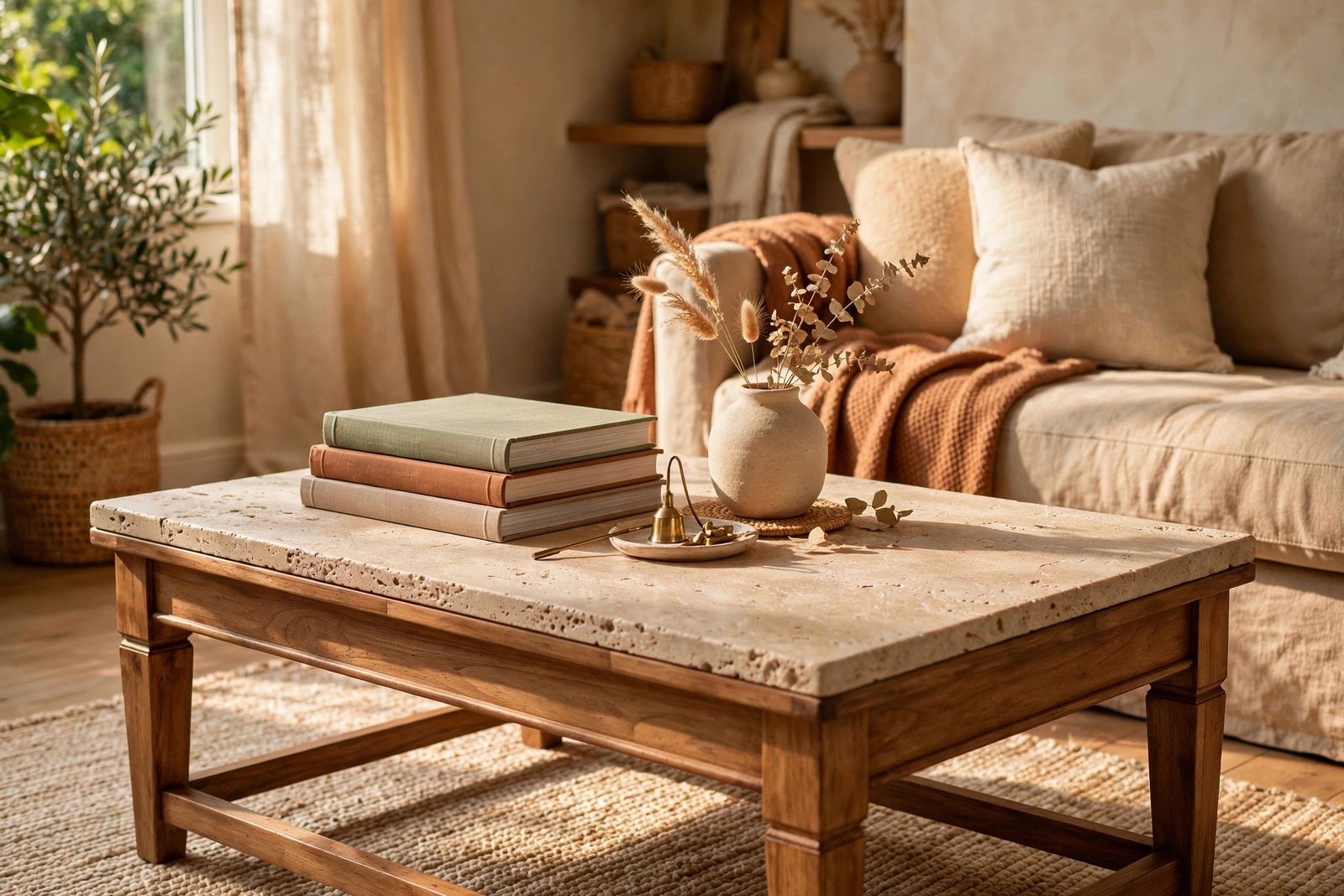
Stone-look tables are everywhere in designer catalogs and priced accordingly. A solid wood coffee table with a ruined top ($10–15 at any thrift store) is your shortcut. Sand the top smooth, then build texture with a mix of baking soda and beige paint — the viral “plaster” technique — applied in thin layers. Seal with matte polyurethane. From two feet away, it reads as honed stone.
Find: $12 → Flip: $18 (paint, baking soda, sealer) → Retail equivalent: $250+. This is the flip that gets the most disbelieving reactions.
5. Mismatched Ceramic Vases → A Cohesive Plaster Collection
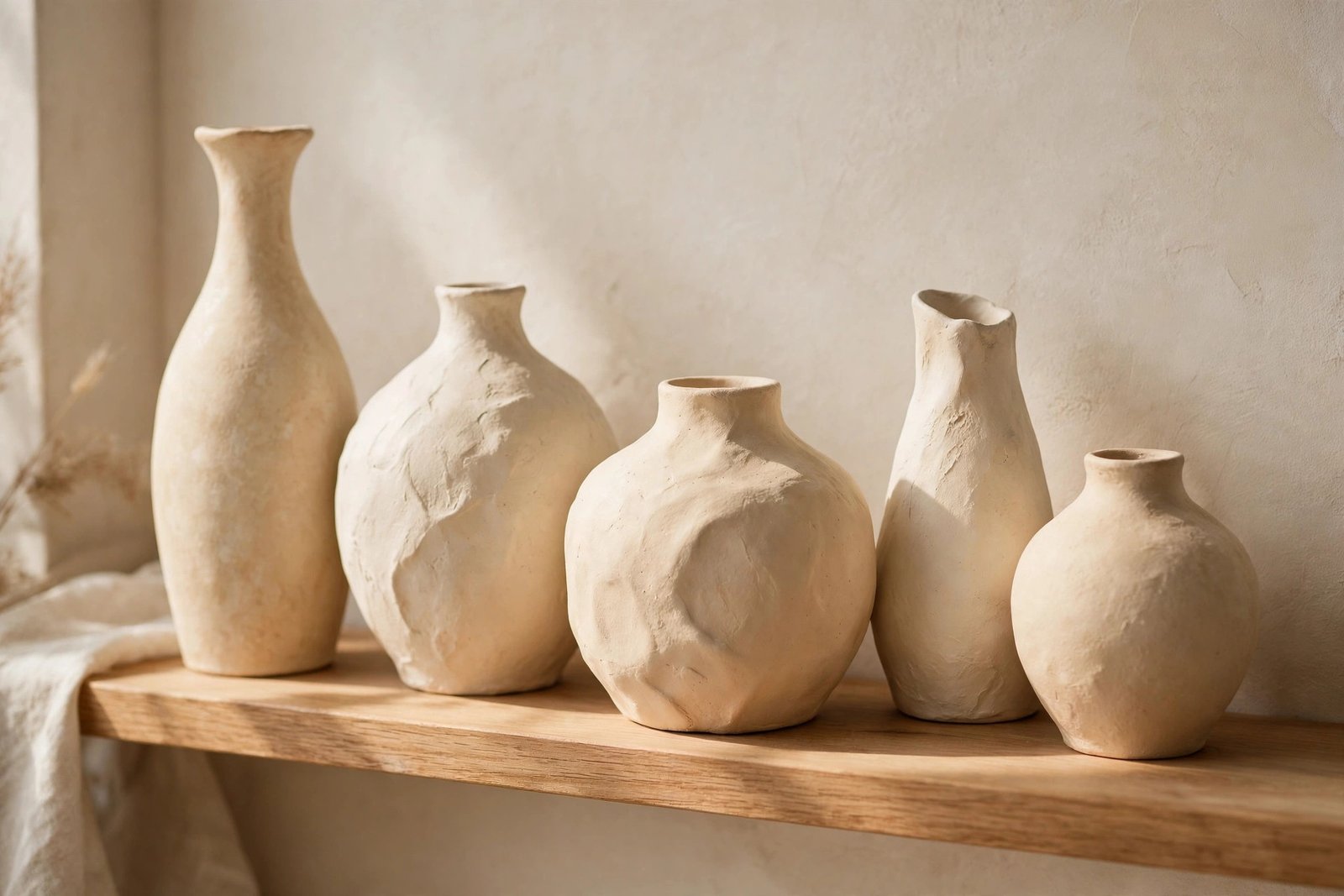
One vase is clutter; five matching vases are a collection. Gather ceramic vases in different shapes ($1–3 each), then unify them with the same baking-soda paint technique in warm white or greige. Group them in odd numbers on a shelf or mantel. Designers charge hundreds for “curated ceramic collections” — yours cost less than a takeaway dinner.
Find: $8 for five → Flip: $6 (one paint sample pot) → Retail equivalent: $150+.
6. The Dated Framed Mirror → Arched Designer Mirror
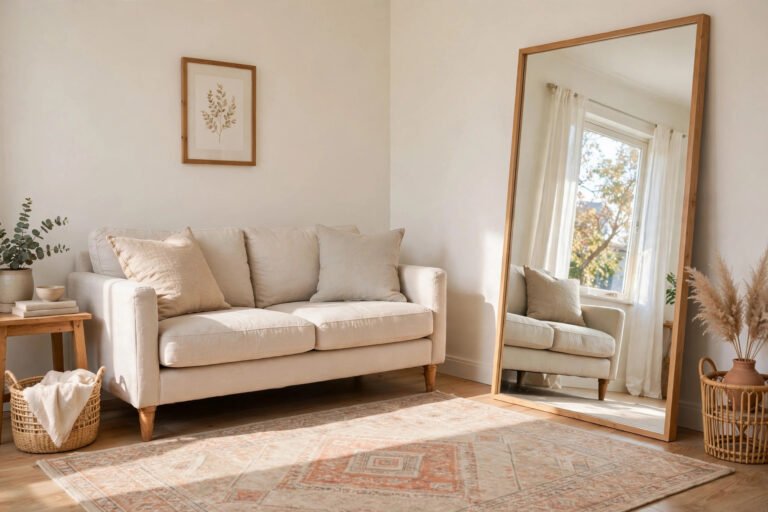
Arched mirrors are the defining shape of current decor, and thrift stores are full of rectangular mirrors in dated frames ($5–12). Two options: paint the frame matte black or antique gold for an instant update, or go further — cut an arch shape from thin plywood, attach it over the top of the rectangle, and paint the whole thing one color. The arch trick fools everyone.
Find: $9 → Flip: $12 (paint, plywood offcut) → Retail equivalent: $90–180.
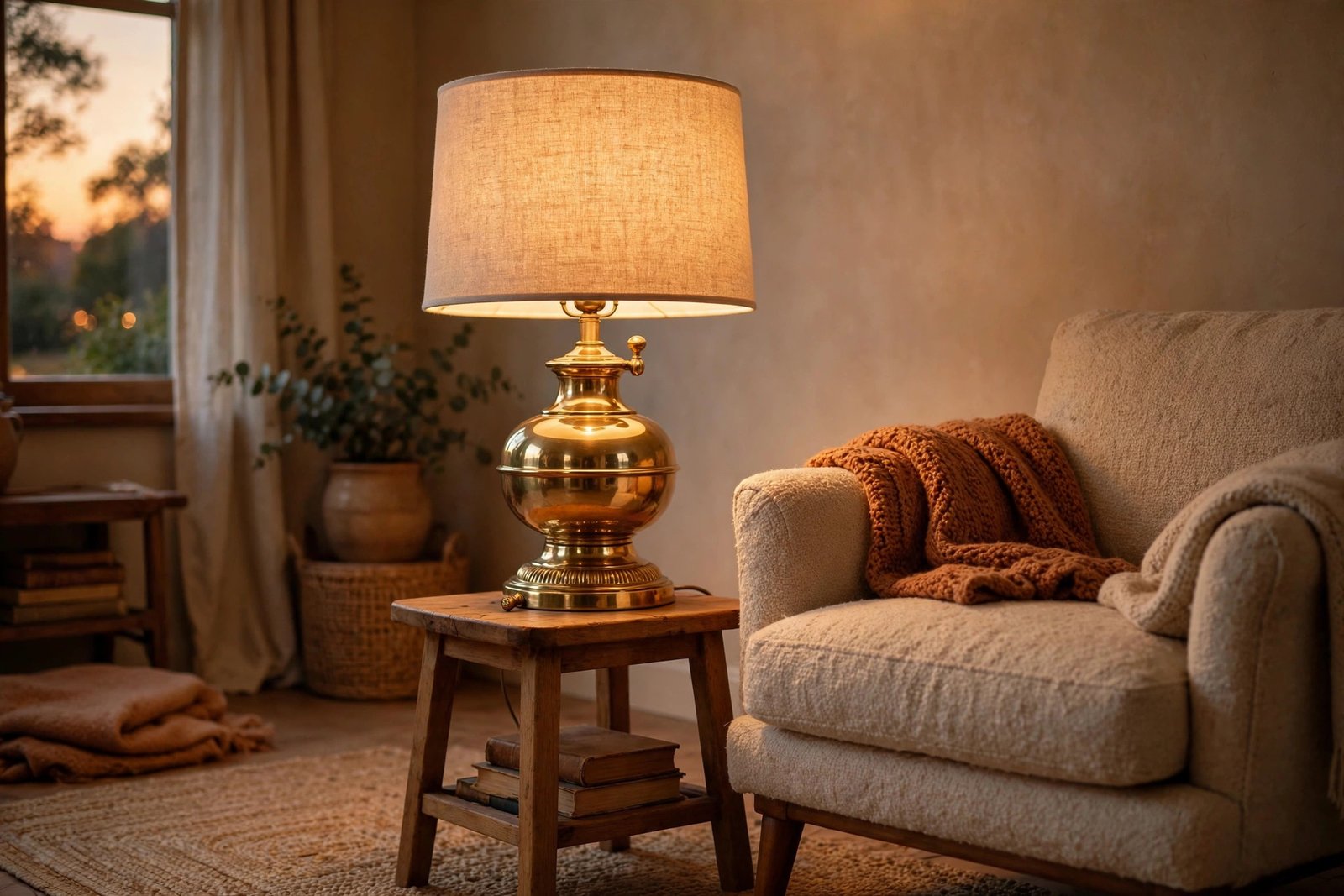
7. The Wobbly Bookshelf → Built-In Look on a Budget
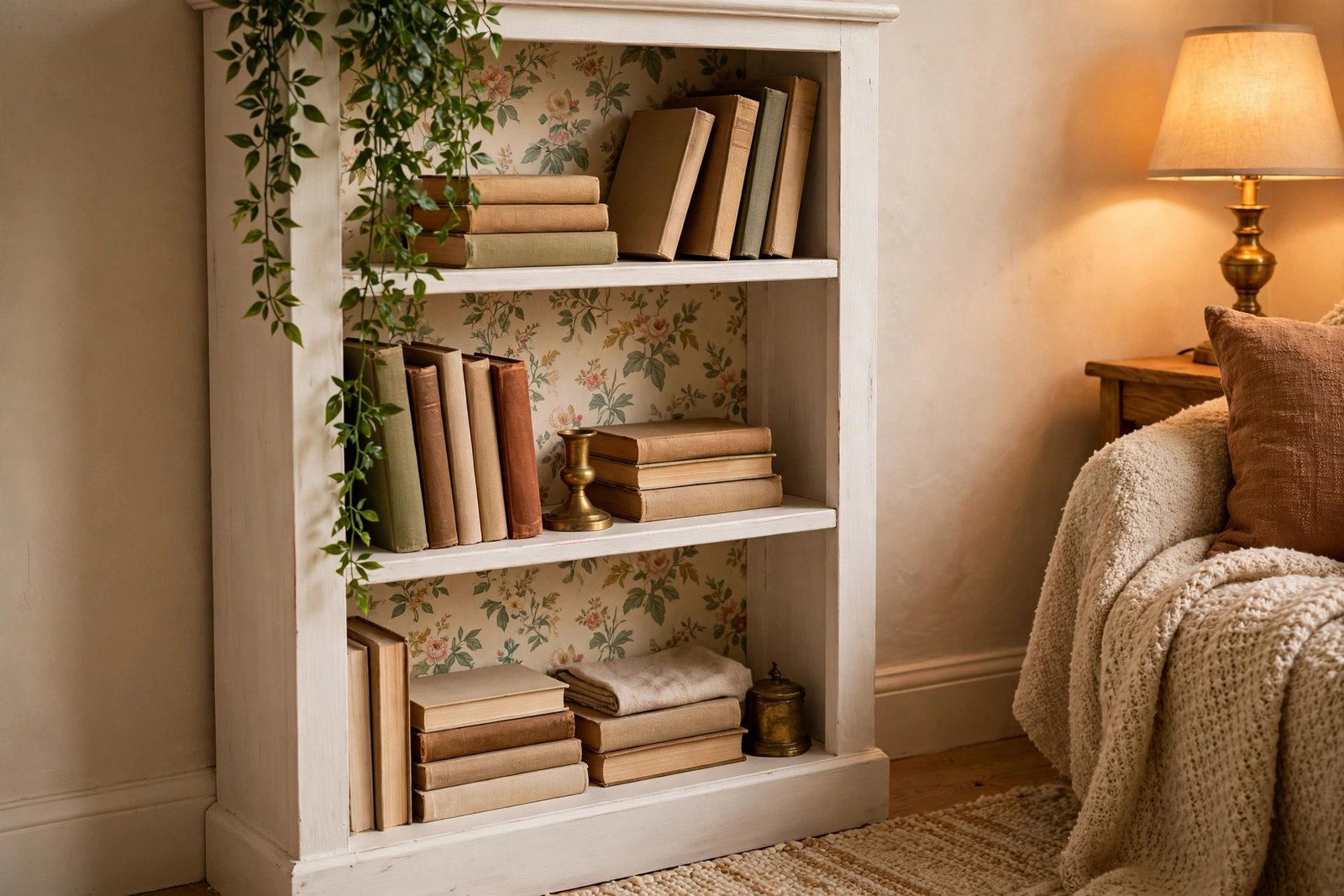
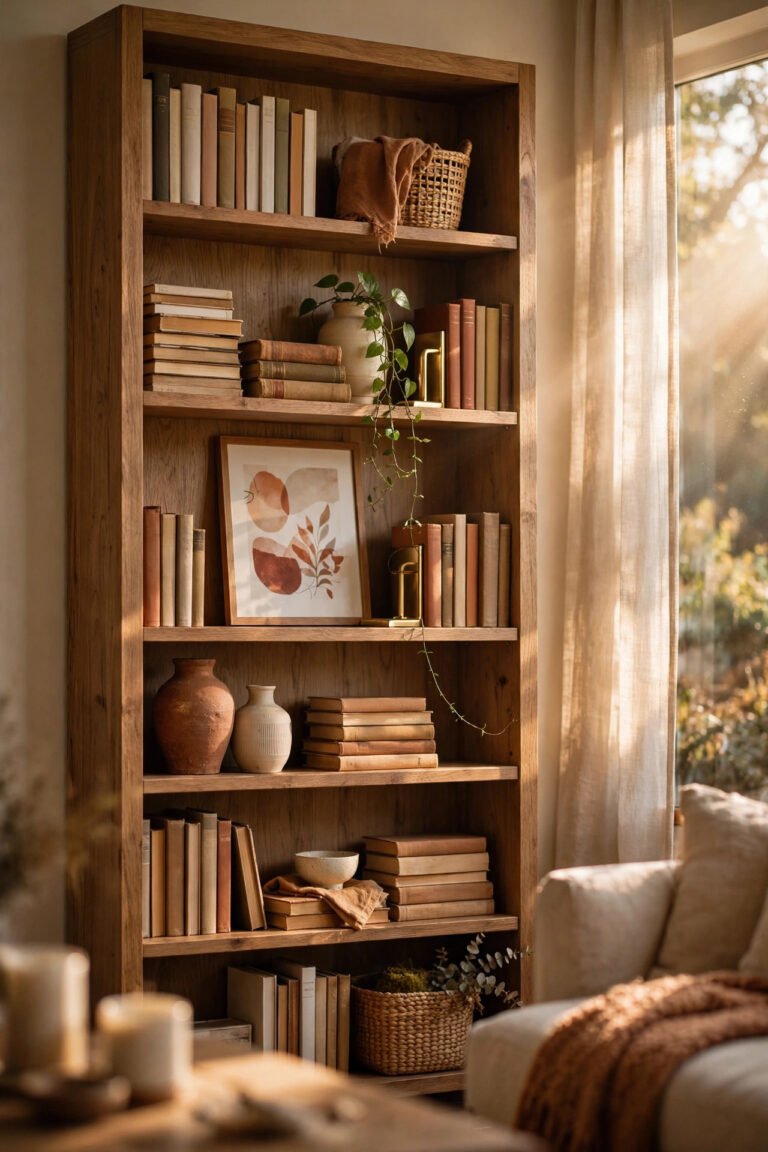
A plain pine or laminate bookshelf ($10–20) becomes custom-looking with three moves: paint it the same color as your wall so it visually recedes, line the back panels with peel-and-stick wallpaper ($8 a roll), and add a simple baseboard trim along the bottom. Style the shelves with books and a few of your flipped vases. Painted the wall color, a freestanding shelf reads as a built-in — the oldest designer trick in the book.
Find: $15 → Flip: $25 (paint, wallpaper, trim) → Retail equivalent: $300+ for a comparable styled bookcase.
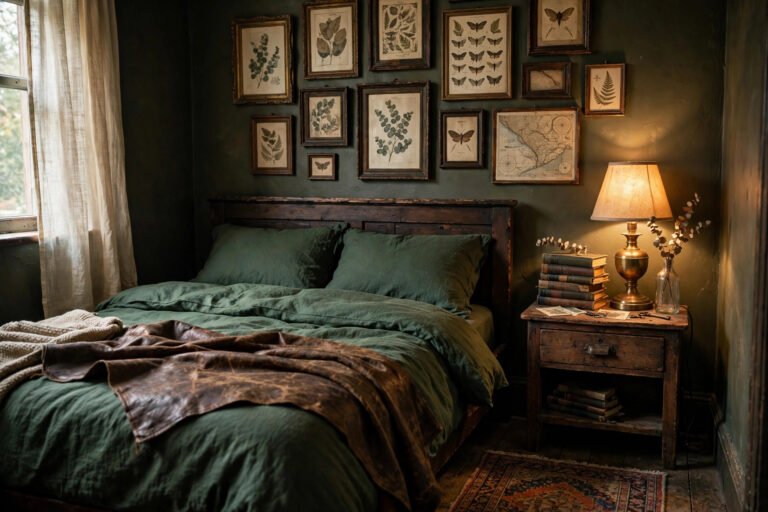
This is also where thrifted finds shine for specific aesthetics — the moody, collected look of dark academia bedroom decor is practically built from thrifted brass, old books, and oil-painting-style art.
8. The Stained Wicker Basket → Textured Planter & Storage
Baskets are thrift-store gold: $2–4 each, endlessly useful. A large stained or faded basket becomes a designer planter with a coat of matte paint or wood stain — tuck a plastic nursery pot inside and no one sees the mechanics. Smaller baskets corral throws, toys, or firewood. Natural texture is what makes expensive rooms feel layered, and baskets deliver it for pocket change.
Find: $3 → Flip: $5 (spray paint or stain) → Retail equivalent: $35–60 per basket planter.
9. The Sad Floor Lamp → Arc-Style Statement
Floor lamps with dated shades and wobbly poles sell for $5–10 because nobody can picture them fixed. Replace the shade with an oversized drum ($15–20) and spray the pole and base matte black or brass. An oversized shade on a slim pole gives you the silhouette of lamps that retail for ten times the price.
Find: $8 → Flip: $24 (shade, spray paint) → Retail equivalent: $150+.
10. Wooden Crates → Floating Shelves & Side Tables
Old wooden crates and wine boxes ($3–6 each) are structural, characterful, and endlessly reconfigurable. Mounted on hidden brackets, two crates become floating shelves with more charm than anything flat-pack. Stacked and topped with a thrifted tray, three crates become a rustic side table. Sand rough edges, stain or paint to match your room.
Find: $10 for two → Flip: $8 (stain, brackets) → Retail equivalent: $70–120.
11. Cloudy Glass Decanters → Apothecary-Style Display
Thrift stores overflow with glass decanters, apothecary jars, and vases clouded by years of hard water ($1–2 each). Soak them overnight in white vinegar and uncooked rice — the rice acts as a gentle abrasive — and they come out sparkling. Group three or five on a tray with dried stems or fairy lights inside. Vintage glass grouped together looks like a collection you inherited, not something you assembled for six dollars.
Find: $6 for four → Flip: $2 (vinegar) → Retail equivalent: $80+.
12. Old Cabinet Doors → Entryway Command Center
This one’s for the confident beginner. A pair of cabinet doors or shallow drawers ($3–5) mounted on the wall becomes a hallway organizer: add small hooks for keys, a little shelf on top for sunglasses, and paint everything one bold color. It’s custom storage that looks built for your space — because it was.
Find: $4 → Flip: $14 (hooks, paint) → Retail equivalent: $60–100.
13. The Ugly Ceramic Table Lamp → Designer Dupe
Ceramic lamp bases in unfortunate 90s glazes are $4–7 and structurally perfect. The plaster-paint technique from flip #5 works here too: two coats of warm-white textured paint, a new tapered shade, and you have the exact silhouette of the $200+ ceramic lamps all over designer feeds. Nobody — nobody — will guess its origin.
Find: $5 → Flip: $22 (paint, shade) → Retail equivalent: $200+.
Find vs. Flip vs. Retail: The Honest Math
| Flip | Thrift find | Flip cost | Total | Comparable retail |
|---|---|---|---|---|
| Painted chair pair | $8 | $22 | $30 | $140+ |
| Brass lamp + new shade | $6 | $20 | $26 | $120 |
| Overpainted abstract art | $7 | $8 | $15 | $80–200 |
| Faux-travertine coffee table | $12 | $18 | $30 | $250+ |
| Plaster vase collection (5) | $8 | $6 | $14 | $150+ |
| Arched mirror trick | $9 | $12 | $21 | $90–180 |
| Built-in-look bookshelf | $15 | $25 | $40 | $300+ |
| Basket planter | $3 | $5 | $8 | $35–60 |
| Floor lamp + oversized shade | $8 | $24 | $32 | $150+ |
| Crate shelves (2) | $10 | $8 | $18 | $70–120 |
| Apothecary glass display | $6 | $2 | $8 | $80+ |
| Cabinet-door organizer | $4 | $14 | $18 | $60–100 |
| Ceramic lamp dupe | $5 | $22 | $27 | $200+ |
| All 13 flips | $105 | $186 | $291 | $1,500+ |
All thirteen transformations together cost under $300 — less than a single designer lamp.
Frequently Asked Questions
What should I always buy at thrift stores for decor?
Solid wood furniture, brass and copper objects, heavy ceramics, real-wood picture frames, glass decanters, mirrors, baskets, and linen textiles. These materials age well, clean up easily, and take paint beautifully. If it’s heavy, solid, and has good lines, it’s almost always worth the price.
What should I never buy secondhand?
Skip upholstered furniture you can’t fully sanitize (mattresses, fabric headboards), anything particleboard (it crumbles when you try to refinish it), items with musty or unidentifiable smells, and damaged electrical items unless you know how to rewire. When in doubt, remember: structure can be fixed, contamination can’t.
How do I clean thrifted decor?
Hard surfaces get a wipe-down with equal parts water and white vinegar, then air-dry in sunlight. Glass and ceramics soak overnight in hot water with dish soap and a splash of bleach. Washable fabrics go through a hot wash and a full hot dryer cycle — sustained heat is what kills anything hiding in fibers. For wood furniture, follow the wipe-down with a light sanding before any paint goes on.
How do I make thrifted furniture look modern?
Three moves do 90% of the work: one — paint it a current color (deep green, warm black, creamy white) in a satin finish; two — swap the hardware for simple modern pulls or knobs; three — style it minimally, because sparse styling is what signals “modern” to the eye. Dated details disappear under good paint; modern hardware and breathing room do the rest.
Which thrift stores are best for home decor?
Independent charity shops in affluent neighborhoods tend to have the best furniture donations. Habitat for Humanity ReStores are excellent for wood furniture and hardware. Estate-sale leftovers often land at local hospice and church shops. And don’t ignore the big chains on weekday mornings — the turnover is high, which means fresh finds daily. The best thrift store is the one you visit regularly; familiarity with a store’s rhythm beats any single “secret” location.
Your First Thrift Trip
You don’t need all thirteen flips. You need one Saturday, a tape measure, and the willingness to see past ugly finishes. Start with the brass lamp or the vase collection — both are under $30 all-in, both take an afternoon, and both deliver that disbelieving “wait, that was thrifted?” reaction that makes this hobby addictive.
The real secret of thrift store decor ideas isn’t the paint or the technique. It’s the eye you develop: after a few trips, you’ll walk past the clutter and spot the bones instantly. That skill compounds — every room in your home gets better as your hunting gets sharper.
For more budget transformations in the same spirit, browse our DIY home decor ideas that look expensive — and if your thrifted brass and moody art are pulling you toward a darker aesthetic, our dark academia bedroom guide shows exactly how to style them.

One Comment