
15 Cottagecore Decor Ideas for Small Spaces (2026)
I fell for cottagecore the wrong way first. I saw one photo of a tiny bedroom — floral bedding, dried flowers, sunlight through lace curtains — and tried to copy the whole thing in a single weekend. I came home with armfuls of floral cushions, three vases and a teapot I didn’t need. My small room didn’t look like a cottage. It looked like a gift shop had exploded in it.
Here’s what I figured out: cottagecore in a small space isn’t about buying the look. It’s about a few soft, old, loved things — and a lot of empty space around them. The rooms that feel like a cottage aren’t the fullest ones. They’re the calmest ones.
So if your room is small and you want it to feel like a storybook cottage, these are the 15 ideas that actually worked for me.

Start With the Soft Stuff
1. Let Floral Bedding Do the Heavy Lifting
If you do nothing else on this list, do this one. One floral bedding set changes a bedroom more than any other single purchase, because the bed is the biggest thing in a small bedroom. I went for a soft, faded floral — cream background, small pink and green flowers — and suddenly the whole room had a mood.
Keep the rest simple: plain white or cream pillows, one folded throw at the foot. The floral is the star; everything else is the supporting cast.
- Small, faded florals feel cottagey; big bold tropical prints feel like a different style entirely
- If a full floral set feels like too much, start with just the pillowcases — you get the effect for a fraction of the change
Try this weekend: put floral pillowcases on your bed and live with them for a week. If you smile every time you walk in, the full set is worth it.
2. One Thrifted Wooden Piece With a Past
Cottagecore loves old wood, and a small room only needs one piece of it. Mine is a scuffed wooden nightstand I found second-hand — the top is a bit marked, one drawer sticks slightly, and I love it more than anything new I own. Old wood brings the history that new furniture can’t fake.
Look for a small dresser, a nightstand, a wooden stool, or a little side table. The imperfections are the point — a few scratches say “this has lived a life” in a way flat-pack never will.
- Check the joints, not the finish — wobbly legs are fixable, a cracked frame usually isn’t
- If you love the hunt, my thrift store decor flips show how to turn second-hand finds into pieces that look designer
Mistake I made: I bought a whole matching floral set — bedding, curtains, and cushions all in the same print — because I thought matching meant stylish. It didn’t. It looked like a hotel room, not a home. One floral, then plain companions. That’s the rule now.

3. Mix Two Patterns, Not Five
Cottagecore loves pattern, but in a small room, pattern needs a limit or it turns into visual noise. My rule: two patterns maximum, in the same colour family. A small floral on the bedding and a thin stripe or gingham on a cushion. That’s the whole formula.
- Keep both patterns in the same palette — cream, sage, dusty pink, soft blue — so they feel collected, not random
- The bigger pattern goes on the bigger surface, usually the bed; the smaller pattern goes on the cushion
Try this weekend: take one patterned thing out of your bedroom and see if the room breathes easier. If you don’t miss it in a week, it doesn’t belong.
4. Paint One Wall Sage or Warm Cream
You don’t need to wallpaper a whole room to get the cottage feeling. One wall in a soft sage green or warm cream changes the light in the entire room. I painted the wall behind my bed a soft sage, and the white bedding and floral pillows suddenly looked intentional instead of random.
If you’re renting and paint is off the table, the same trick works with a large piece of fabric — a cream throw hung behind the bed, or a sage curtain panel on the wall you see most. It’s the colour that does the work, not the paint.
- Sage green is the safest cottagecore colour — it flatters wood, cream, and floral equally
- This is the warm opposite of my dark academia bedroom decor on a budget — same small-room thinking, different mood
Walls That Tell a Story
5. A Botanical Gallery Wall (The Cheap Kind)
A gallery wall is where cottagecore gets personal, and the cheapest version is also the prettiest: botanical prints in mismatched frames. I printed a few free botanical illustrations, put them in thrifted frames of different sizes, and hung them above my dresser. It cost almost nothing and it’s the first thing people comment on.
- Mix frame finishes — dark wood, pale wood, one gold one — so it looks collected over time
- Include one non-picture piece, like a small woven basket, to break up the rectangles
If you like making things, my DIY wall art ideas that look expensive have a few more versions of this same trick, including pressed flowers in frames.
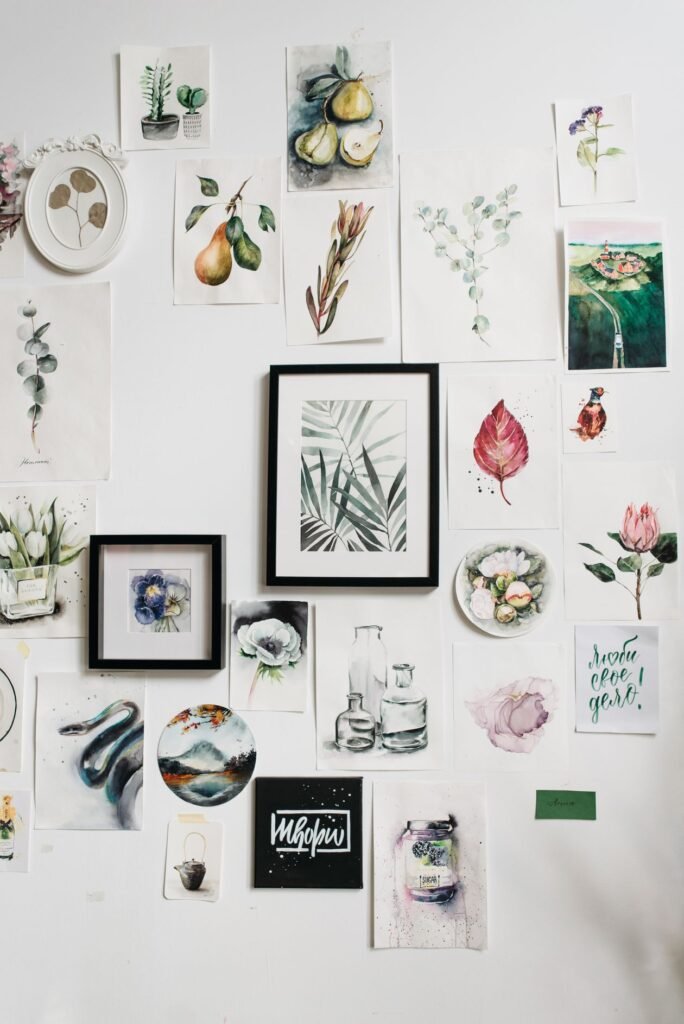
Try this weekend: print three botanical pictures, frame them in whatever frames you already own, and hang them in a triangle. Done is better than perfect here.
6. One Woven Wall Hanging, Hung Low
A woven or macramé wall hanging is the cottagecore shortcut — texture, warmth, and a handmade feeling on a blank wall in about five minutes. I hung one large piece above my bed, low enough to see properly when I’m lying down, and it did more for the room than any painting I tried.
One large piece beats three small ones on the same wall. If you’re renting, a single adhesive hook holds most woven hangings — no drilling, no damage, no deposit worries.
- Cream or natural cotton works with every colour scheme; dyed pieces date faster
- Hang it lower than you think — most people hang wall art too high
7. Lace Curtains That Make the Light Glow
Cottagecore light is soft light, and lace curtains are how you get it. I swapped my plain roller blind for simple lace panels, and the morning light went from harsh to golden. The curtains don’t need to be fancy — they just need to filter the light.
- Sheer lace or thin cotton works best; heavy lined curtains kill the glow
- Let them fall to the sill, not the floor — floor-length curtains eat visual space in a small room
Try this weekend: hang one sheer panel on your brightest window and watch the light at 8 in the morning. That’s the whole test.
Corners, Nooks & Slow Mornings
8. A Window Seat, Even a Fake One
Every cottagecore home has a window seat, and you don’t need a built-in bench to have one. Mine is a deep windowsill with a folded quilt, two cushions, and a small stack of books — the best seat in my home. I read there every morning.
If your windowsill is too narrow, a low stool or a small bench pulled up to the window does the same job. The point is a dedicated spot by the light, not the carpentry.
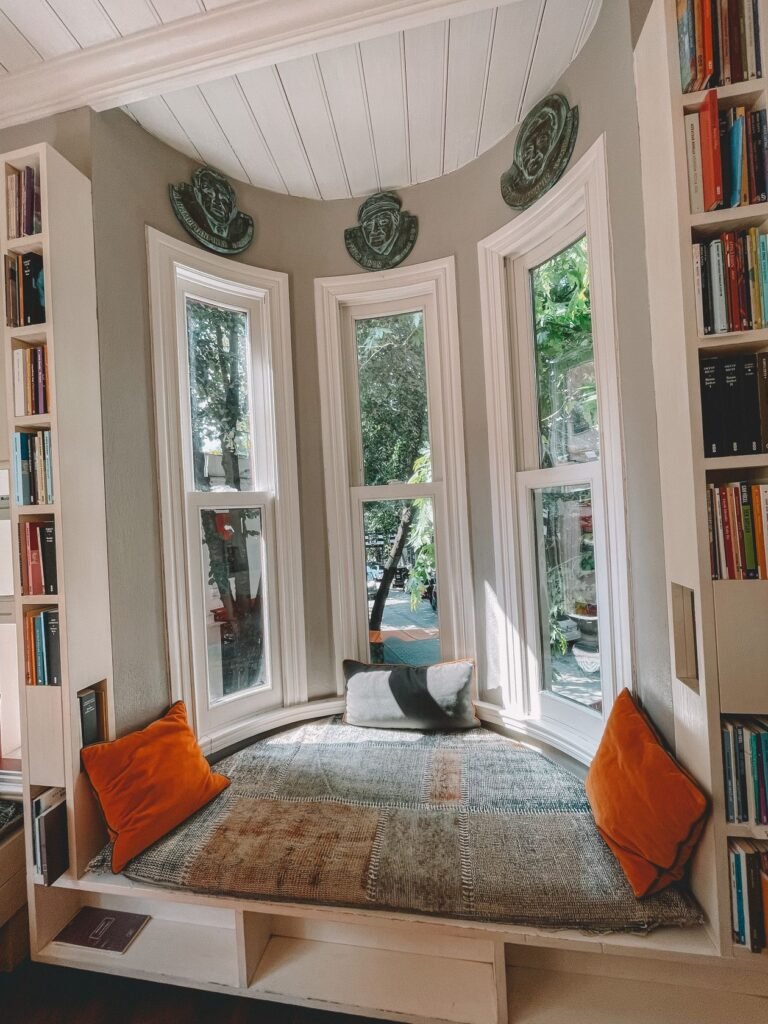
- A cushion in a floral or gingham print makes a plain sill feel deliberate
- Keep a small basket underneath for the books you’re actually reading
Mistake I made: I filled every surface with tiny vintage finds — little vases, little frames, little candles — until I couldn’t put a mug down anywhere. A cottage is supposed to be lived in, not looked at. Now every surface has to earn its clutter: if I can’t set a cup of tea on it, something leaves.
9. An Attic-Corner Reading Chair
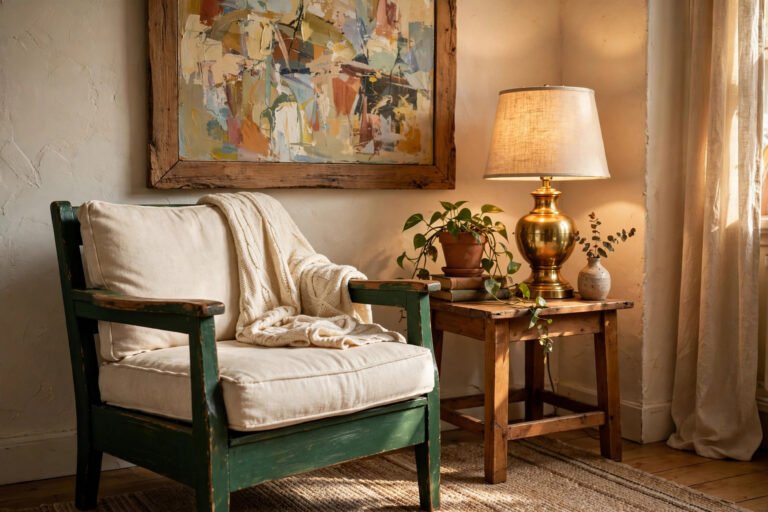
Every small home has an awkward corner — behind a door, under a slope, beside the wardrobe. Put a chair there. A cane chair or any old armchair with a cushion becomes a reading corner the moment you add a small table and a lamp. Mine sits under a sloped ceiling with a bookshelf beside it, and it’s where I end up every evening.
- A chair with arms reads cosier than a dining chair dragged into the corner
- A small side table matters more than the chair — you need somewhere for the tea
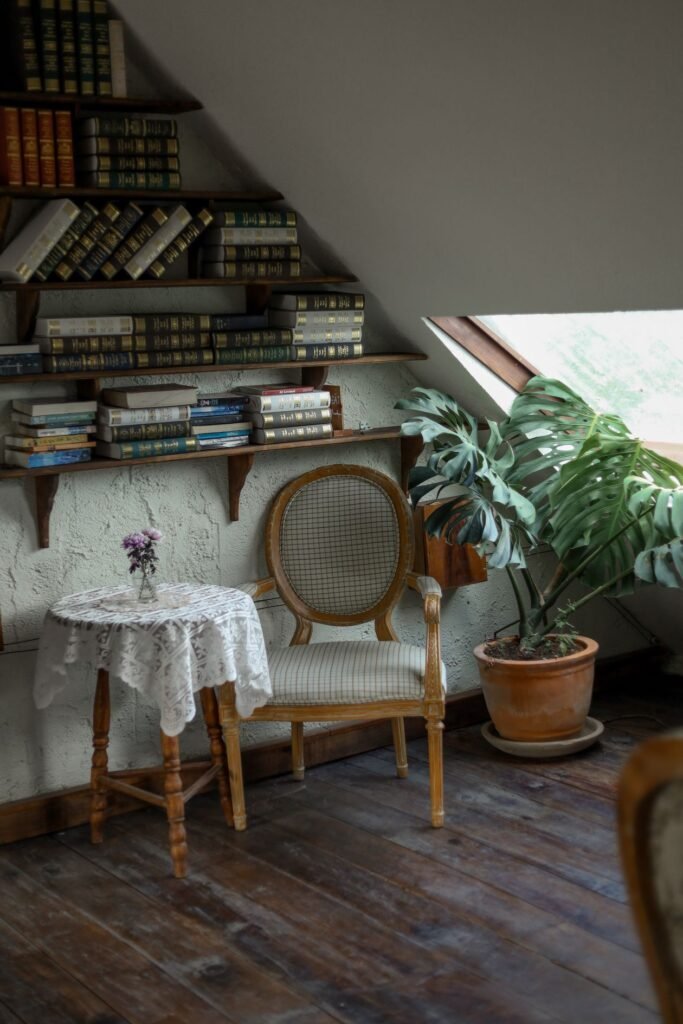
corner. Photo: Pexels.
Try this weekend: drag your most comfortable chair into your most awkward corner, add a cushion and a mug, and sit there for ten minutes. You’ll know straight away if it works.
10. Books and Plants Sharing One Corner
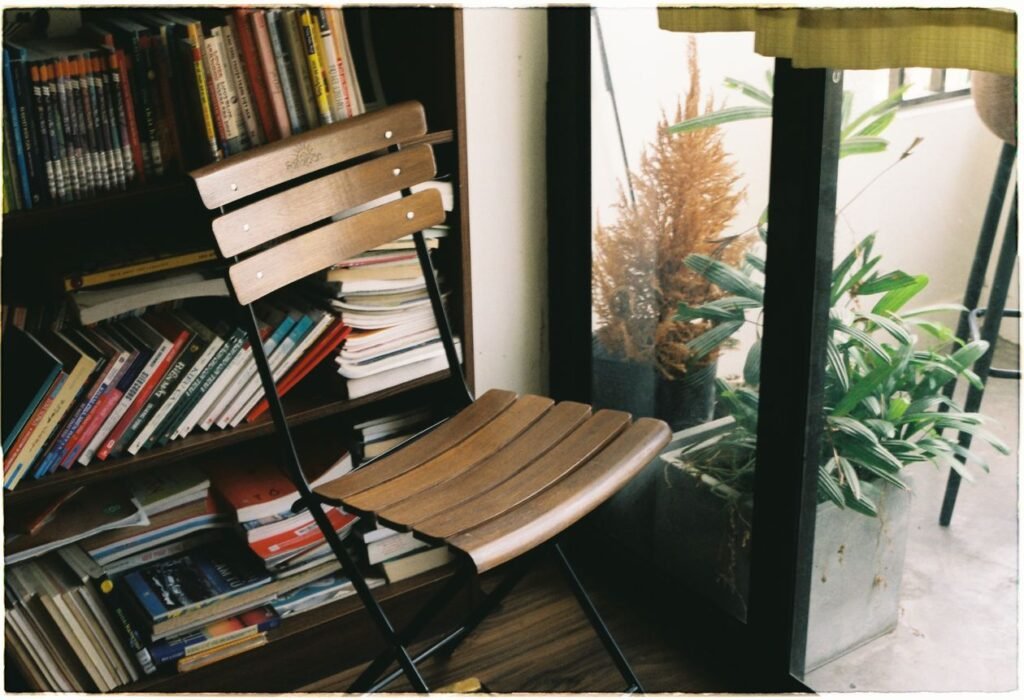
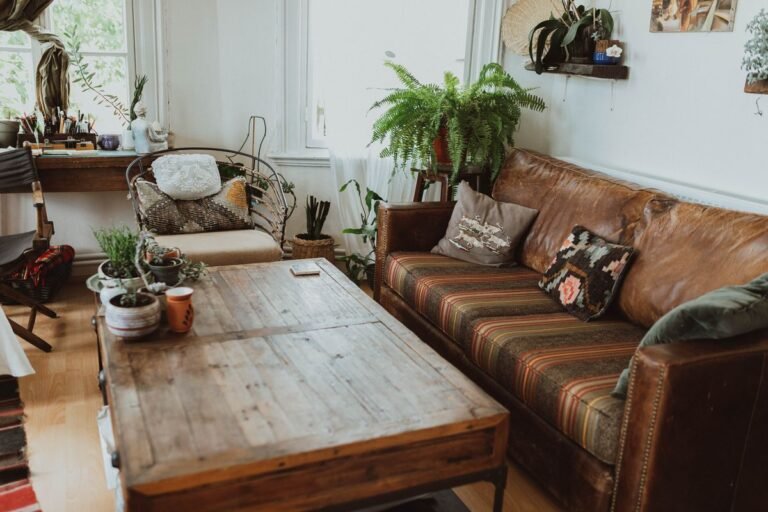
Cottagecore rooms always have books and plants, because cottagecore is supposed to look lived in. I keep a small wooden chair beside a full bookshelf, with a leafy plant on the floor next to it. Books, wood, green — that’s the whole recipe, and it works in a corner barely a metre wide.
- Stack books horizontally as well as vertically — a horizontal stack holds a small vase or candle
- One big leafy plant beats five small ones in a corner
11. Slow Mornings on a Bed Tray
This one isn’t furniture, it’s a habit — and it’s the most cottagecore thing on this list. A simple wooden tray on the bed, with a book and a mug, turns an ordinary morning into a small ritual. I started on Sundays and now it’s the part of the week I protect most.
- A tray with a rim matters — flat boards slide off the bed and spill things
- Keep the tray to three things: something to read, something to drink, and nothing else

The Kitchen & the Tea Table
12. Open Shelves in the Tiniest Kitchen
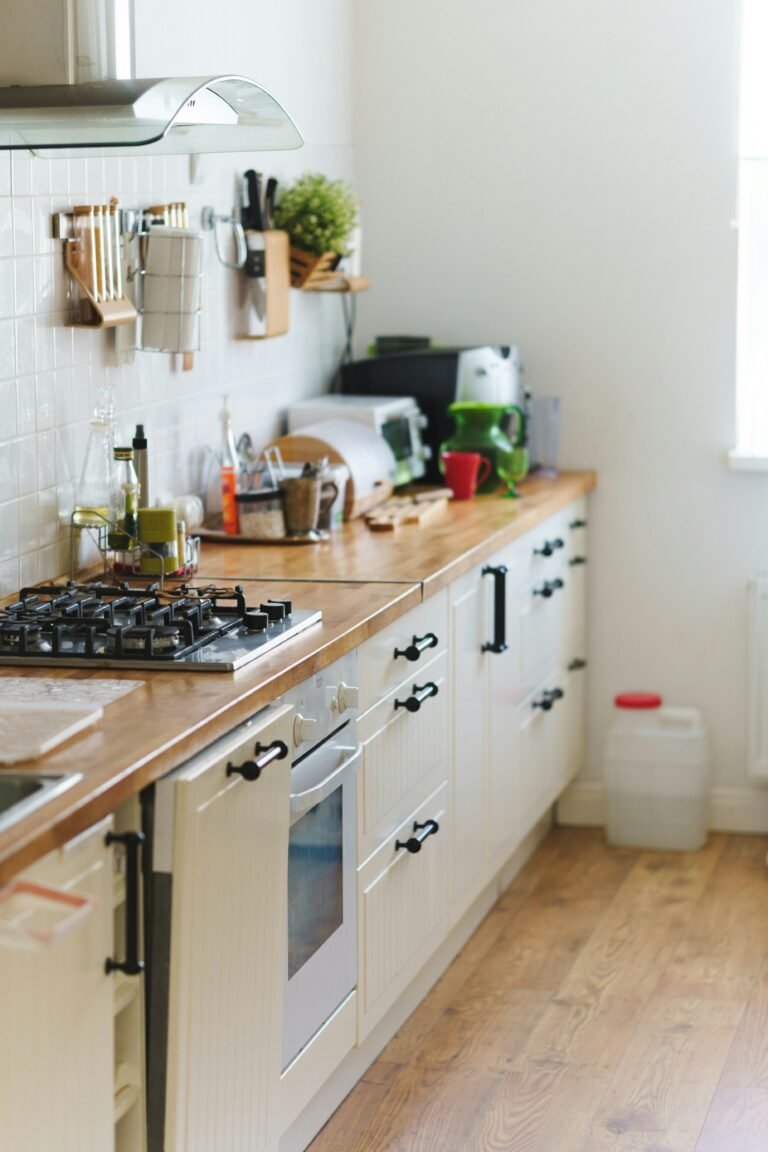
Cottage kitchens show their things instead of hiding them, and open shelves are how you get that feeling in a small kitchen. I took the doors off one small wall cabinet and put my prettiest plates, mugs, and jars on display. The kitchen instantly felt bigger, because your eye travels further with no doors in the way.
- Only display the pretty stuff — everyday plates and mugs in cream, wood, or soft colours
- Keep one shelf for daily use and one for display, so you’re not dusting things you never touch
My small dining room decor ideas use the same thinking for the table itself — a small round table, one vase, and nothing you don’t use.

Try this weekend: take the doors off one kitchen cabinet and live with open shelves for a week. If you hate the dusting, the doors go back on — no harm done.
13. A Tea-Time Corner (Even If It’s Just a Tray)
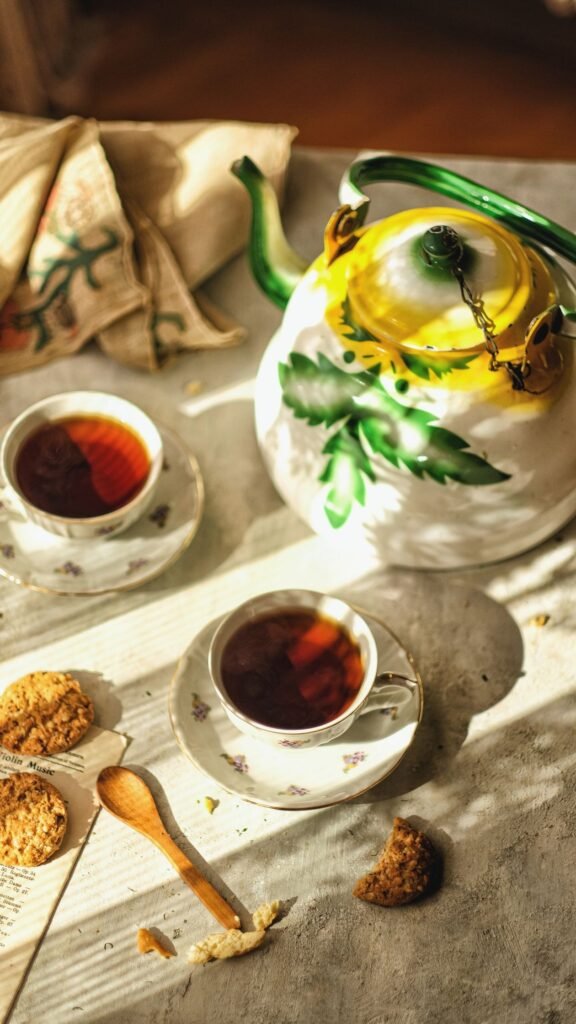
You don’t need a dining table to have a tea-time corner. Mine is a tray on a small side table: a teapot, two cups, and a little plate for biscuits. It sits by the window, and making tea there feels like a small ceremony instead of a chore.
- A teapot you actually use beats a decorative one — the used one has a story
- Two cups, even if you live alone — it says “someone is welcome here”
The Finishing Touches
14. Dried Flowers, Not Fresh Ones
Fresh flowers are lovely and they die in a week. Dried flowers are the cottagecore cheat code — they last for months, they cost almost nothing if you dry them yourself, and they look better a little faded. I hang small bundles upside down in a dark cupboard for two weeks, then put them in vases and on shelves.
- Lavender, wheat, dried roses, and eucalyptus dry best and keep their shape
- Keep them out of direct sun or they fade to grey in a month
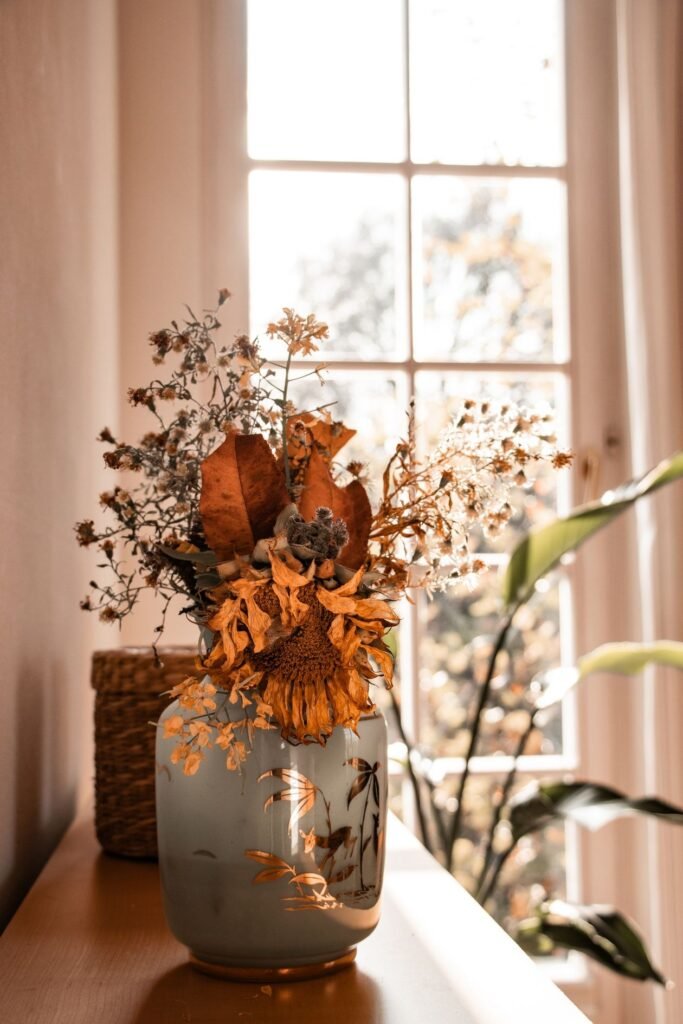
Try this weekend: hang one small bunch of flowers upside down somewhere dark and dry. In two weeks you’ll have your first free arrangement.
Mistake I made: I dried a huge bunch of flowers all at once and hung them everywhere — above the bed, on the shelves, on the door frames. Within a week they were shedding petals onto everything, including my breakfast. Dry one bunch, use it in one vase, and see how it sheds before you go any further.
15. Edit Ruthlessly (The Real Secret)
The last idea is the one nobody wants to hear, and it’s the one that matters most: cottagecore without clutter is mostly editing. I do a monthly edit — I take one thing out, put it in a box, and live without it for a month. If I don’t miss it, it leaves the house.
- Do the edit when you’re in a good mood, not when you’re frustrated — you’ll throw away things you love
- Keep a “maybe” box for a month before anything leaves for good
A cottage isn’t a shop. It’s a home where everything in it is loved, used, or both — and the empty spaces are what let you see the loved things at all.
FAQs
What is cottagecore decor?
Cottagecore is a warm, vintage, nature-inspired style — floral patterns, old wood, dried flowers, handmade textiles, and soft natural light. Think of a countryside cottage: nothing matches perfectly, everything feels collected over time, and the room is made for slow living.
Can cottagecore work in a tiny apartment or a rental?
Yes — it’s one of the most renter-friendly styles there is. Almost everything here needs no drilling or painting: floral bedding, a thrifted wooden piece, dried flowers, a window-seat cushion, and open shelves you can reverse.
How do I do cottagecore without it looking cluttered?
Give every surface a job and a limit: one tray per surface, three cushions on the sofa, one vase per shelf. Cottagecore is collected, not scattered — and the monthly edit in idea 15 is what keeps it that way.
What colours work best for cottagecore in a small space?
Warm cream and soft sage as your base, with dusty pink, soft blue, and warm brown as accents. Keep patterns in the same colour family so they feel collected, not random. Avoid stark white and cool grey — they fight the warm feeling.
What’s the cheapest way to start cottagecore decor?
Start with floral pillowcases and a bunch of dried flowers — both cost very little and change the whole feeling of a room. Then add one thrifted wooden piece and a woven basket.
Your Turn
Which of these fifteen ideas are you trying first? I’m betting it’s the floral bedding or the window seat — those two changed my rooms the most. Tell me in the comments, and if your home is already cottagecore, share the one thing that made the biggest difference.
Written by Irtza — I write cozy, budget-friendly home decor ideas for small spaces. Real homes, renter-friendly tricks, and the honest mistakes I made along the way.

One Comment