15 Japandi Decor Ideas for Calm, Warm Minimalism (2026)
I still remember the evening I sat on my living room floor, surrounded by three throw pillows, two candles I never lit, and a bookshelf so full it looked tired — and I felt more stressed than before I started decorating. Have you ever looked at your room and thought, why does this feel so loud when it’s supposed to feel like home?
Japandi is the quiet answer: Japanese minimalism blended with Scandinavian warmth — low furniture, warm wood, natural textures, room to breathe. Here are the 15 ideas that changed my space, mistakes included.

1. Start With a Warm Neutral Palette
My first mistake was painting everything brilliant white and wondering why the room felt like a waiting room. Japandi neutrals are warm: warm white, oat, sand, greige, soft grey, a little charcoal. I repainted one wall warm off-white and the room softened overnight — same furniture, different feeling.
Key takeaway: pick three neutrals and one dark accent, then repeat them everywhere.
Try this weekend: hold paint swatches against your wall in daylight and lamplight, and pick the warm one.
More calm, pale-room ideas: my minimalist living room ideas for calm small spaces.
2. Go Low — Lower Everything
The biggest Japandi shift in my home was lowering the eye line. I swapped a tall, bulky sofa for a lower one, moved my coffee table down, and suddenly my ceiling felt higher and my room felt bigger. Japanese design calls the empty space ma — the pause between things.
Low furniture makes a small room feel calm because nothing blocks your view across it. A low bed, a floor cushion, and a low coffee table will do more than any new paint colour.
Mistake I made: I bought a low sofa and kept my tall bookshelf, tall lamp, and tall plant stand. The room still felt top-heavy — going low only works if most big pieces go low together. I sold the tall shelf and the room finally breathed.
3. Mix Light and Dark Wood on Purpose
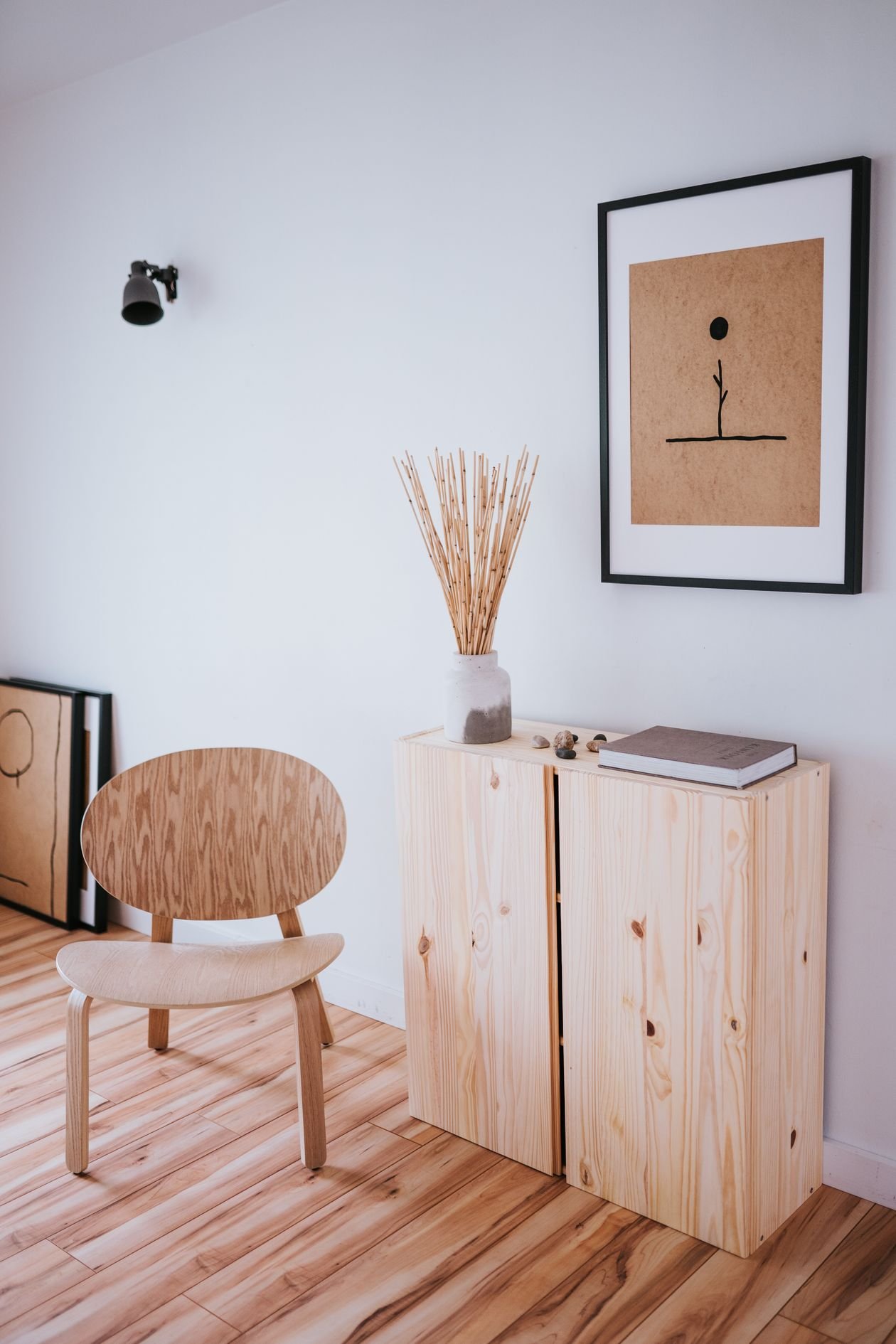
For years I thought all my wood had to match. It doesn’t — Japandi actually wants the contrast: pale oak floors with a dark walnut bench, or a light pine cabinet next to a black tray table. That light-dark conversation keeps a neutral room from looking washed out.
My rule now: wood in at least three places, in at least two tones. Floor, table, one chair. All pale wood goes flat; all dark goes heavy.
4. Choose Materials You Can Feel
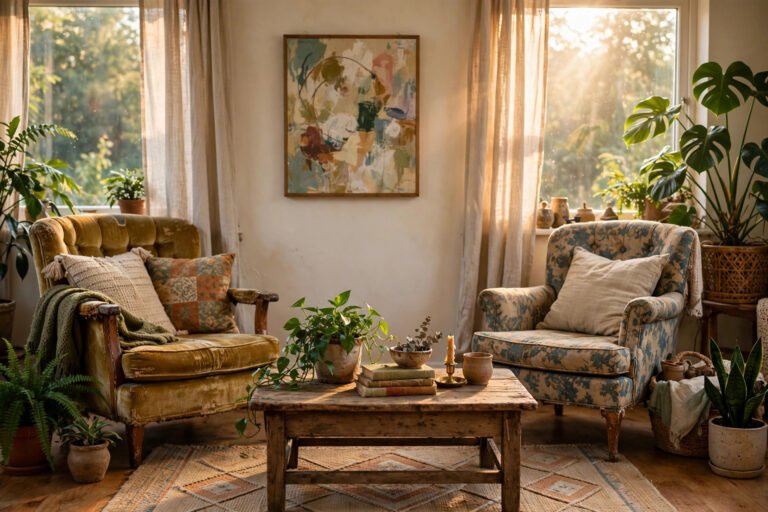
Japandi is a touch-first style. I run my hand over things before I buy them: linen that wrinkles beautifully, a wool rug with weight, rattan with its open weave, a rough ceramic vase. If a material feels like plastic, it looks like plastic in a calm room too.
Natural texture is the decoration. You don’t need patterned wallpaper when linen, wood grain, woven fibres, and stone share the same room.
5. Leave Empty Space on Purpose
This was the hardest idea for me — an empty shelf felt wasted. But the Japanese idea of ma changed my mind: the empty space is part of the design, not a gap waiting to be filled. I cleared one shelf completely, and guests started complimenting the room.
If a surface is more than two-thirds full, remove something. Your eye needs somewhere to rest — one empty shelf per bookcase, one bare wall per room, and let the floor show.
Try this weekend: pick the most cluttered surface in your home, take everything off, and put back only three things.
6. Swap Harsh Light for One Paper Lantern (Plus Warm Lamps)
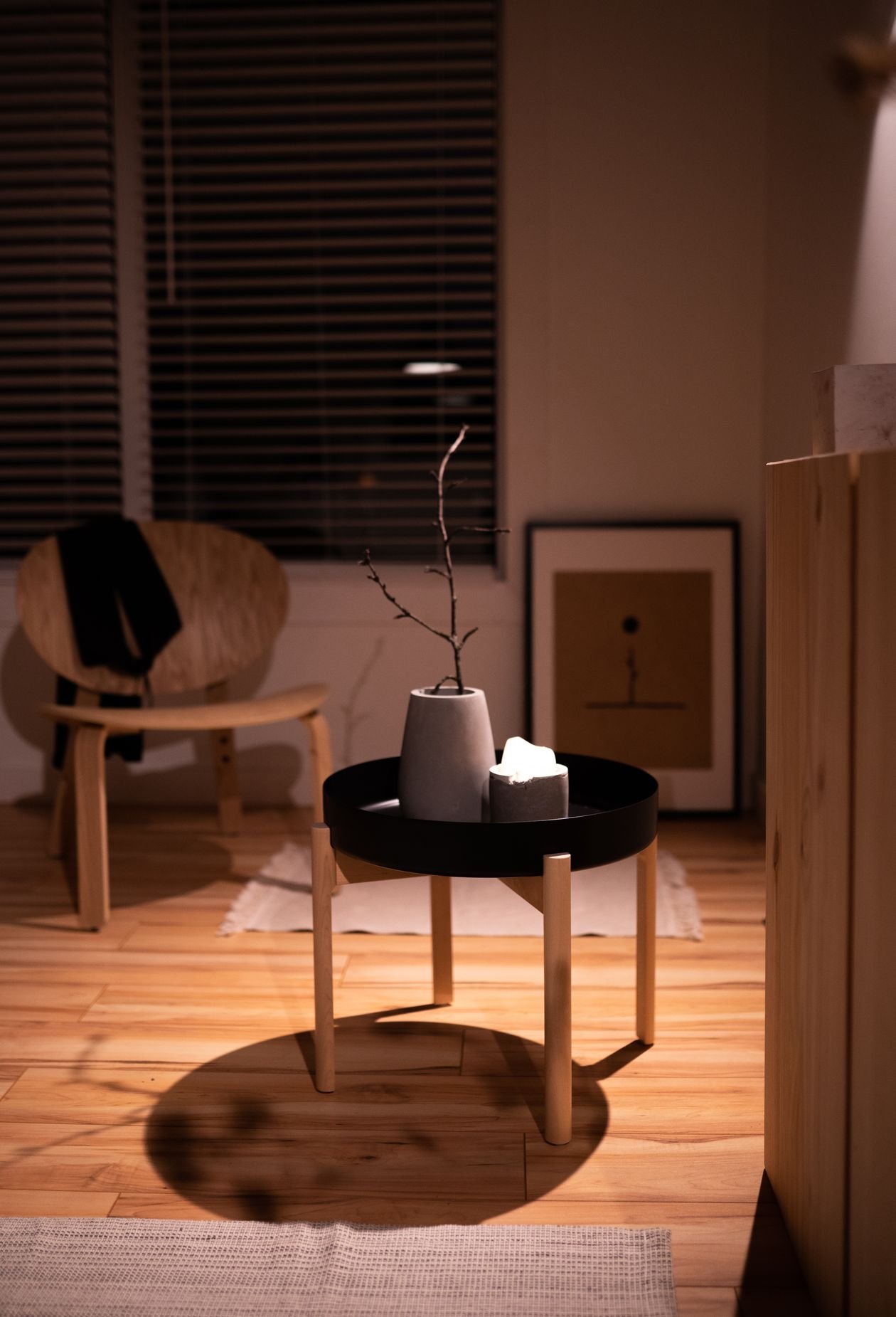
I used to light my living room with one bright ceiling bulb, and every evening felt like an interrogation. Then I tried the Japandi way: a round paper lantern over the table, a small warm lamp in the corner, a candle after dinner. Same room — suddenly evenings felt like a slow exhale.
Layer low, warm light instead of one bright light from above. Paper lanterns scatter a soft glow over wood and linen, for very little money.
Mistake I made: I hung my first paper lantern too high, right against the ceiling, where it lit nothing but the ceiling. Lanterns need to hang low — roughly above eye level when you’re sitting. I lowered mine by one cord length and the room changed completely.
7. Try a Low Platform Bed With Rumpled Linen
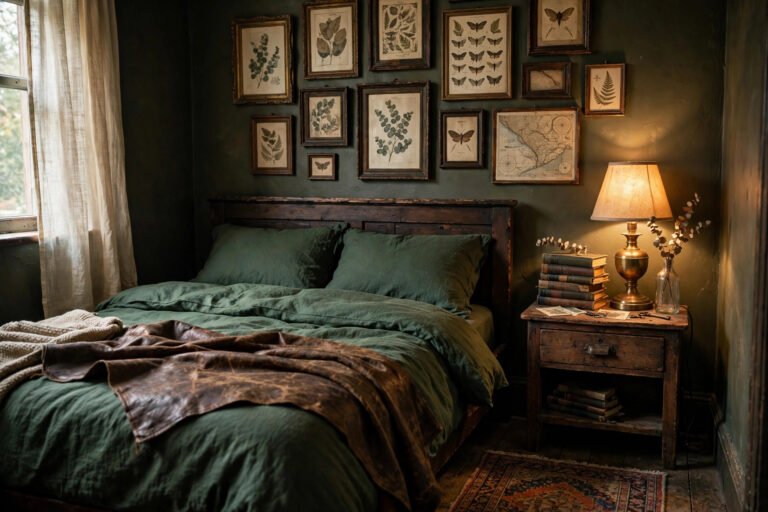
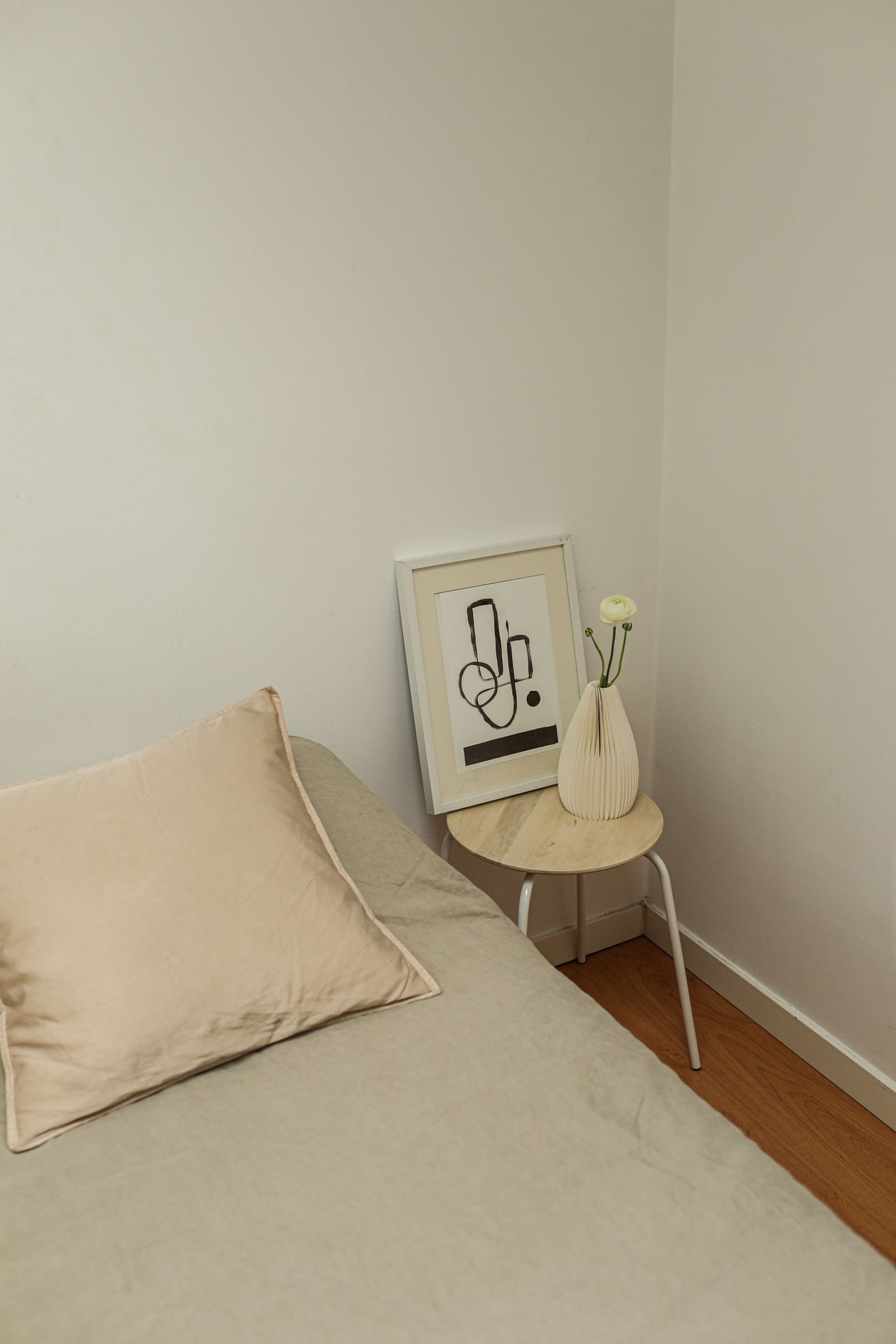
My bedroom used to have a tall, heavy headboard that dominated the whole room. When I switched to a low wooden platform bed with plain linen bedding — slightly rumpled, never ironed — the room felt like a retreat. Linen is the secret: it looks relaxed on purpose.
Keep the bedding to two colours, maximum: white or oat sheets, one throw in a warm neutral. A small wooden stool replaces a bulky nightstand.
Try this weekend: strip the bed back to plain bedding and one throw, and see how much calmer it feels.
More ideas for this low, calm setup: my cozy small bedroom decor ideas.
8. Style One Surface, Then Stop
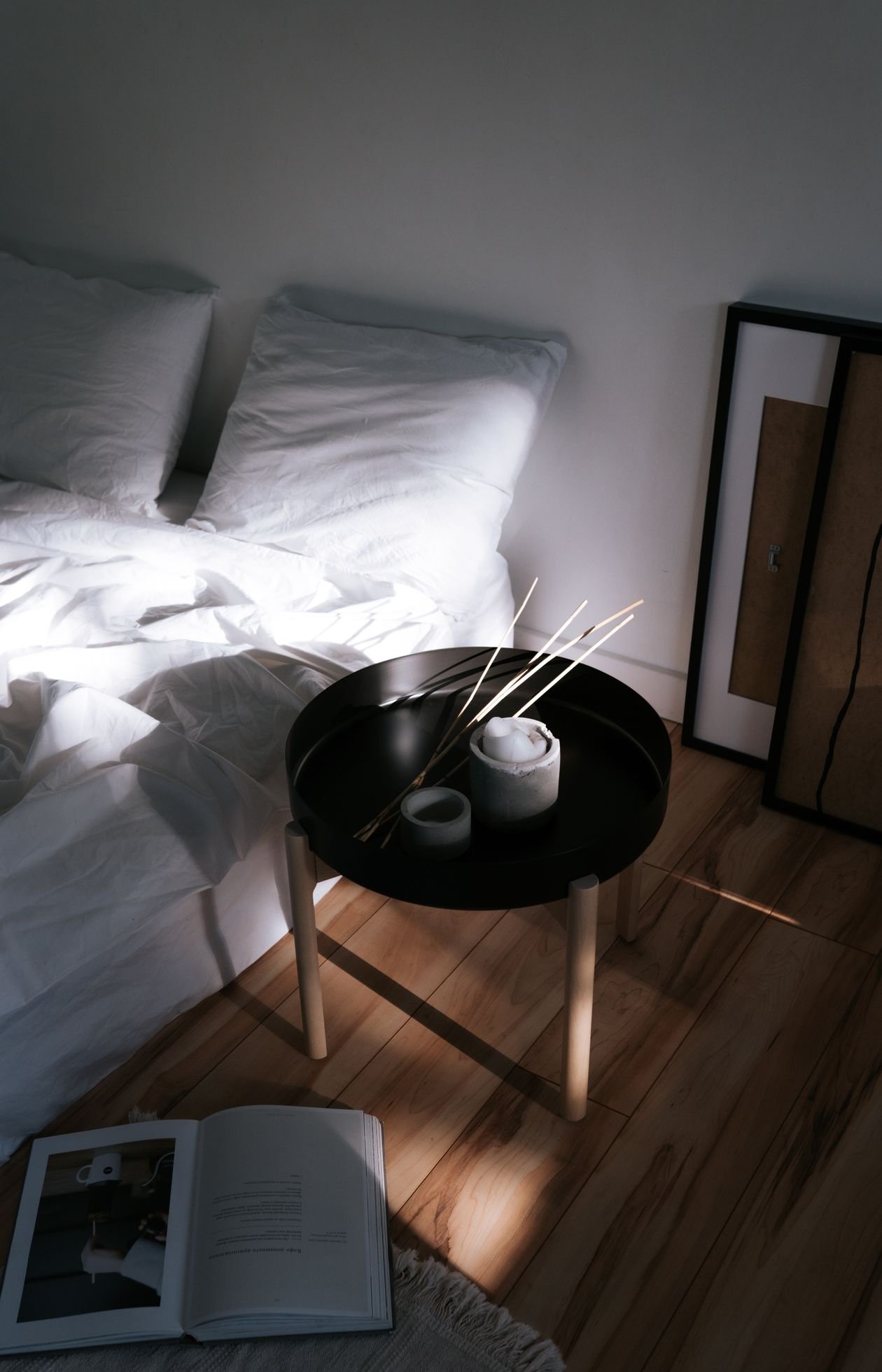
The tray table in these photos taught me my favourite Japandi rule: style one surface beautifully, leave the rest alone. A black tray table with a white vase, a few bamboo stems, and three smooth pebbles is a complete composition — it needs nothing else.
Three objects, one tray, done. When I stopped decorating every surface, the one styled surface got all the compliments.

9. Bring In One Sculptural Plant
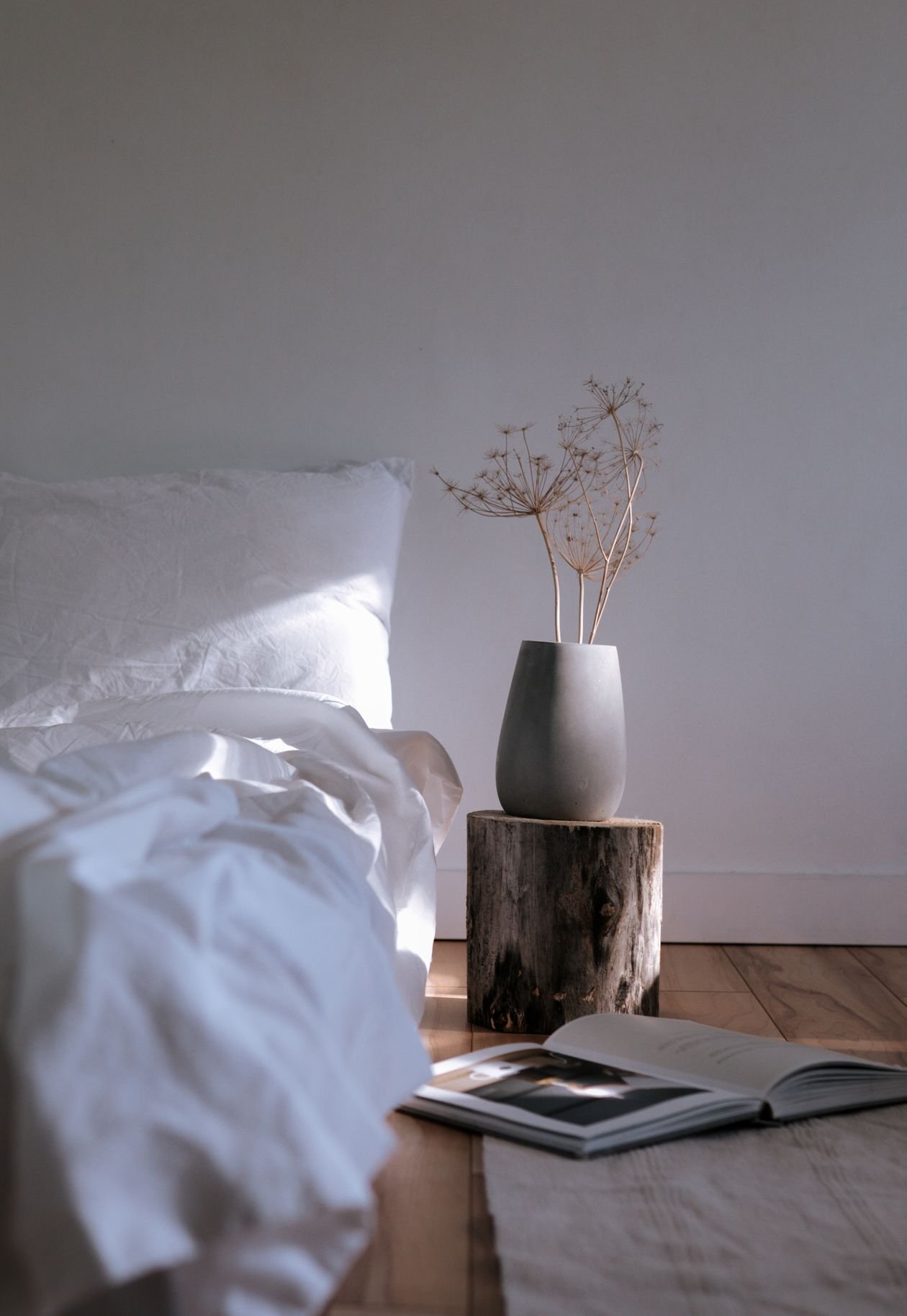
I used to dot little plants everywhere until my room looked like a garden centre sale. Japandi does plants differently: one plant, with a shape worth looking at. A small olive tree in a clay pot, a dried palm in a black vase, a single branch in a grey vase. One strong green shape is worth ten small pots.
10. Hang One Piece of Wabi-Sabi Art
Wabi-sabi is the Japanese love of imperfection, and it finally cured my fear of bare walls. Instead of a gallery wall of six matching prints, I hung one piece that looks handmade and slightly imperfect — a simple line drawing, crumpled-paper art, a rough ceramic tile. One piece, hung low, with breathing room around it.
One imperfect piece beats a perfect gallery wall in a calm room. It gives your eye one place to land, and the empty wall around it is part of the art. Hang it lower than you think — eye level when sitting — or lean the frame on the floor, which is renter-friendly too.
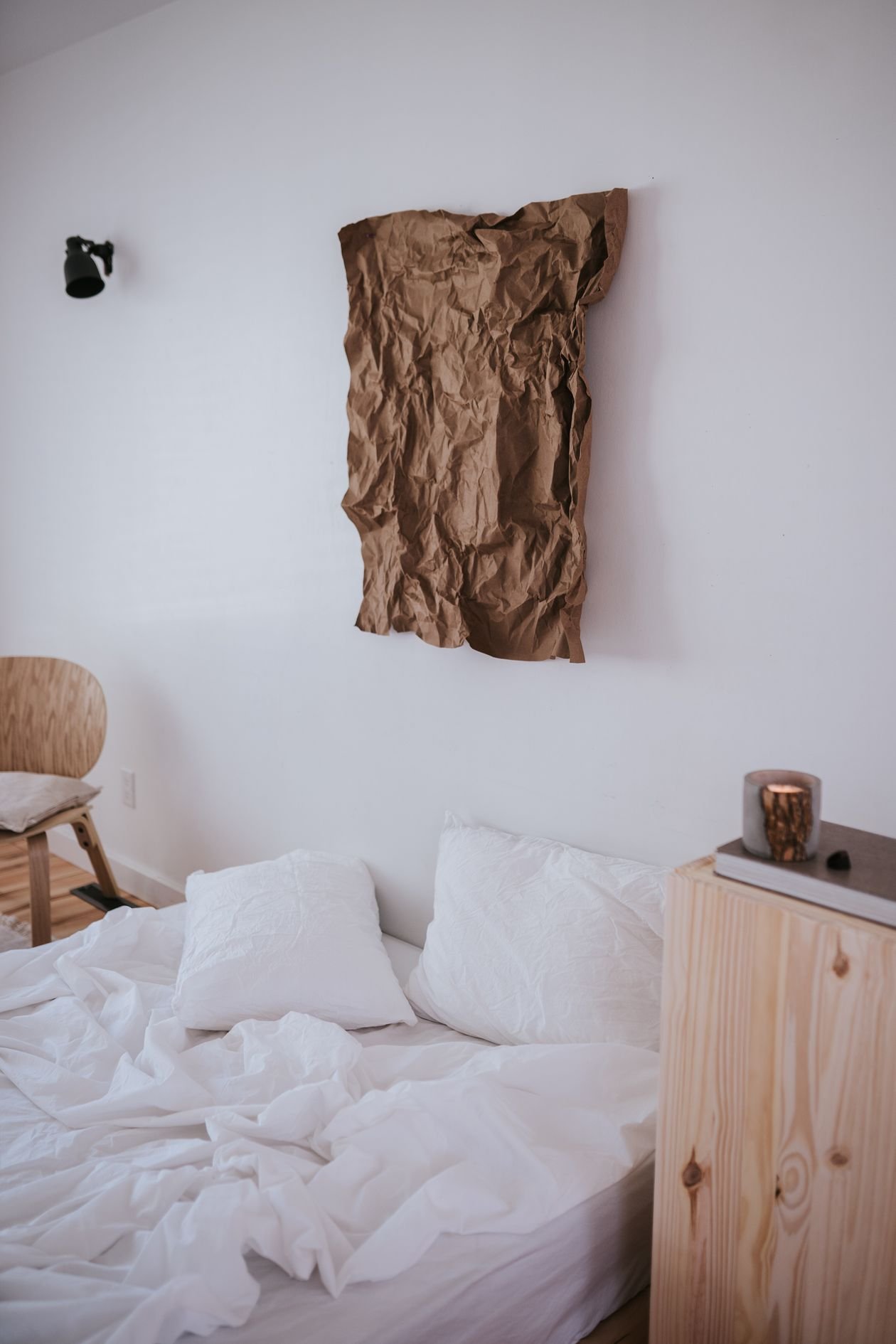
If you like making your own pieces, my DIY home decor ideas that look expensive on a budget has projects in this wabi-sabi spirit.
11. Layer Soft Textiles — But Only a Few
Scandinavian warmth keeps Japandi from feeling cold, and textiles are where that warmth lives. The trick is few but good: one wool rug, one linen throw, one cushion you actually lean on. Six cushions and three throws made my sofa look like a fabric storage shelf. With one of each, it finally looked inviting.
Three textiles per room is my limit now: a rug under the front legs, a throw over one arm, one cushion in linen, wool, or cotton — all inside your three-neutral palette.
Try this weekend: take every throw and cushion off your sofa, then put back only your favourite of each.
If your taste leans more layered, my boho bedroom ideas — collected, not cluttered shows how to add warmth without tipping back into clutter.
12. Hide the Clutter in Closed Storage
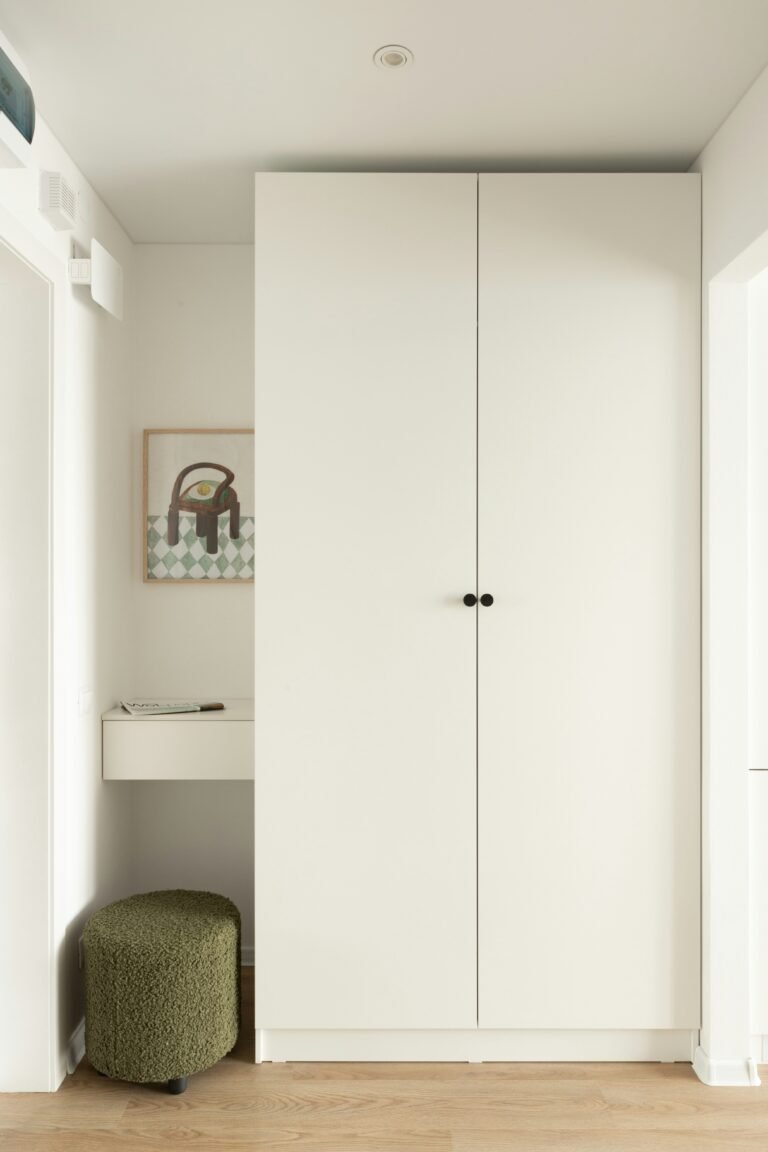
Here’s the honest truth about calm Japandi photos: the clutter is somewhere, just behind a closed door. I bought one pale pine cabinet with plain doors, and suddenly the chargers, board games, and ‘later’ pile all had a home.
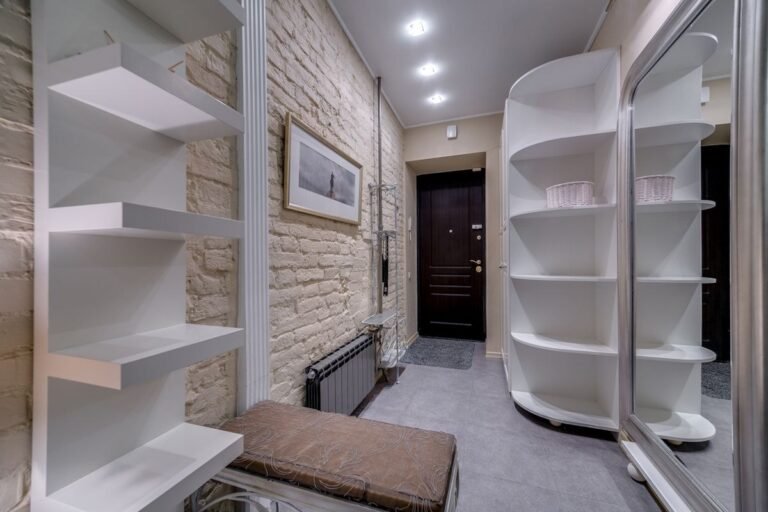
Closed storage is the cheat code for minimalism in a real, lived-in home. Keep one open shelf for pretty things and hide the rest — cords in a box, a basket by the door for keys and post.

Mistake I made: I styled beautiful open shelving perfectly, then slowly filled it with chargers and half-empty boxes because it was there. Open shelves demand weekly editing. I swapped one shelf for a closed cabinet and my ‘minimal’ room finally stayed minimal.
13. Make a Slow Corner for Mornings
Every calm home I admire has one spot for doing nothing properly: a chair by the window, a small table, a cushion where the morning light lands. Mine is a low wooden chair and a tiny round table by the window, where I drink my tea before the day starts. It takes up almost no space, but it changed my mornings.
You don’t need a reading nook — you need one chair, one light, and one reason to sit there. A book left open, a cup, a plant nearby.
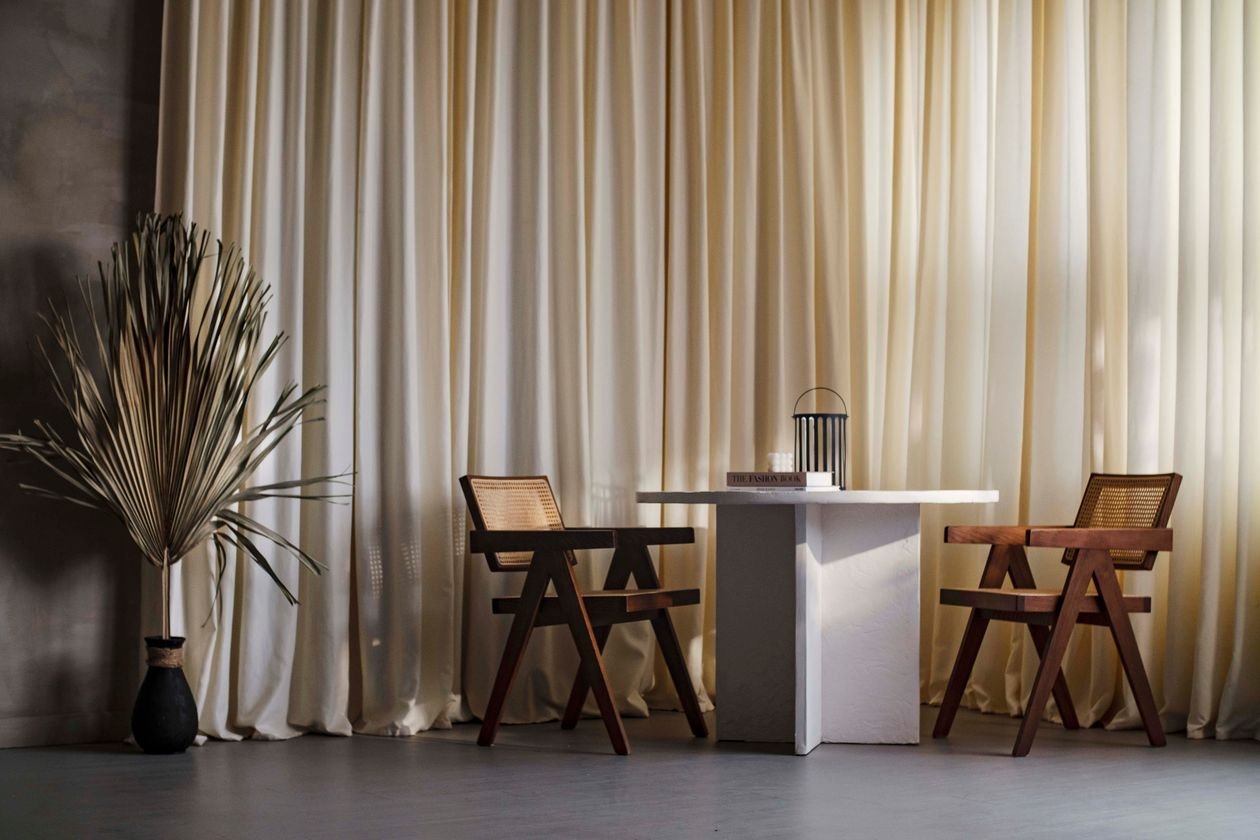
Try this weekend: put one chair where the morning light falls, add a cup and a book.
14. Warm Up the Floor With One Big Rug
Bare wood floors are beautiful, but a whole room of them can feel echoey and cold underfoot. The Japandi fix is one generous rug — big enough to sit under the front legs of your sofa and chairs — in wool, jute, or cotton. Small rugs made my room look like a collection of islands; one big rug pulls the seating area together.
Size rule I wish I’d known sooner: the rug should be at least as wide as your sofa. If you can only afford one rug, make it the big one — and let bare wood show around the edges.
More ideas for compact living areas: my small living room decor ideas.
15. Add One Dark Accent to Ground the Room
The last idea ties the other fourteen together: one dark thing — a black tray table, a charcoal vase, a dark frame, a walnut bench. Without it, a pale room can drift into ‘washed out.’ With it, every light colour has something to lean against, and the room feels finished.
One dark accent per room, used twice at most. A black tray and a black frame is plenty — three or four and you’re decorating a different style.
Try this weekend: move your darkest object to the centre of the room and watch the pale pieces look intentional.
FAQs About Japandi Decor
What is Japandi decor, exactly?
Japandi blends Japanese minimalism with Scandinavian warmth. From Japan: low furniture, natural materials, empty space, and the wabi-sabi love of imperfection. From Scandinavia: pale woods, soft textiles, and hygge — that cosy, lived-in warmth. The result is calm, warm minimalism for small spaces.
Is Japandi decor expensive to try?
Not if you start the way I did: with editing, not shopping. Removing things and rearranging what you own costs nothing and does most of the work. When you do buy, start with one paper lantern and one linen throw.
Can Japandi work in a small apartment?
Small spaces are where Japandi works best. Low furniture, pale colours, empty space, and one big rug instead of many small ones make a small room feel larger and calmer. It gets better the less space you have.
How is Japandi different from plain minimalism?
Plain minimalism can feel cold — lots of white, hard surfaces, empty for the sake of empty. Japandi adds warmth: natural wood, linen, wool, warm neutrals, and handmade, imperfect objects. A minimalist room says ‘look how little I own.’ A Japandi room says ‘everything here is warm and useful.’
What colours should I avoid in a Japandi room?
There’s no banned colour, but bright, saturated colours fight the calm. If you love colour, keep it to one muted accent — sage, dusty terracotta, or soft clay — in a textile or a vase. Keep the base warm and neutral so the accent can breathe.
Your Turn
So — which of these 15 ideas will you try first? For me, the low furniture and the one-dark-accent rule changed everything. What does your room need most — empty space, warm light, or the great clear-out? Tell me in the comments — I read every one.
Written by Irtza — I write cozy, budget-friendly home decor ideas for small spaces. Real homes, renter-friendly tricks, and the honest mistakes I made along the way.