How to Hang Pictures Without Nails in a Rental (By Weight)
The first picture I ever hung in my rental fell off the wall at 2 in the morning. A small framed print, held up by a strip I had stuck on in ten seconds flat — and it landed face-down with a crack across the glass. I lay there thinking: my landlord is going to kill me — and why did nobody tell me weight matters?
That is the whole secret: hanging pictures without nails is not about one magic product. It is about matching the method to the weight. A strip that holds a postcard will not hold a framed poster. Once I started weighing my frames first — a kitchen scale, ten seconds — nothing has fallen since. Here is exactly what worked for me, sorted by weight, so you can skip the 2am crash.
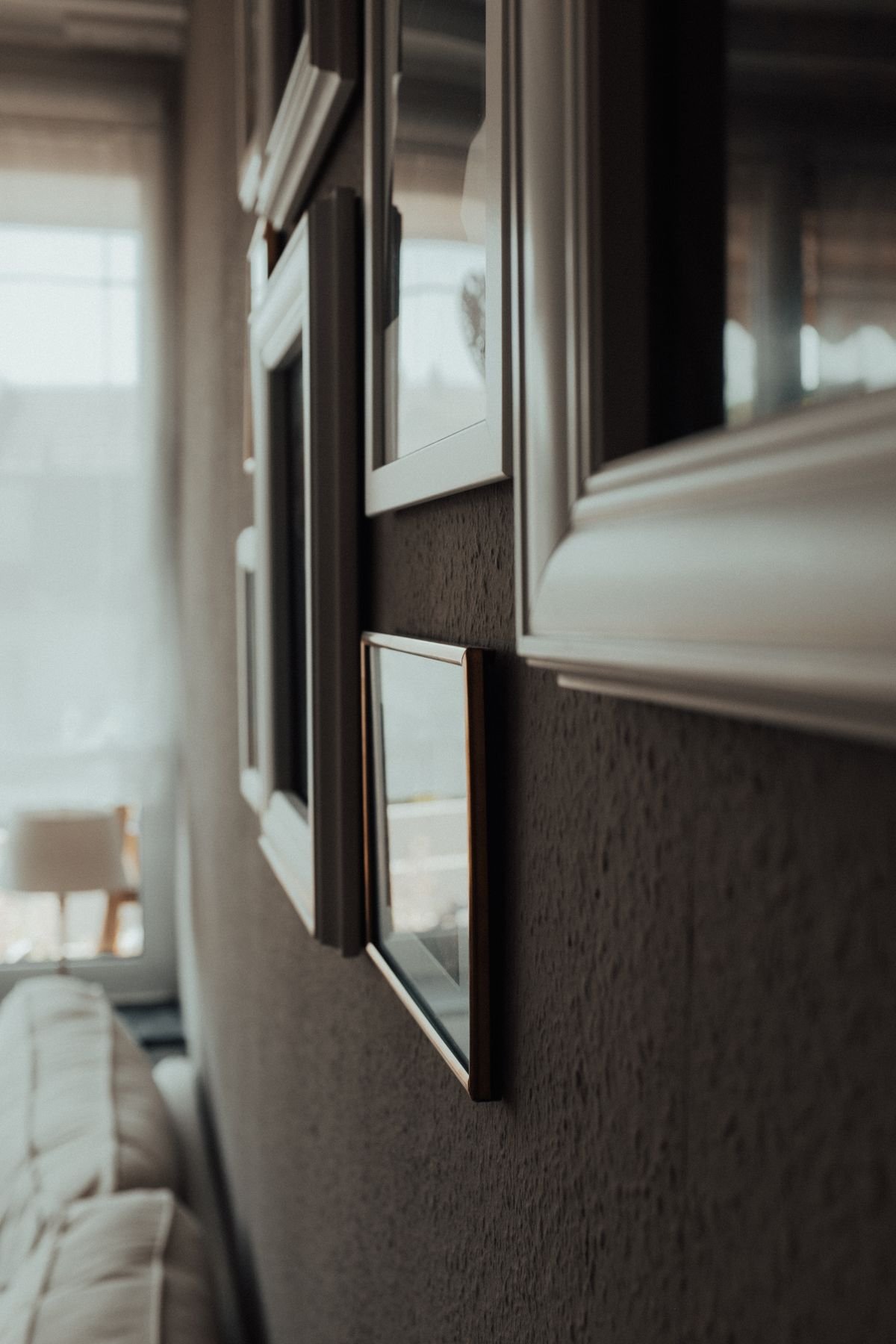
Start Here: Weigh Your Frame Before You Hang Anything
The one rule that changed everything for me: weigh first, stick second. Every adhesive product has a weight limit printed on the packet, and most hanging failures happen because we guess. I keep a kitchen scale by the door, and every frame gets weighed before it goes near a wall.
Here is the quick version of what you will learn below:
- Under 1 lb: adhesive strips, mounting putty, washi tape.
- 1–5 lb: adhesive hooks, paired strips, magnetic mounts.
- 5–20 lb: picture ledges, leaning, tension-rod systems — no adhesive should carry these alone.
- Over 20 lb: do not hang it — lean it on the floor instead.
Clean the wall first. I wipe the spot with a damp cloth, let it dry, and only then stick anything on — dust and cooking grease are the quiet killers of adhesive strips.
Tip: Press and hold every strip for 30 seconds, then wait an hour before hanging the frame. The adhesive needs time to bond.
Light Frames (Under 1 lb): The Easy Wins
This is where rental decorating starts. Small prints, postcards, lightweight frames with plastic instead of glass — all under a pound, and the easiest things you will ever hang.
1. Adhesive Picture-Hanging Strips
These classic Velcro-style strips are my default for anything light. One pair on the frame, one pair on the wall, press together, done. I use the small size under a pound, and always two pairs per frame — one at each top corner — because a single pair lets the frame tilt.

Try this weekend: Weigh your three lightest frames, stick them up with two pairs of small strips each, and live with them for a week before touching anything heavier.
2. Mounting Putty for Postcards and Tiny Prints
Mounting putty — the soft, reusable stuff — is perfect for things with no frame at all: postcards, small prints, kids’ drawings. I roll a pea-sized ball, press it into each corner, and push the paper flat against the wall. It holds for months and peels off clean.
Two honest warnings. First, putty and fresh paint do not get along — on a wall painted in the last few weeks, putty can lift the paint when you remove it. Second, in a warm room putty softens, so keep it away from sunny walls and radiators.
Mistake I made: I once used putty above a radiator. By evening the print had slid down six inches and left a greasy smear. Putty hates heat — keep it on cool, shaded walls only.
3. Washi Tape and Clip Strings for a Casual Look
If your style is relaxed rather than formal, washi tape is your best friend. A strip of patterned tape across the top corners of a print holds it up and becomes part of the decoration — perfect for rotating prints, with no marks left behind.
For a dressier version, run a length of twine between two small adhesive hooks and clip prints to it with wooden pegs. It looks like a little gallery line, and changing pictures takes seconds. If you rent with roommates, everyone gets a few pegs.

Medium Frames (1–5 lb): Where Most Real Frames Live
Most framed pictures with real glass weigh between one and five pounds. This is the weight band that matters most — and where most people get into trouble, because they treat a medium frame like a light one.
4. Adhesive Hooks (The Workhorse)
Adhesive hooks are the single most useful rental product I own. The frame’s wire or sawtooth hanger drops onto the hook, and the adhesive pad spreads the load across the wall. I use medium for frames up to 3 lb and large up to 5 lb — always checking the weight on the packet.
The key detail is placement. Hooks hold best when the weight pulls straight down, so the hook must sit directly above the frame’s hanging point. And never hang a frame wider than your hand from a single hook — two hooks, spaced apart, stop the slow sideways creep that ends with a crooked frame.
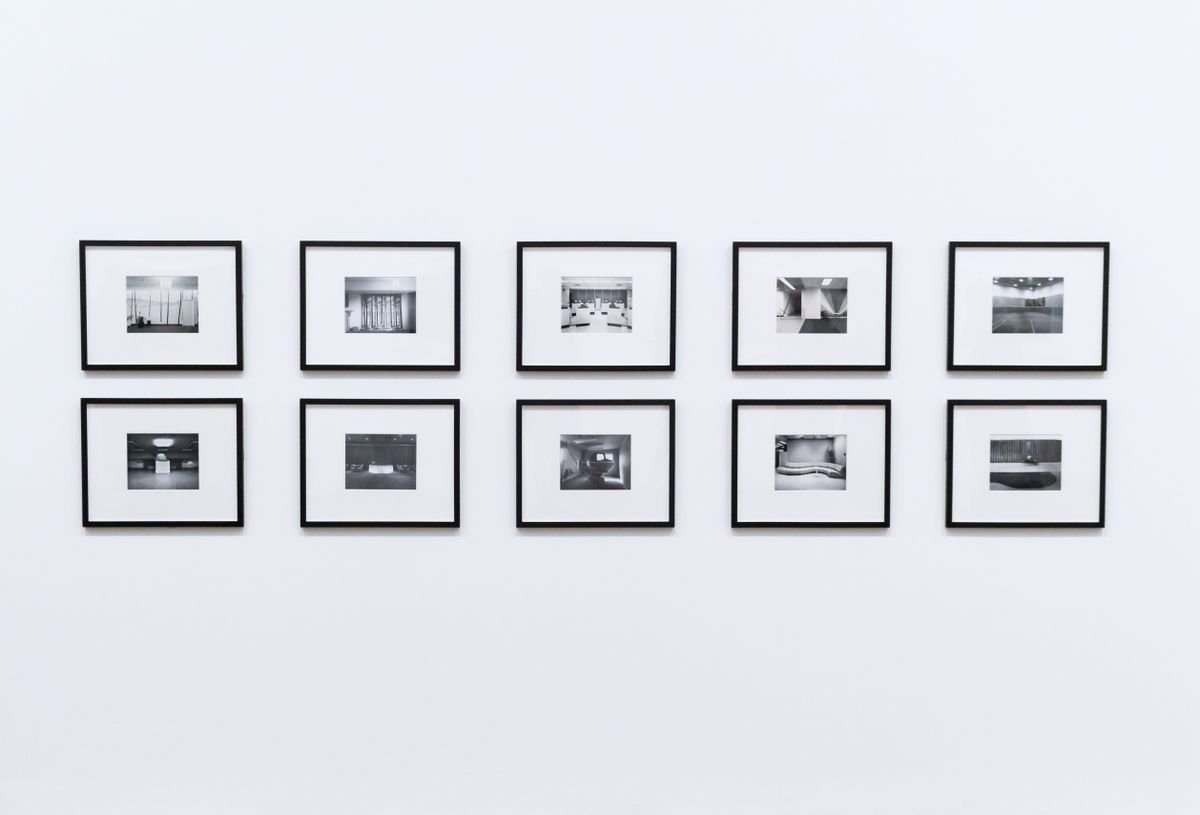
5. Paired Strips for Heavier Medium Frames
For frames between 3 and 5 lb, I go back to strips — the large size, and four pairs instead of two: two across the top, two across the bottom. The bottom pairs stop the frame tipping forward and peeling the top strips away.
Tip: If your wall is textured — orange-peel, rough plaster, brick-patterned wallpaper — strips and hooks will struggle, because the adhesive needs a smooth surface to grip. On textured walls, skip to the ledge and leaning methods below.
Try this weekend: Pick your heaviest medium frame, weigh it, and hang it with four pairs of large strips. Check it after 24 hours — if it has not moved, your method works.
6. Magnetic Mounts for Metal Frames and Thin Art
This one surprised me. Small magnetic mounts — a metal plate stuck to the wall with adhesive, plus a magnet on the frame — are brilliant for thin metal frames, acrylic frames, and unframed prints on magnetic boards. They hold a couple of pounds easily, and taking the picture down takes one second.
Try this weekend: Stick one magnetic mount plate behind your smallest metal frame and swap the art in and out a few times — you will feel how easy seasonal swaps can be.
I use them in the kitchen and hallway, where I swap prints with the seasons — the wall plate stays put, only the art changes. One caution: magnets and very old, brittle photos do not mix well in my experience, so I keep my oldest prints on strips instead.
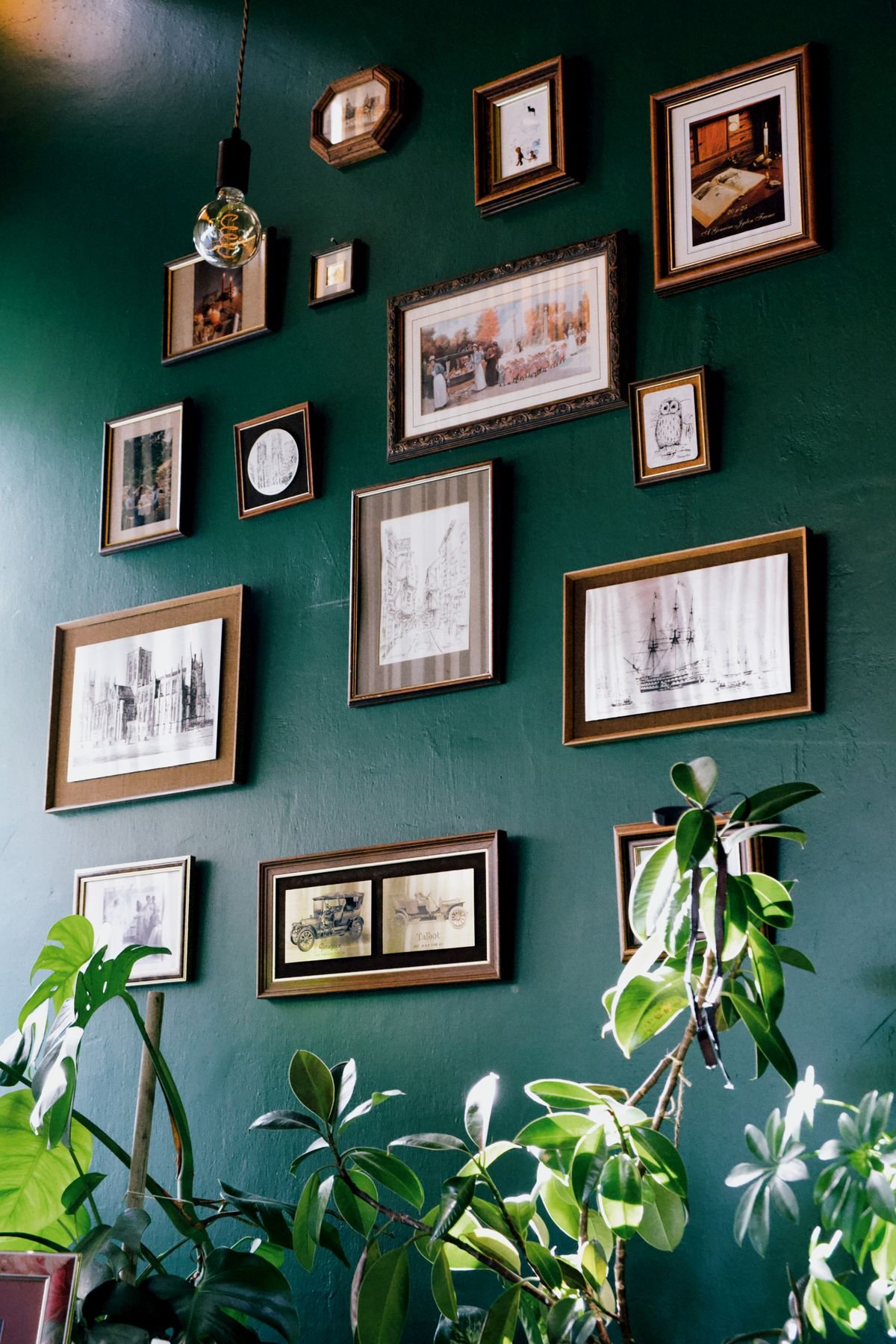

Heavy Frames (5–20 lb): Stop Sticking, Start Supporting
This is the part most rental guides skip, and it is the most important one. No adhesive strip should carry a heavy frame on its own. A big framed poster with glass, a chunky wooden frame, a large canvas — these weigh 5 to 20 lb, and gravity always wins eventually. The answer is not stronger glue. The answer is to stop hanging them and start supporting them instead.
7. Picture Ledges (My Favourite Heavy-Frame Trick)
A picture ledge is a narrow shelf with a little lip, and it changed my whole approach. Frames simply stand on it, leaning against the wall, and the ledge carries all the weight. You can layer three or four frames and swap them whenever you like — and nothing is stuck to the wall at all.
Yes, the ledge itself needs fixing to the wall — but a short, light ledge can go up with two large adhesive hooks or four large strips. Mine has held five frames for months. Start short and light, and build up from there.
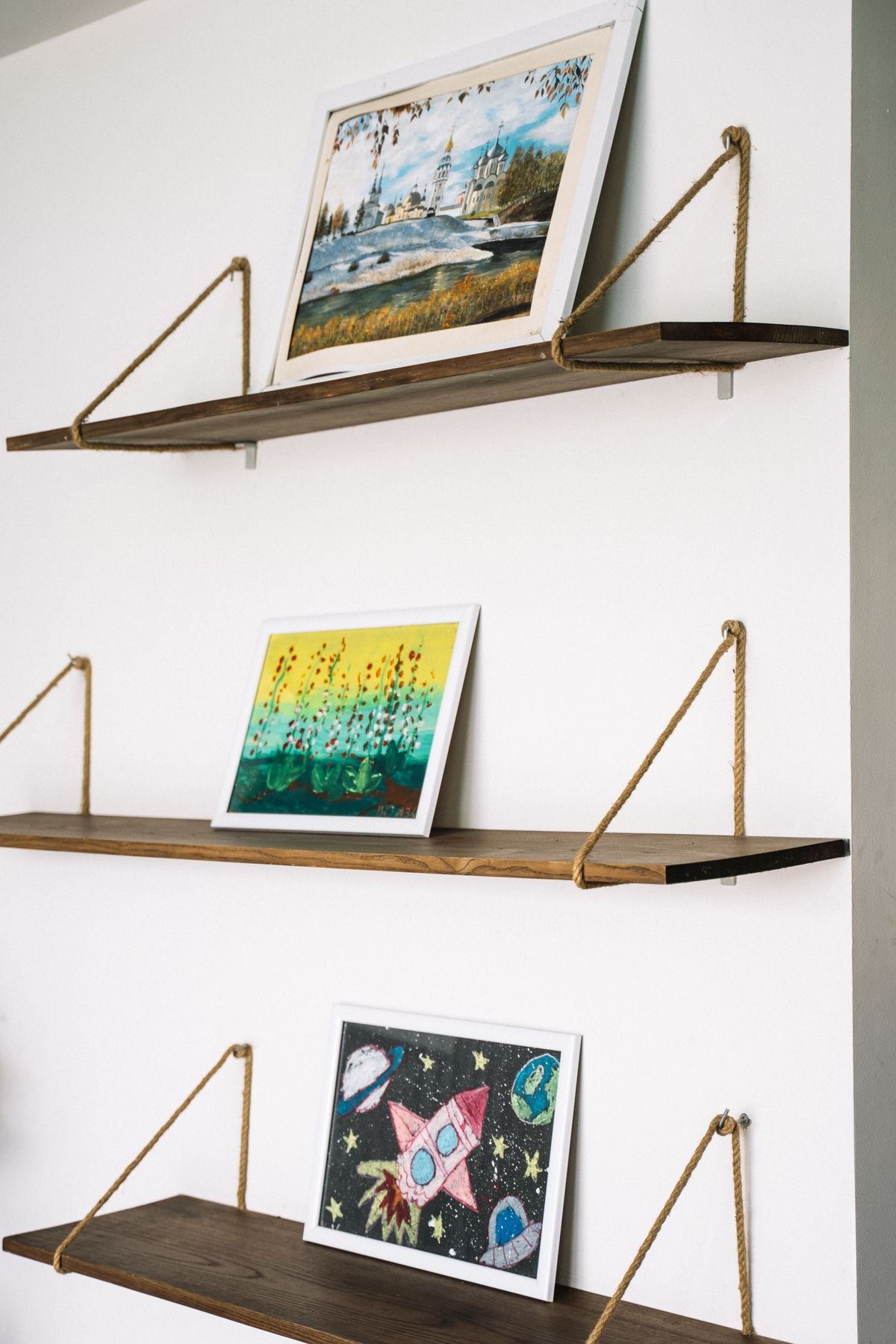
Try this weekend: Put your heaviest frame on a ledge instead of on the wall. It takes five minutes — and you will wonder why you ever trusted a strip with it.
8. Lean Big Frames on the Floor or Furniture
The simplest heavy-frame solution is also the most overlooked: do not hang it at all. A large frame leaning on a sideboard, a dresser, or the floor looks intentional and expensive — like a stylist did it on purpose. Mine leans behind my sofa, and guests assume it was professionally placed.
The rules are simple: the bottom edge needs a non-slip surface (putty underneath works), the lean angle should be slight, and keep it away from walkways.
Mistake I made: I leaned a heavy mirror against the wall on a polished wooden floor with nothing underneath it. It slid slowly forward for a week until one morning I found it face-down. A strip of putty or a rubber pad under the bottom edge stops the slide completely.
9. Tension Rods and Clip Systems for Big Displays
For a whole wall of prints — a photo wall, postcards, kids’ artwork — a tension rod is my favourite damage-free tool. It wedges between two walls in a hallway or alcove with no fixings at all, and you clip prints to it with rings or pegs.
The same idea works with a clip rail: a slim rail held up by two adhesive hooks, with clips hanging from it. The rail spreads the load across two points, so the whole display can weigh several pounds while each hook carries half. It is the wall I get complimented on most. Fill it with art you made yourself — my DIY wall art ideas are a good start.

What NOT to Hang in a Rental
Some things simply do not belong on a rental wall. Here is my honest list:
- Anything over 20 lb on adhesive alone. A huge mirror or solid-wood frame needs real fixings — which means a landlord’s permission, or a different spot.
- Frames with real glass over a bed, sofa, or crib. Glass above where you sleep is a risk I will not take — use acrylic or plastic glazing instead, or lean it elsewhere.
- Anything on a freshly painted wall. Paint needs about a month to cure — strips on fresh paint will either fail or take the paint off.
- Wet-room walls. Bathroom steam weakens adhesive fast — use a ledge or lean frames on a shelf instead. See my small bathroom decor ideas for renters for what survives the steam.
Mistake I made: I hung a framed poster in the bathroom because it looked perfect above the sink. Two weeks of hot showers later, the strips gave up and the frame crashed into the sink. Bathrooms eat adhesive — I only lean things there now.
The Removal Checklist (So You Get Your Deposit Back)
Hanging is only half the job — removing everything cleanly is what gets your deposit back. Here is my routine:
- Pull strips slowly, straight down along the wall — never yank them outward. The slow stretch releases the adhesive without paint damage.
- Use a hairdryer on low for stubborn putty — ten seconds of warm air and it rolls off cleanly.
- Wipe every spot with a damp cloth after removal, and check the wall in daylight — it shows marks lamplight hides.
- Photograph your walls on moving day. I take a quick photo of every wall when I move in and when I move out — it takes two minutes and has saved me from one unfair deduction already.
Try this weekend: Take one old frame down using the slow-pull method and check the wall in daylight. If it is clean, your system works — and you can hang the next one with confidence.
Quick Answers: Hanging Pictures Without Nails
How much weight can adhesive strips hold?
Check the packet — small strips hold around 1 lb per pair, large ones up to 7 lb per pair in ideal conditions. I always use at least two pairs and treat the rating as a maximum, not a target.
Will adhesive strips damage rental walls?
Not if you use them correctly: clean the wall first, do not overload them, and pull slowly straight down to remove. Avoid textured walls and fresh paint.
What is the safest way to hang a heavy picture in a rental?
Do not hang it — support it. A picture ledge, or leaning the frame on furniture, carries the weight without stressing the wall. For more rental-friendly ideas, see my small living room decor ideas.
Can I hang pictures in a bathroom without nails?
Yes, but carefully. Steam weakens adhesive, so use a ledge or lean frames on a shelf instead. Acrylic glazing beats glass where things get steamy.
Do adhesive hooks work on all walls?
No — they need a smooth, clean, dry surface. They fail on textured plaster, brick, and rough wallpaper, so use ledges, leaning frames, or tension rods there instead.
Your Turn
So, which weight band are most of your frames in — the easy light ones, or the heavy ones you have avoided? Which trick will you try first: four-pair strips, a ledge, or leaning that big frame behind the sofa?
Tell me in the comments — I read every one.
Written by Irtza — I write cozy, budget-friendly home decor ideas for small spaces. Real homes, renter-friendly tricks, and the honest mistakes I made along the way.



One Comment