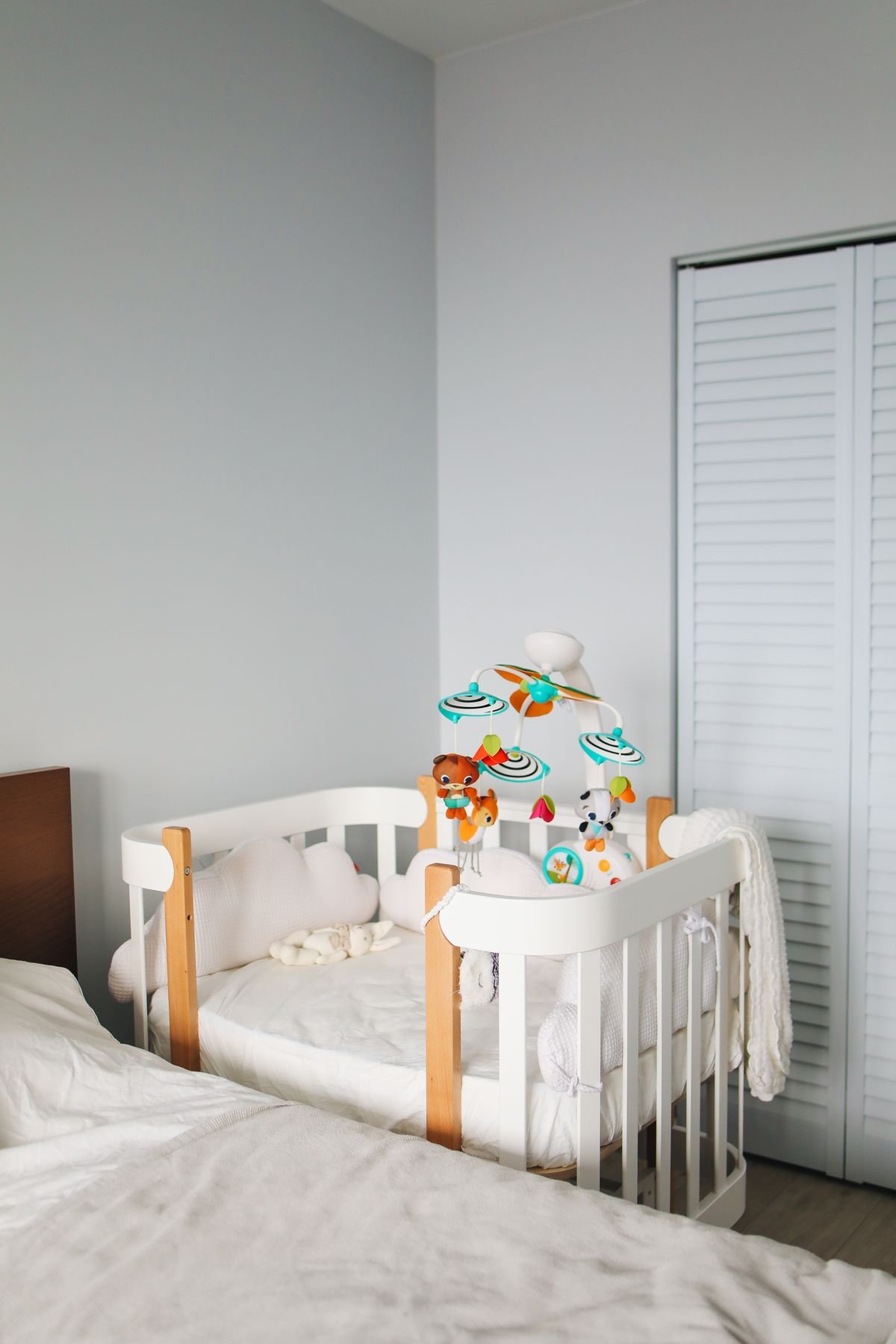
Nursery in a Bedroom Corner: 13 Ideas When There’s No Spare Room
When I first heard a friend say they were setting up a nursery, I pictured a whole room. Then they showed me their flat, and I understood the problem: there is no spare room. There is one bedroom, and the baby is going to live in the corner of it, next to the adult bed. And honestly? Once I saw it done well, I thought it looked better than a separate nursery — everything within arm’s reach at 3am, no hallway to stumble down in the dark.
So if your baby’s “nursery” is going to be one corner of your bedroom, this is for you. No spare room, no renovation — just thirteen ideas that carve a calm, beautiful little nursery out of a corner you already have.
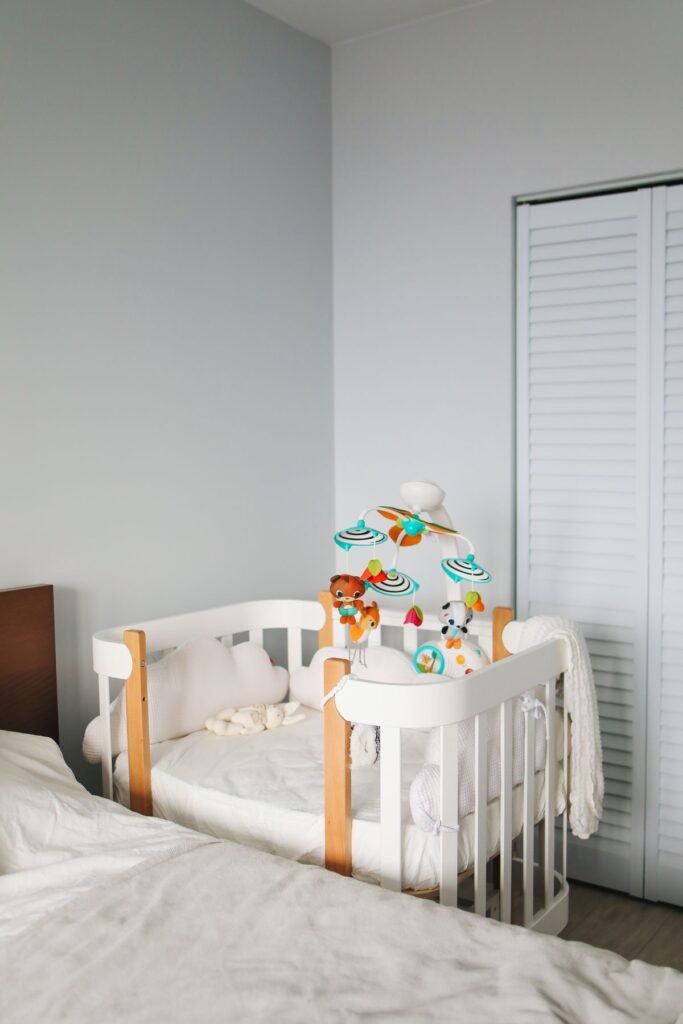
First, Measure Your Corner (It Takes Ten Minutes)
Before you buy a single thing, grab a tape measure. A standard crib needs roughly 130cm by 70cm of floor, and a mini crib about 95cm by 60cm — but the numbers on a website don’t tell you whether the crib will actually fit next to your bed, or whether you’ll still open the wardrobe door.
- Measure the corner twice: once for the crib, and once for the space you need to stand beside it and lift the baby out
- Check the walkway: you need at least 60cm of clear floor between the crib and the bed, or night feeds become an obstacle course
- Mark it out with tape on the floor before you order anything
If you want the bigger picture on small bedrooms first, my cozy small bedroom decor ideas show how to keep a shared bedroom feeling calm and grown-up, even with a baby moving in.
1. Start With a Mini Crib (Not a Full-Size One)
This is the single best decision you can make for a bedroom corner. A mini crib does everything a full crib does for the first year or so, and takes up about a third less floor space. In a small bedroom, that saved space is the difference between a corner that works and one you keep tripping over.
Many mini cribs convert — mini crib to toddler bed to daybed — so you’re not buying furniture that only lasts a few months.
- Measure your corner first, then buy the crib that fits it — not the other way round
Try this weekend: tape out the crib footprint on your bedroom floor and live with it for two days. Walk around it, open the wardrobe, get into bed. If it works with tape, it will work with a real crib.
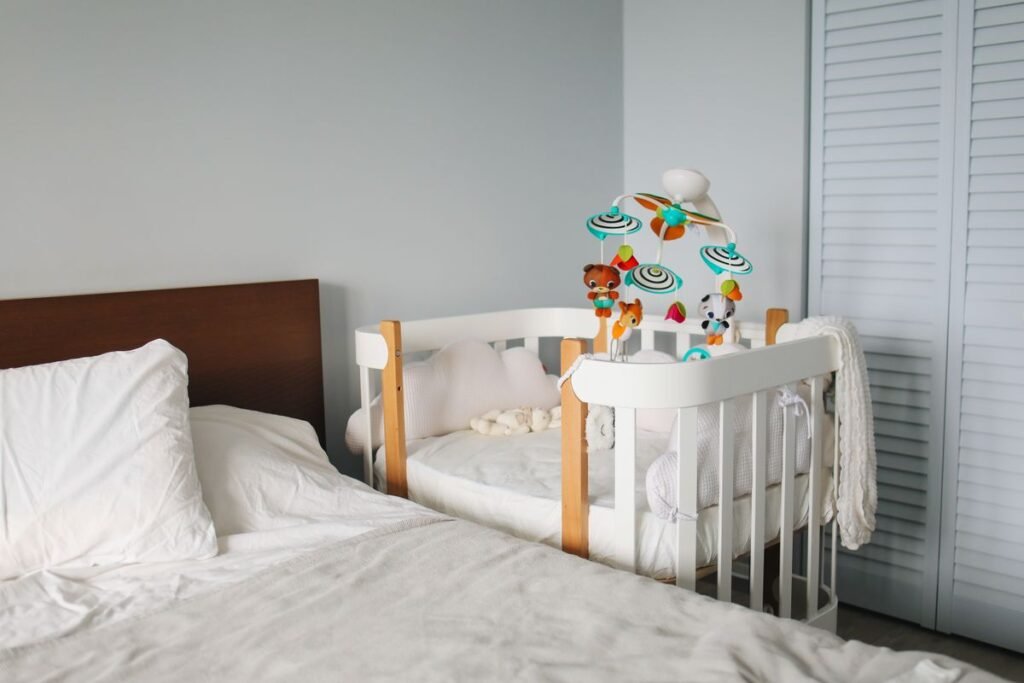
2. Push the Crib Against Your Bed (The Sidecar Trick)
The simplest nursery corner is no corner at all — it’s the space right beside your bed. Push the crib flush against the adult bed, with one side lowered or removed (following safe-sleep guidance for your crib model), and the baby is within arm’s reach all night.
This is the setup I recommend most for the first few months, because night feeds become a lean-over instead of a get-up. You don’t cross a dark room at 3am, and the baby settles faster because you’re right there.
- Leave a gap-free fit — no space for little arms or blankets to slip into
Mistake I made: I once helped a friend set up a crib across the room because it “looked tidier” there. They were up four times that first night, crossing a dark room each time, and by morning they had dragged the crib next to the bed anyway. Put the crib where your arm can reach it, not where it photographs best.
3. Define the Corner With a Rug
A rug is the fastest way to say “this corner is the nursery” without building a single wall. A soft, washable rug under and around the crib marks the baby’s zone, softens the floor for tummy time, and makes the corner feel intentional.
Choose a rug you can wash. Babies are messy, and a beautiful rug you can’t clean becomes a stressful rug fast. Low-pile, washable, and big enough to extend past the crib on two sides is the formula.
- Cream, sage, or soft grey keeps the corner calm and matches most bedroom colours

4. Paint (or Paper) Just One Corner Wall
You don’t need to repaint the bedroom — just one accent: the two walls that meet behind the crib. A soft sage, warm cream, or pale dusty blue on that corner makes the nursery zone feel like its own little room, and it’s a job you can finish in an afternoon.
If you’re renting, use removable peel-and-stick wallpaper on the same corner instead. It peels off cleanly, and the pattern does the same job as paint. My guide to decorating a small bedroom without painting has the renter-friendly versions of this trick.
- Two walls, one colour, done — don’t paint the whole room and lose the effect
5. A Changing Station on Top of a Dresser (Not a Separate Table)
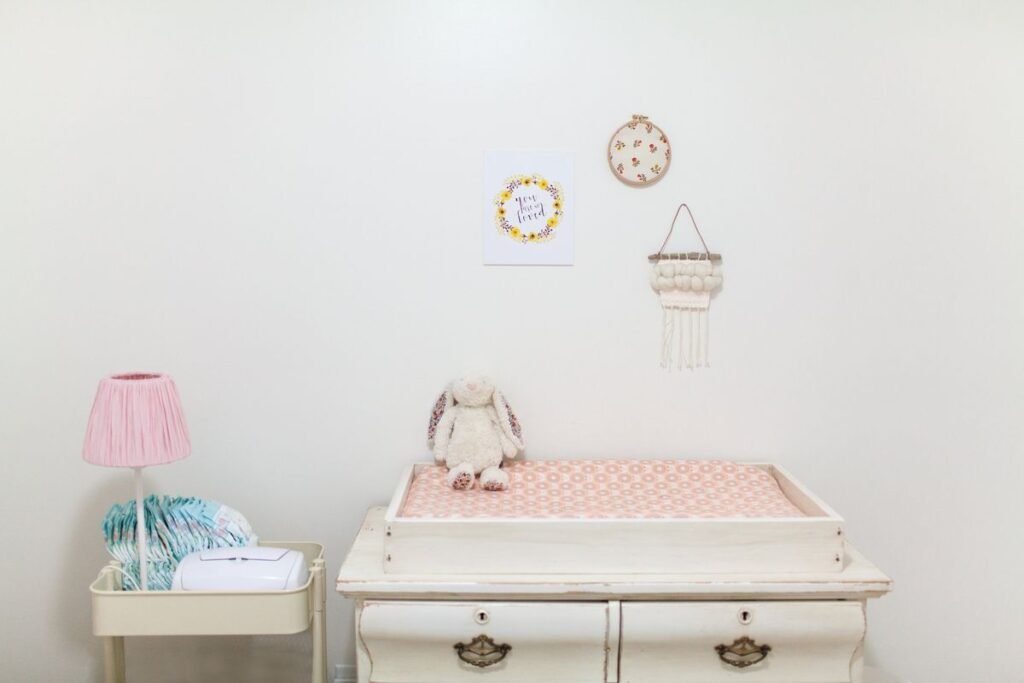
A full changing table is a luxury a bedroom corner cannot afford. A dresser with a changing tray on top is the same thing, but it holds clothes and does nappy changes — and keeps working as a dresser long after the nappies are gone.
This is the highest-value piece of furniture in a corner nursery. Nappies, wipes, and creams in the top drawer, the changing mat on top — everything you need in one place at 3am, in the dark, with one hand.
- A contoured changing pad with raised edges, strapped to the dresser top, is the safe way to do this
Try this weekend: clear the top drawer of your bedroom dresser and put all the baby-changing supplies in it. If it fits, the dresser can be the changing station, and you don’t need to buy one.
6. A Rolling Cart for the 3am Supplies
Even with a dresser changing station, there are nights when you don’t want to cross the room. A small three-tier rolling cart parked beside the bed holds nappies, wipes, a bottle, and a spare sleep suit, and it rolls wherever you need it.
I love the rolling cart because it moves with the phase. Beside the bed for night feeds now, beside the crib for playtime later. It costs very little, and it saves you from getting up more than you need to.
- A cart with a lip on each shelf stops bottles rolling off at 3am
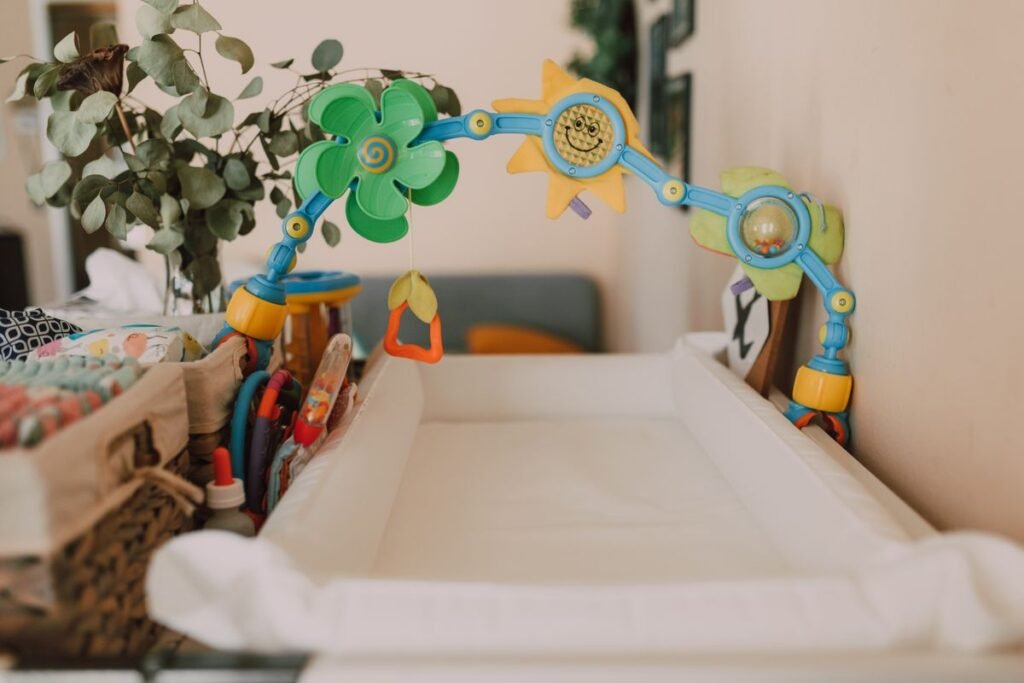
7. One Comfortable Chair (That Fits the Corner)
Every nursery corner needs a chair. Not a big glider that eats the room — a small, comfortable armchair or compact rocking chair that fits beside the crib. This is where you’ll feed, rock, and read at 2am, so it has to be genuinely comfortable, not just pretty.
Sit in it before you buy it, if you possibly can. A chair that looks good in a photo and hurts your back after ten minutes is the wrong chair. Look for good armrests, a seat low enough that your feet touch the floor, and fabric you can wipe clean.
- Drape a soft throw over the arm so it’s always there for night feeds

Mistake I made: I once told a friend any old chair would do, and they used a stiff dining chair for the first month. Their back was wrecked, and they ended up buying the proper chair anyway — a month late and twice as tired. Buy the comfortable chair first, not second.
Try this weekend: sit in the chair you’re planning to use, holding something baby-sized, for twenty minutes. If your arms or back complain, that chair is not the one.
8. Wall Shelves Above the Crib (Not a Bookcase)
Floor space is precious in a shared bedroom, so storage has to go up. Two floating shelves above the crib hold books, a few soft toys, and the pretty things — and use zero floor space. Just keep heavy items off them, and never hang anything heavy above where the baby sleeps.
Shelves also make the corner look finished. A bare wall above a crib looks temporary; two shelves with a few books and a soft toy look like a nursery that was always meant to be there.
- Three or four items per shelf is plenty — a crowded shelf over a crib feels heavy, a calm one feels restful
9. Storage Cubes That Disappear Under the Crib
Under the crib is the most underused space in a bedroom corner. Low storage cubes or flat baskets slide right under it and hold nappies, spare sheets, and outgrown clothes — all the things that otherwise pile up on the bedroom floor.
The trick is making the storage look like it belongs. Matching baskets in one colour — cream, sage, natural seagrass — turn under-crib storage into part of the decor. My small bedroom storage ideas when there’s no closet go deeper on storage that hides in plain sight.
- One basket per category: nappies, clothes, sheets. Labelling them is not overkill at 3am
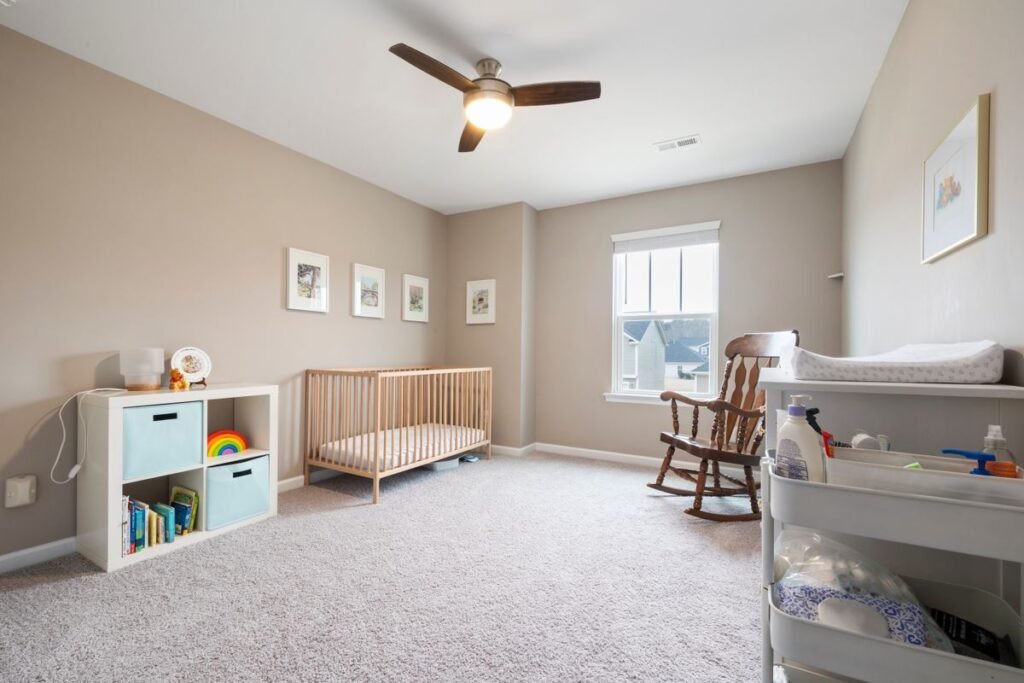
10. A Mobile (or Wall Art) That Babies Actually Look At
A mobile above the crib is the oldest nursery trick there is, and it works because babies love movement and contrast. A simple mobile with soft shapes, hung safely out of reach, gives the baby something to watch while they settle.
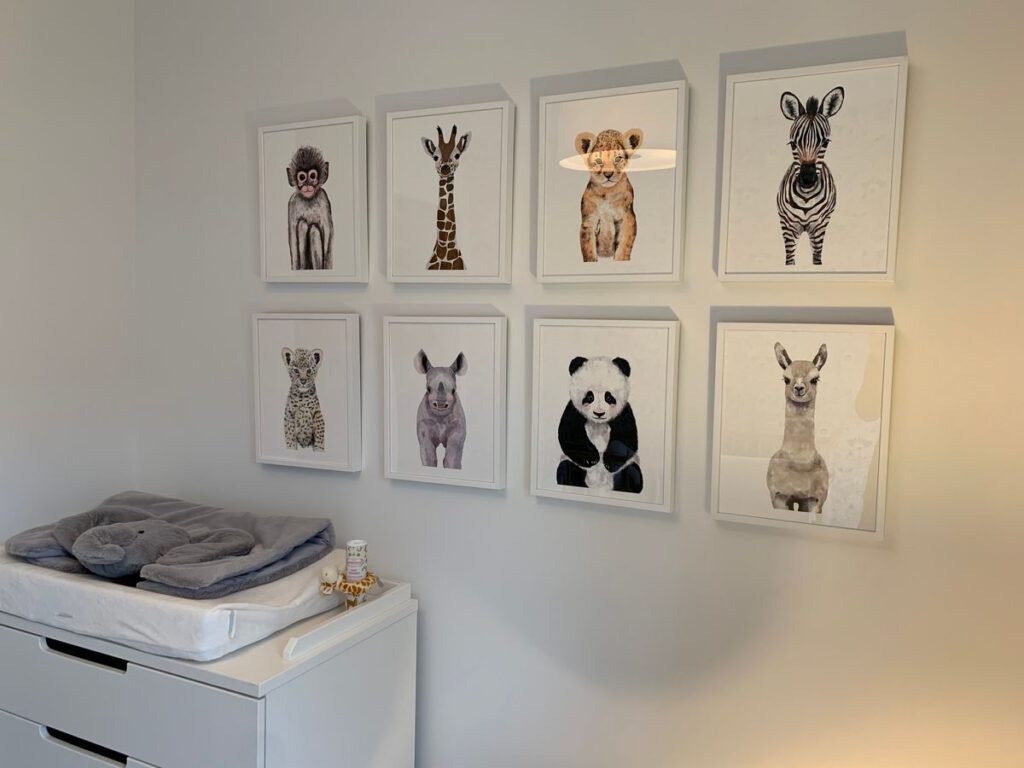
If a mobile isn’t your style, the wall above the crib is still your canvas. A framed print or a row of small animal prints turns a plain corner into a nursery corner in about ten minutes.
- High-contrast black-and-white shapes are what newborns see best; soft pastels come later
11. A Curtain or Room Divider (The “Wall” That Isn’t a Wall)
Some nights you want the baby’s corner to feel separate — not a real wall, just a little privacy for feeds, or a way to block light from the adult side of the room. A ceiling-mounted curtain, a folding screen, or a tall bookcase turned sideways can do it.
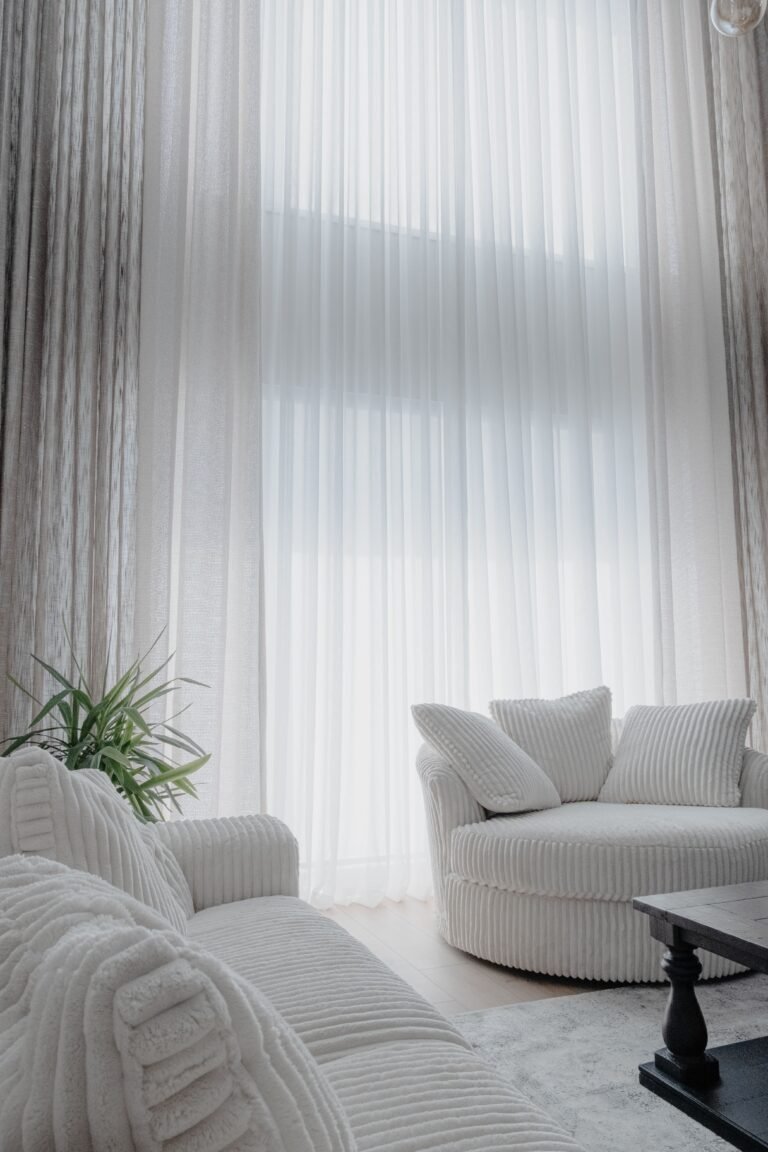
A sheer curtain is my favourite version of this, because it still lets light through while softening the boundary. Hang it from a ceiling track or a tension rod, and pull it closed for naps.
- Sheer or light cotton fabric keeps the corner bright; heavy fabric makes it feel like a cupboard
Try this weekend: hang a light curtain on a tension rod across the corner and see how different the room feels. It takes twenty minutes, and it comes down just as fast if you don’t like it.
12. A Bassinet for the First Few Months (Then the Crib)
If a full crib still feels like too much furniture for the corner, start smaller. A bassinet or bedside sleeper takes up barely more space than a laundry basket, and for the first three to four months it’s all the baby needs. Then the crib takes its place in the same corner.
This staged approach is the most honest one for small bedrooms. You don’t have to solve the whole nursery on day one — just the first three months, and the corner grows with the baby.
- Choose one with a washable mattress cover, because you will be washing it often
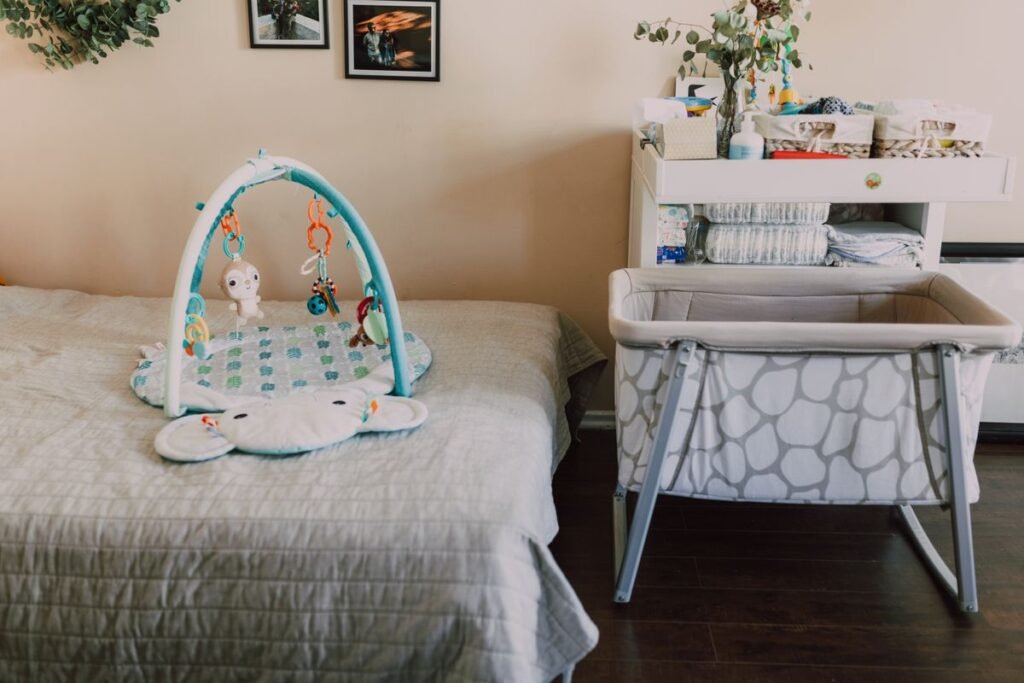
13. Keep the Adult Side of the Room Adult
This is the idea most people forget, and it’s the one that makes a shared bedroom work long-term. The baby gets the corner — and the rest of the room stays yours. A bedroom that still feels like an adult’s bedroom is a room you won’t resent at 3am.
The boundary matters more than the decor. A rug under the crib, a curtain across the corner, a different wall colour — these small markers say “baby lives here, adults live here.” My tiny nursery ideas for small spaces cover the separate-room version, but this corner version works on the same principle: one clear zone, calmly done.
- Don’t let baby things drift across the whole room — one basket by the door catches the daily drift
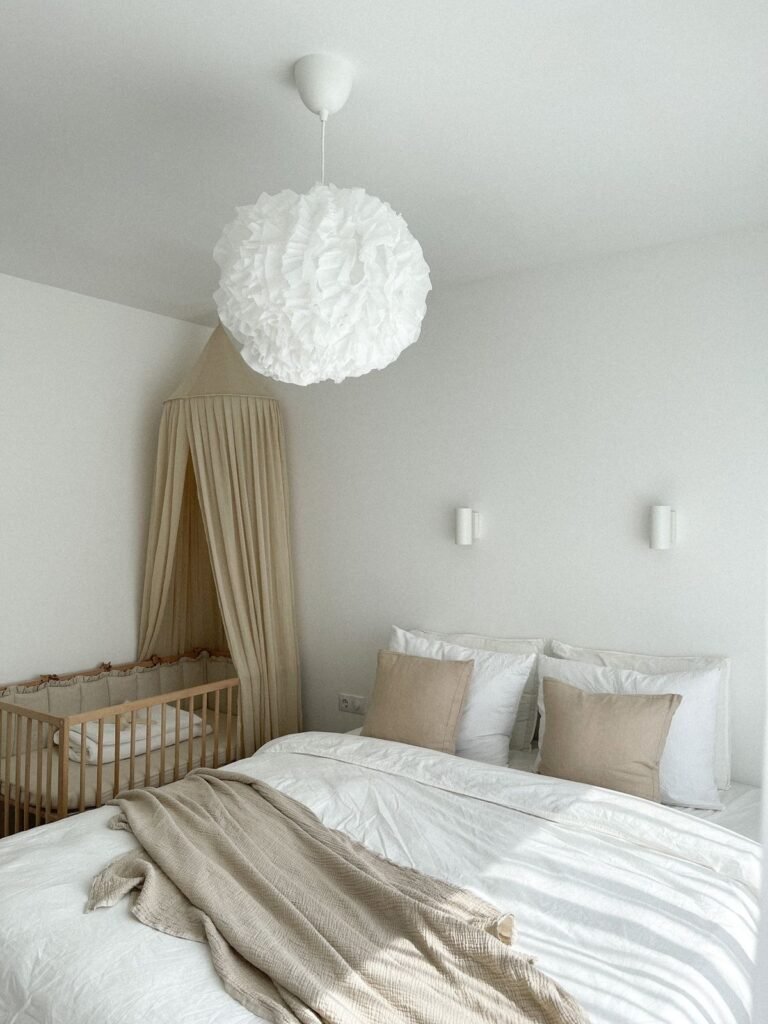
Mistake I made: I watched a friend let the baby’s things slowly take over the entire bedroom — the changing mat on the bed, the toys on the dresser, the bottles on every surface. Within a month the room felt like a nursery with a bed in it. The corner rule fixed it in one evening: baby things live in the corner, and the rest of the room stays calm.
Try this weekend: put a small basket by the bedroom door and spend five minutes each evening returning everything baby-related to the corner. It sounds tiny, and it changes how the whole room feels.
FAQs
Can a baby sleep in the same bedroom as the parents?
Yes — health guidance in many countries recommends the baby sleeps in the parents’ room for the first six to twelve months. A crib or bassinet in the corner is a normal, safe setup on a firm, flat mattress with no loose bedding or pillows.
How much space do I need for a nursery in a bedroom corner?
A mini crib needs roughly 95cm by 60cm of floor, plus about 60cm clear beside it so you can stand and lift the baby. A standard crib needs about 130cm by 70cm. Tape the footprint on the floor before you buy.
Is a mini crib safe, and how long will my baby use it?
A mini crib that meets current safety standards is safe, and most babies use one for the first year or so. When the baby can pull up or outgrows the mattress length, it’s time for a full crib or a toddler bed.
How do I keep a bedroom-corner nursery looking tidy?
Give everything a home: a rolling cart, baskets under the crib, shelves on the wall, and a basket by the door. Tidy the corner for five minutes each evening.
Do I need a separate changing table in a bedroom corner?
No — a dresser with a changing tray on top does the same job and holds the clothes too. Add a small rolling cart beside the bed for night changes, and you have the same setup in half the floor space.
Your Turn
Which corner are you working with — the one by the bed, the one by the window, or the awkward one behind the door? And which of these thirteen ideas are you trying first? Tell me in the comments — I’m betting it’s the mini crib and the rug. And if you’ve already built a nursery in a bedroom corner, share the one thing that made the biggest difference.
Written by Irtza — I write cozy, budget-friendly home decor ideas for small spaces. Real homes, renter-friendly tricks, and the honest mistakes I made along the way.