9 Best Indoor Plants for Small Apartments With Low Light (That Actually Look Good)
The first plant I ever bought for my apartment died in three weeks. It was a beautiful, leafy thing I had picked up because it looked good in the shop, and I put it in the darkest corner of my living room and wondered why it gave up on me. I watered it too much, then too little, and within a month it was a brown stick in a nice pot.
Here’s what I know now: I didn’t have a plant problem, I had a light problem. My apartment gets a little morning sun and then mostly soft, grey light — and the plants that thrive here are the ones that actually like that. So if your place is like mine, which plants are actually worth your money?
These are the nine I have tried myself, in my own small apartment, in genuinely low light. Every one of them survived, and every one of them still looks good.
First, What “Low Light” Really Means in a Small Apartment
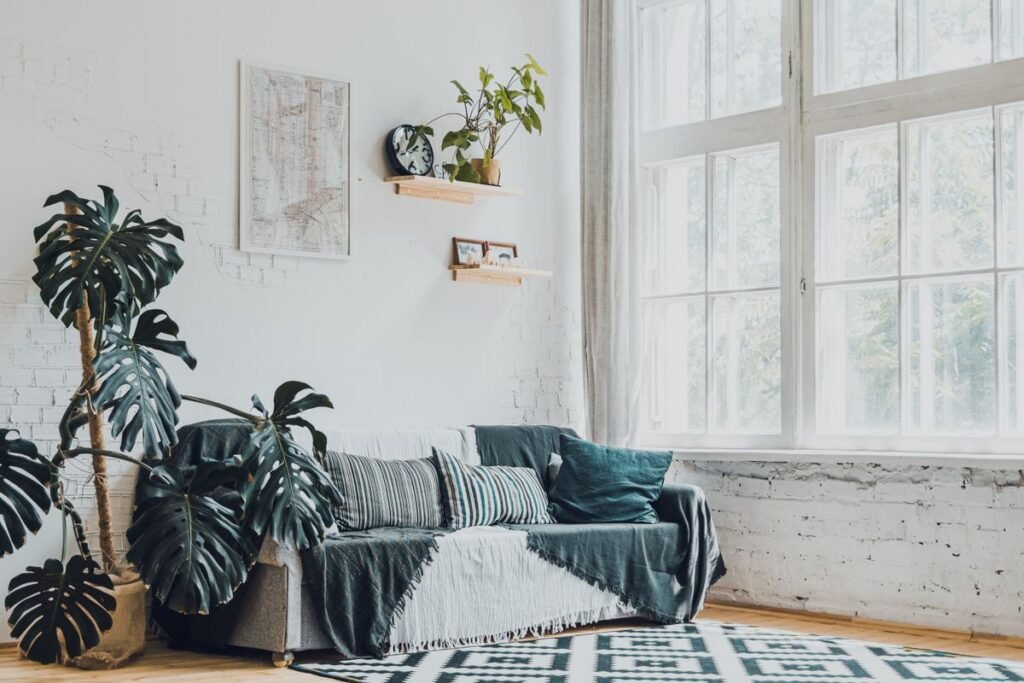
Before we get to the plants, let’s be honest about light, because this is where most of us go wrong. Low light does not mean no light. It means your plant sits a few feet from a window that never gets direct sun, or in a room with a small window, or in a corner that gets soft, indirect light for part of the day. If you can read there without a lamp at midday, most of these plants will be fine. If you can’t, it’s too dark for almost anything.
- The hand-shadow test: hold your hand a foot above the spot at midday. A soft, fuzzy shadow means low light. A sharp, dark shadow means bright light. No shadow at all means find another spot.
- Dust the leaves once a month — dust blocks what little light there is, and in a dim room that matters more than you’d think.
If you want the room itself to feel brighter around your plants, my small living room decor ideas show how a mirror opposite the window and lighter curtains can double the light your plants get — for free.
1. Snake Plant — The One That Forgives Everything
The snake plant was my second attempt, and it is still alive today. It stands tall in a plain white pot by my sofa and asks for almost nothing: a little water every few weeks and to be left alone.
This is the plant to buy if you have killed plants before. Snake plants store water in their thick, upright leaves, so forgetting to water them for a month is not a tragedy. They grow slowly in low light, which is a blessing in a small apartment, because they won’t outgrow their corner in a season.
- Pick a tall, narrow pot so it takes up floor space, not table space
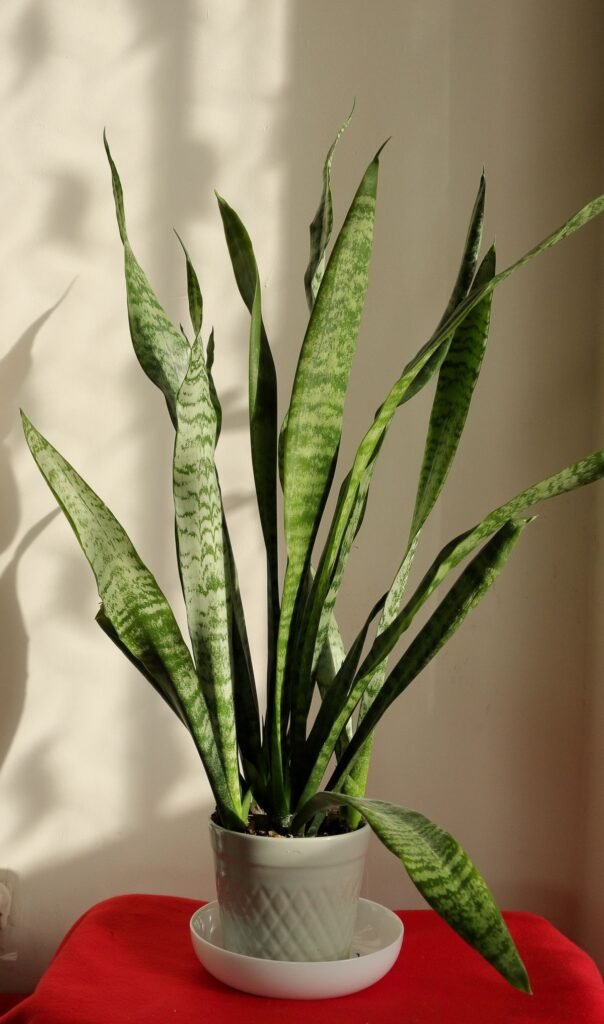
Mistake I made: I watered my first snake plant every week because watering felt like caring. It rotted from the roots up. Now I water mine about once a month in winter, and it has never looked better. Less water is the whole secret.
Try this weekend: move your snake plant (or buy one) into the darkest corner of your living room and leave it there for a month. It will be fine — I promise.
2. Pothos — The Trailing Plant That Makes a Room Feel Finished
Pothos is the plant that made my apartment feel like a home instead of a flat with furniture in it. I hung one in a plain pot above my bookshelf, and within a few months its vines were trailing down the wall, softening every hard edge in the room. It grows fast even in low light, which means you get that lush, lived-in look without waiting a year.
Pothos is the best plant for renters — one small adhesive hook or a shelf is enough, and you can take it with you when you move. Snip a long vine, pop it in a glass of water, and in two weeks you have a second plant for free.
- Golden pothos has the prettiest variegated leaves; plain green pothos grows fastest in dim rooms
- Let the vines trail from a shelf, or train them up a wall with tiny adhesive clips
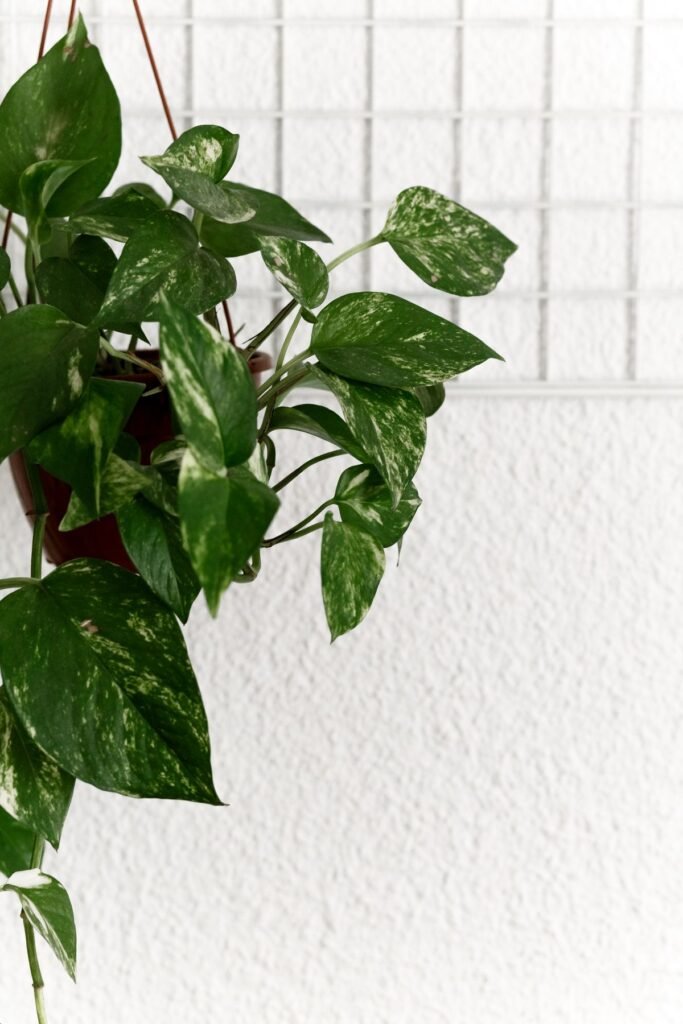
Try this weekend: snip one long pothos vine, cut it into pieces with a leaf each, and put them in a glass of water on your windowsill. Free plants, and they look lovely while they root.
3. ZZ Plant — The Glossy One That Thrives on Neglect
The ZZ plant looks like it belongs in a fancy hotel lobby — glossy, dark green, perfectly upright leaves — yet it is one of the toughest low-light plants there is. Mine lives on a shelf with my books, far from any window, and just quietly grows with almost no help from me.
If you travel a lot or forget to water things, buy the ZZ plant first. It stores water in thick stems under the soil, so it can go weeks without a drink and not even notice. In low light it grows slowly and stays compact, which is exactly what you want when shelf space is limited.
- Yellow leaves usually mean too much water, not too little — let the soil dry out completely

Mistake I made: I repotted my ZZ plant into a huge pot because I thought more room meant more growth. It sulked for months — ZZ plants actually like being a little snug. Keep the pot just one size bigger than the roots, and it will be much happier.
4. Spider Plant — The Hanging Plant That Makes Babies
The spider plant is the cheerful one. Its long, arching striped leaves look great in a hanging basket, and the best part is that a happy spider plant grows little baby plantlets on long stems — tiny copies of itself, dangling in the air like a mobile. Mine hangs in a macramé holder by the window, and guests always ask about it first.
Spider plants are perfect for small apartments because they live in the air, not on your surfaces. A hanging basket uses zero floor or shelf space, and the plant actually likes dimmer light a few feet back from the window.
- Hang it where you can see it from your sofa — the dangling plantlets are half the charm
- Snip off a baby plantlet, pot it up, and you have a gift for a friend
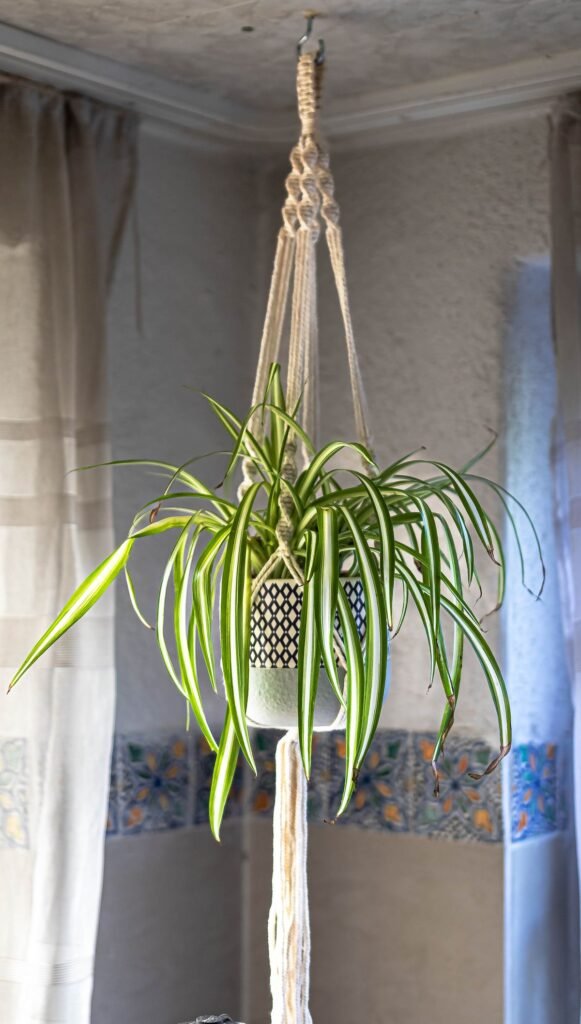
Try this weekend: pot up one spider plant baby in a small jar and put it on your bedside table. In a month you’ll have a second plant, and it cost you nothing.
5. Philodendron — The Big-Leaf Look Without the Fuss
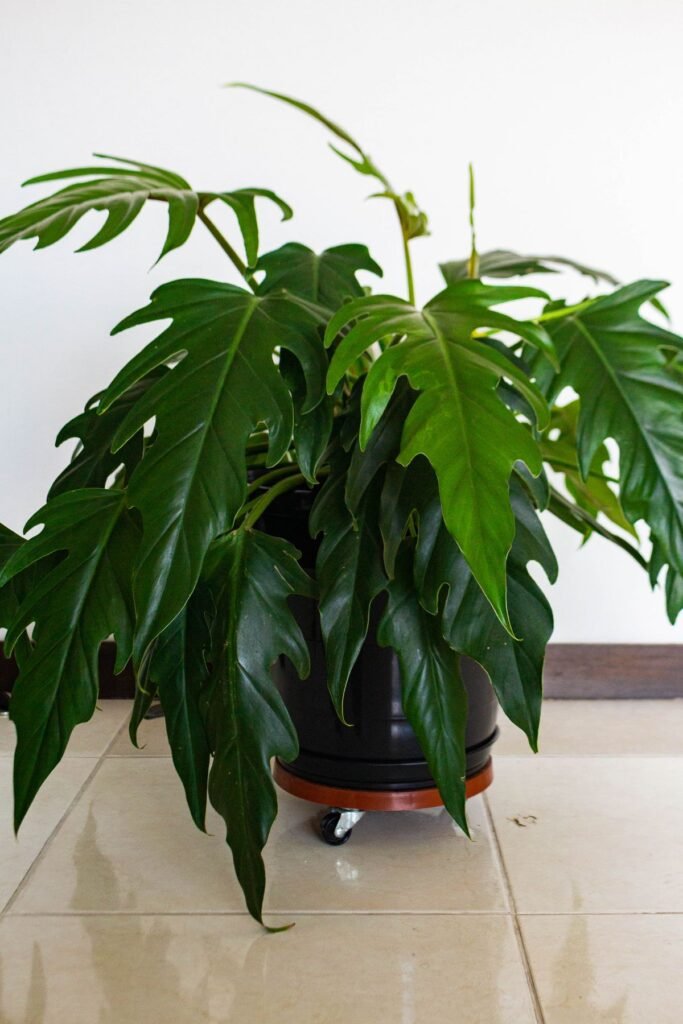
I wanted the big, tropical, jungle-leaf look in my apartment, but I didn’t have the bright light or the floor space for a huge monstera. The philodendron solved that. Its heart-shaped leaves are big and glossy, it climbs or trails depending on what you give it, and it is perfectly happy in the soft light of my living room.
The heartleaf philodendron is pothos’s slightly fancier cousin: trail it from a shelf, let it climb a small moss pole, or let it spill from a pot on a bookcase. In low light the leaves stay a deep, rich green.
- Give it a small trellis or a pole to climb and the leaves grow bigger — a lovely trick for a plain wall
6. Chinese Evergreen — The Colourful One for Dark Corners
Most low-light plants are plain green — but the Chinese evergreen brings colour into a dark corner. Its leaves are patterned with silver, cream, and sometimes pink, so it looks decorated even when it’s just sitting there. Mine lives in a terracotta pot in the darkest corner of my bedroom.
If you have one truly dark corner and you want it to feel alive, this is the plant. Chinese evergreens are famously tolerant of low light and dry indoor air, and they grow slowly, so they stay neat. The patterned varieties are my favourite because the pattern does the decorating for you.
- A terracotta pot suits it beautifully and helps the soil dry out between waterings
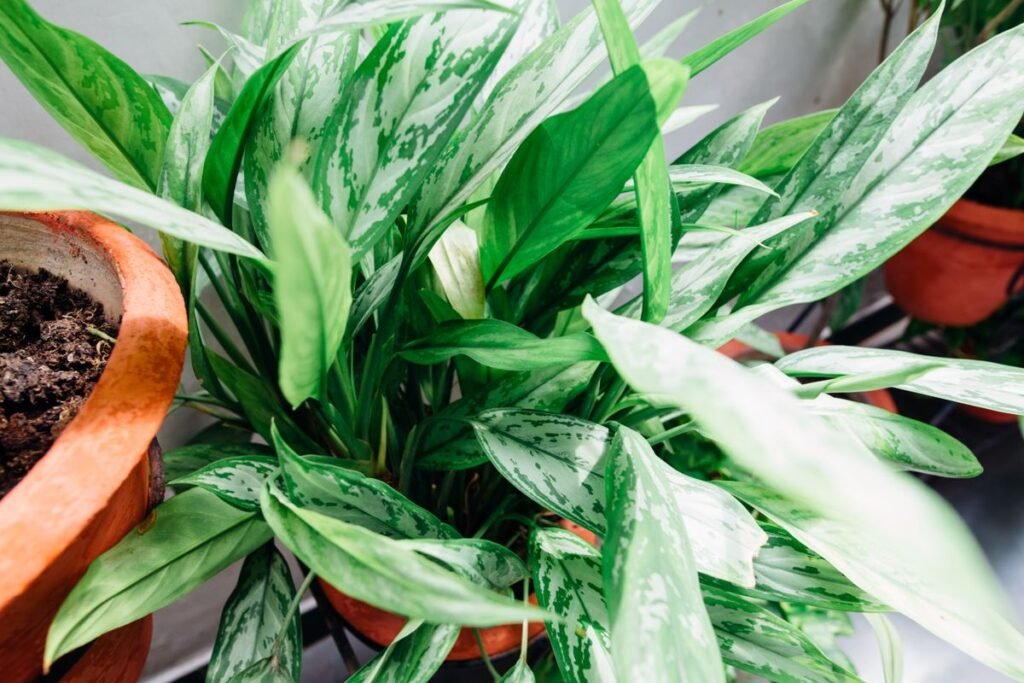
Try this weekend: swap one plain green plant in your darkest corner for a patterned Chinese evergreen and see how much brighter the corner feels. It’s a small change with a big effect.
If your darkest corner happens to be the bedroom, my cozy small bedroom decor ideas pair beautifully with a plant or two on the bedside table — soft light, soft textures, and something green to wake up to.
7. Monstera — The Statement Plant (With One Honest Caveat)
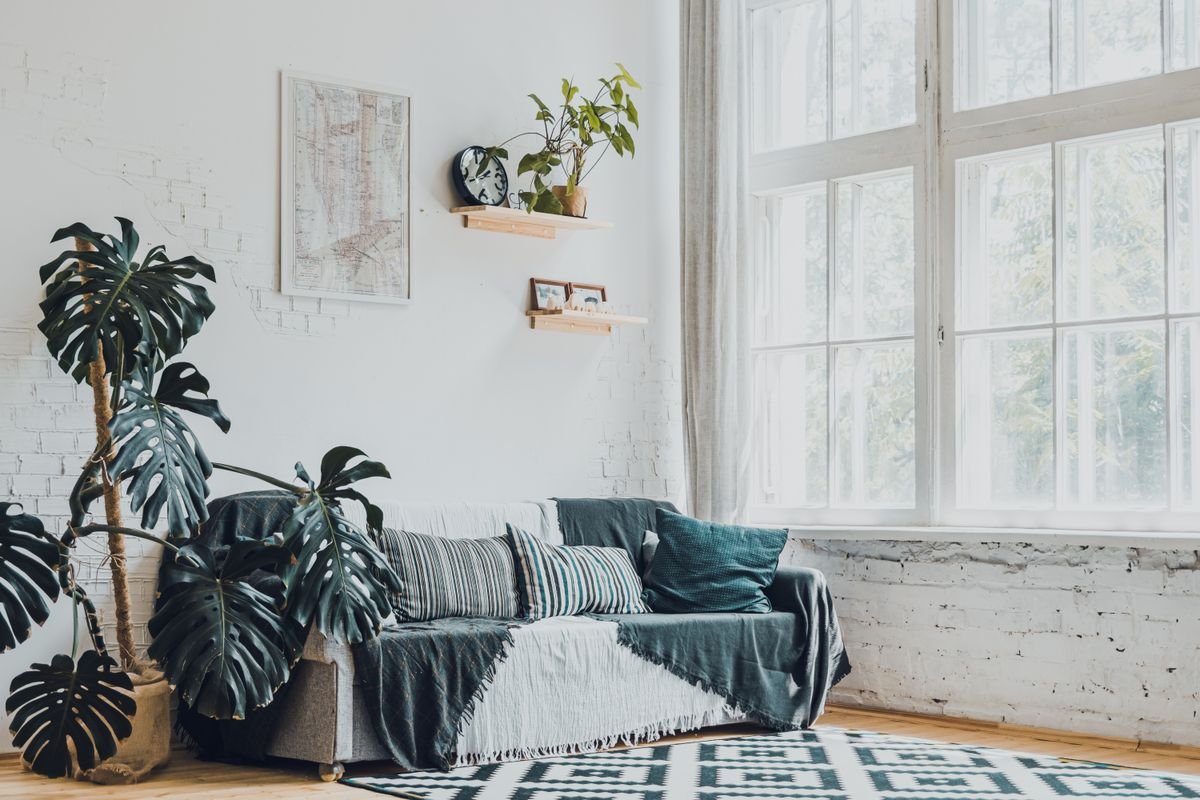
I have to be honest: the monstera is the most dramatic plant on this list, and it is not a true low-light plant. Mine lives by my brightest window, and even there it grows slower than the ones you see online. But if your apartment still has one decent window, it’s worth it — nothing else makes a small room look this good.
Put your monstera in your brightest spot and let everything else take the dark corners. Give it a moss pole to climb, and the leaves will grow bigger and start splitting — those famous holes and splits are the sign it’s happy. In dimmer light it will still live, but the leaves stay smaller and solid.
- Wipe the big leaves regularly; dusty monstera leaves look tired, clean ones look like a magazine photo

Mistake I made: I bought a monstera for a dark hallway because it looked amazing in the shop, and within two months it was leggy, pale, and sad. I moved it to the window, cut back the stretched stems, and it recovered — but I had wasted a whole season. Bright spot first, dark corner never.
Try this weekend: if your monstera is in a dark spot, move it to your brightest window today. You’ll see new growth within a month, and you’ll wonder why you waited.
8. Peace Lily — The One That Flowers in Low Light
The peace lily is the only plant on this list that reliably flowers in low light, and that makes it special. Those white, sail-like blooms appear even in a dim room, and they last for weeks. Mine lives on the bathroom windowsill, where it loves the steam from the shower, and it flowers more often there than anywhere else in my apartment.
A peace lily tells you exactly what it needs, which makes it a great beginner plant. When it’s thirsty, it droops dramatically — then perks right back up within hours of watering. It’s not dying, it’s just being theatrical.
- It loves humidity, so the bathroom is its favourite room — if you want plant ideas for that space, my tiny bathroom decor ideas show how a plant turns a small bathroom into a little spa
9. Cast Iron Plant — The One That Survives Anything
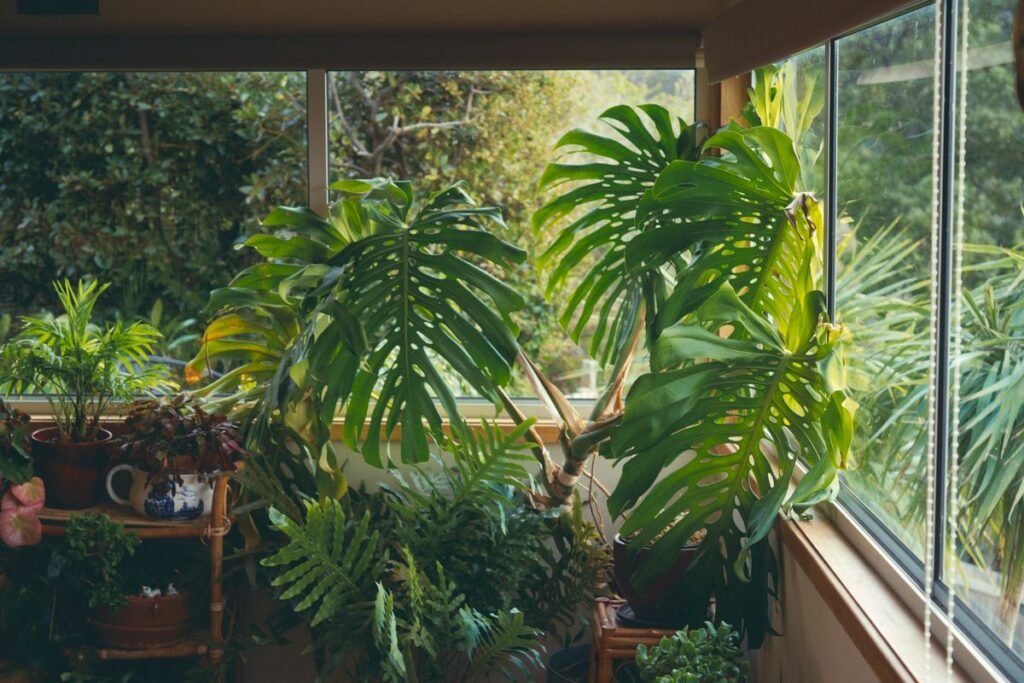
The cast iron plant is the plant I recommend to people who have killed everything. It tolerates low light, missed waterings, dry air, and general neglect, and still looks neat and green. Mine sits with a group of leafy plants in a corner that gets almost no direct light, and it has been there over a year without a complaint.
This is the plant for the corner you have given up on. The dark corner behind the sofa, the hallway with no window, the spot under the stairs — the cast iron plant will live there. It grows slowly and stays tidy, with long, arching dark green leaves that look good in a simple pot.
- It hates being overwatered more than anything — let the soil dry out between drinks

Try this weekend: group three plants together in your darkest corner — a tall one at the back, a trailing one on a stool, a small one in front. It takes five minutes, and the corner will look styled instead of empty.
How I Keep Low-Light Plants Alive (The Short Version)
After killing my fair share of plants, here is the routine that actually works in my apartment. It’s boring, and that’s the point — plants in low light want less of everything, not more.
- Water less than you think. In low light, plants drink slowly. Most of mine get watered every two to three weeks in winter, weekly in summer — and only when the soil is dry.
- Clean the leaves. A damp cloth once a month — in a dim room, a dusty leaf can’t catch light.
- Buy the plant for the light you have, not the light you wish you had. That one rule would have saved my first three plants.
My boho living room ideas for small spaces show how plants, rattan, and warm textures work together — plants are half the boho look.
FAQs
What is the best indoor plant for a small apartment with very low light?
The snake plant, ZZ plant, and cast iron plant are the safest bets — they tolerate the dimmest corners and forgive missed waterings. Start with one of those three.
Can indoor plants survive with no direct sunlight at all?
Most plants on this list survive on indirect light alone — light bouncing off walls or through a curtained window. A windowless room is too dark for almost any plant, and a small grow light is the honest fix there.
How often should I water low-light indoor plants?
Less often than you think. In low light, most of these plants need water every two to three weeks in winter and about once a week in summer — but always check the soil first. If it’s still damp an inch down, wait.
Which low-light plants are safe if I have pets?
Spider plants and cast iron plants are generally considered pet-friendly, while snake plants, ZZ plants, pothos, philodendrons, and peace lilies can be toxic if chewed. Keep those up high or hanging.
Why are my low-light plant’s leaves turning yellow?
Usually too much water. In low light, soil stays wet for a long time and roots rot easily. Let the soil dry out fully between waterings and make sure the pot has drainage holes.
Your Turn
Which of these nine are you bringing home first? I’m guessing the snake plant or the pothos — those two changed my apartment the most. Tell me in the comments, and if you already have a low-light favourite, share it.
Written by Irtza — I write cozy, budget-friendly home decor ideas for small spaces. Real homes, renter-friendly tricks, and the honest mistakes I made along the way.