How to Make a Small Room Look Bigger With Curtains (7 Tricks)
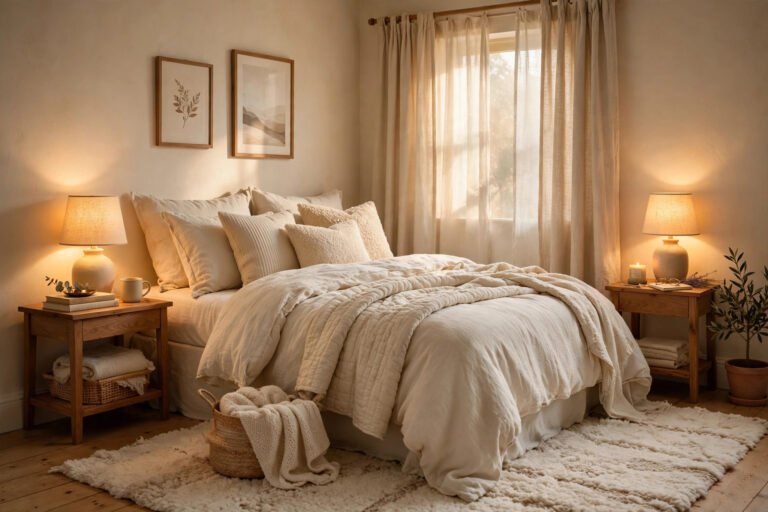
I stood in my bedroom one evening, staring at the window, and I couldn’t figure out why the room felt like a box. The furniture was fine. The walls were a warm cream. But the window — with its short, dark curtains hanging just above the frame — made everything feel cramped and heavy. I had a feeling the curtains were the problem, but I didn’t know how a piece of fabric could change the size of a room.
So I spent the next few weeks experimenting. I moved rods, swapped fabrics, and tried lengths I thought would look silly. And here’s what I found: curtains are one of the cheapest, fastest ways to make a small room look bigger. You don’t need a renovation. You don’t need new furniture. You just need to hang the fabric the right way.
Key takeaway: Hang your curtain rod high and wide, let the fabric kiss the floor, and choose light, airy colors — and your small room will instantly feel taller, wider, and brighter.
In this guide, I’ll walk you through the 7 curtain tricks that actually worked for me, the mistakes I made along the way, and exactly what to try this weekend.
Trick 1: Hang the Rod High — Almost to the Ceiling
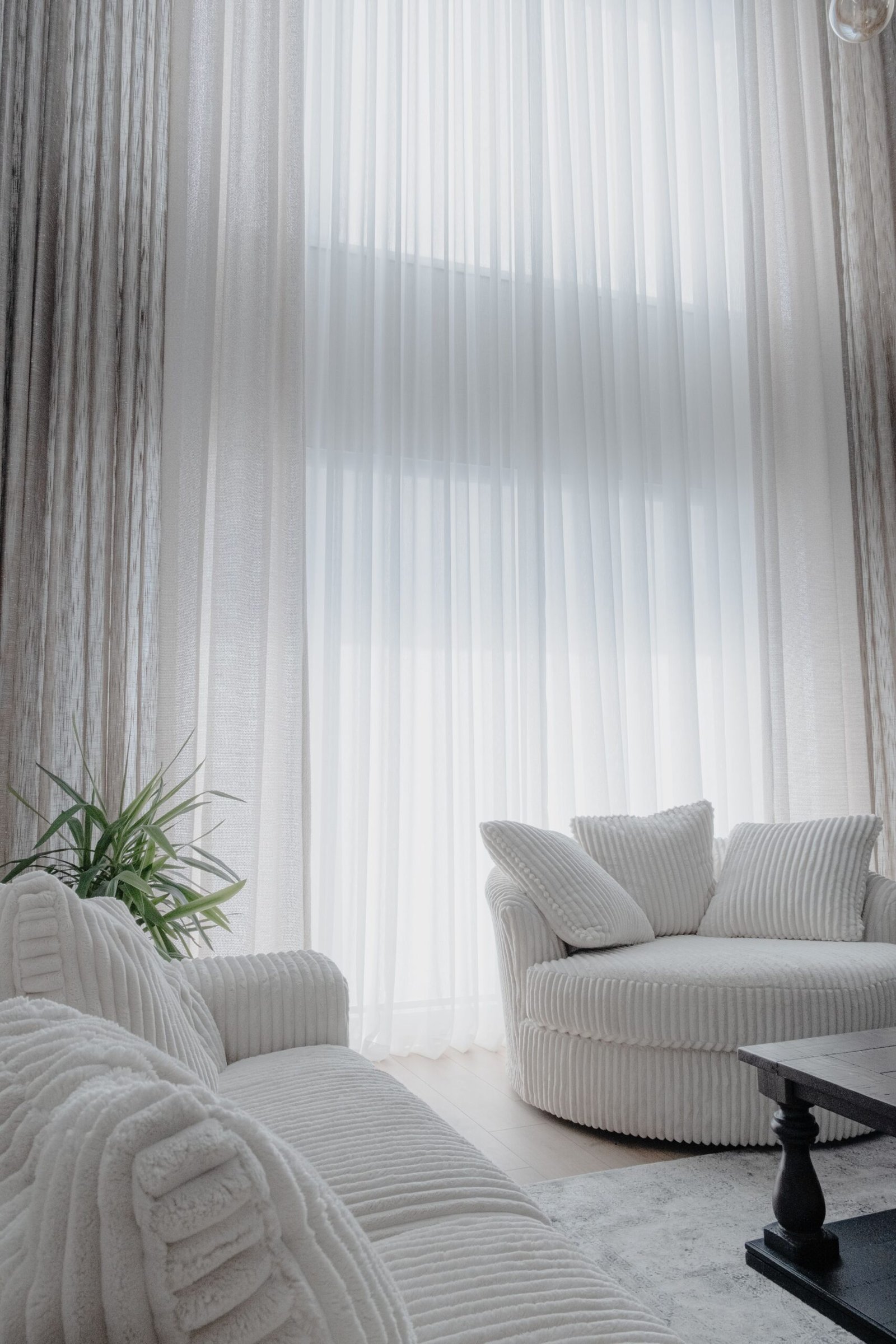
This is the single biggest difference-maker, and it’s the trick I wish someone had told me years ago. Most people hang their curtain rod right above the window frame. That cuts the wall in half visually and makes the ceiling feel low. Instead, hang the rod 4 to 6 inches below the ceiling — or at least two-thirds of the way up from the window frame to the ceiling.
The first time I did this, I actually laughed. My bedroom suddenly looked like it had taller ceilings. Nothing else changed. Same window, same curtains, same furniture — but the room felt taller because my eye followed the long line of fabric all the way up.
How to do it:
- Measure from your window frame to the ceiling. Aim for a rod placement about 4–6 inches below the ceiling.
- If your ceilings are very low, split the difference — go as high as you comfortably can without the rod touching the ceiling.
- Use a level. A crooked rod at that height is very noticeable.
Mistake I made: I hung my first “high” rod only 2 inches above the window frame because I was afraid it would look weird. It barely made a difference, and I convinced myself the trick didn’t work. When I finally pushed the rod up near the ceiling, the change was dramatic. Don’t be shy with the height — that’s the whole point.
Try this weekend: Move one curtain rod up as high as it can go and live with it for a day before deciding.
Trick 2: Go Wider Than the Window
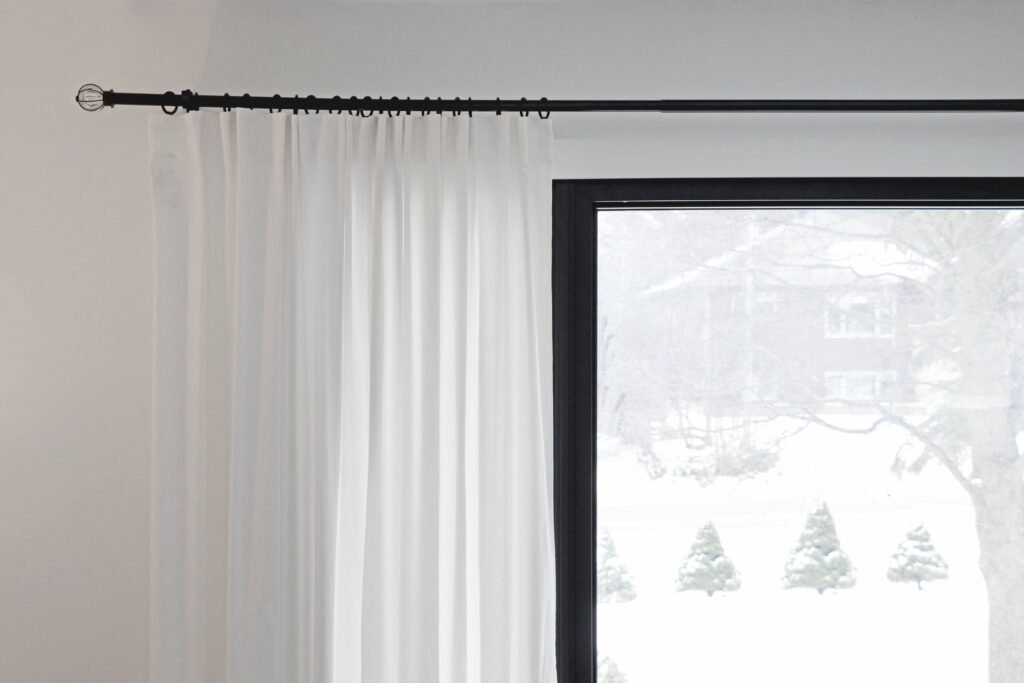
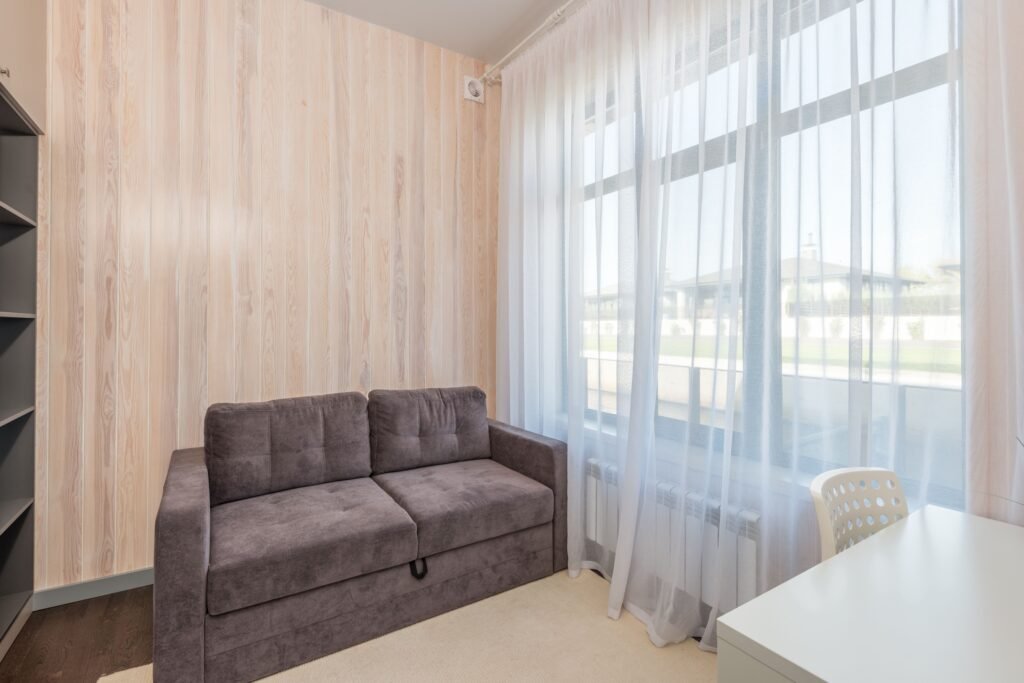
Here’s the second half of the rod trick: mount the rod wider than the window itself. Extend it 4 to 8 inches past the frame on each side. When the curtains are open, they should stack against the wall, not cover the glass.
Why does this matter? Because when curtains cover part of the window, they shrink the amount of light coming in and make the window look smaller than it is. When they’re pulled fully to the sides, the window looks bigger, more light floods in, and the room feels wider.
I tested this in my living room. With the rod at window width, the curtains ate about a third of the glass on each side. With the rod extended, the full window showed — and the room felt noticeably brighter and more open.
How to do it:
- Add 8 to 16 inches total to your window’s width when choosing a rod.
- Make sure your curtain panels are wide enough to cover the window when closed — aim for panels that are 1.5 to 2 times the window width in total.
If you’re still planning the rest of the room, my guide to small living room decor ideas pairs well with this trick — the right layout makes wide-hung curtains work even harder.
Try this weekend: Slide your existing curtains fully to the sides of the window and see how much glass you’ve been covering. You might be surprised.
Trick 3: Let the Curtains Kiss the Floor (or Pool Just Slightly)
Curtain length is where a lot of small rooms go wrong. Curtains that stop at the windowsill or hover a few inches above the floor chop the wall into pieces. That broken line makes the room feel shorter and messier.
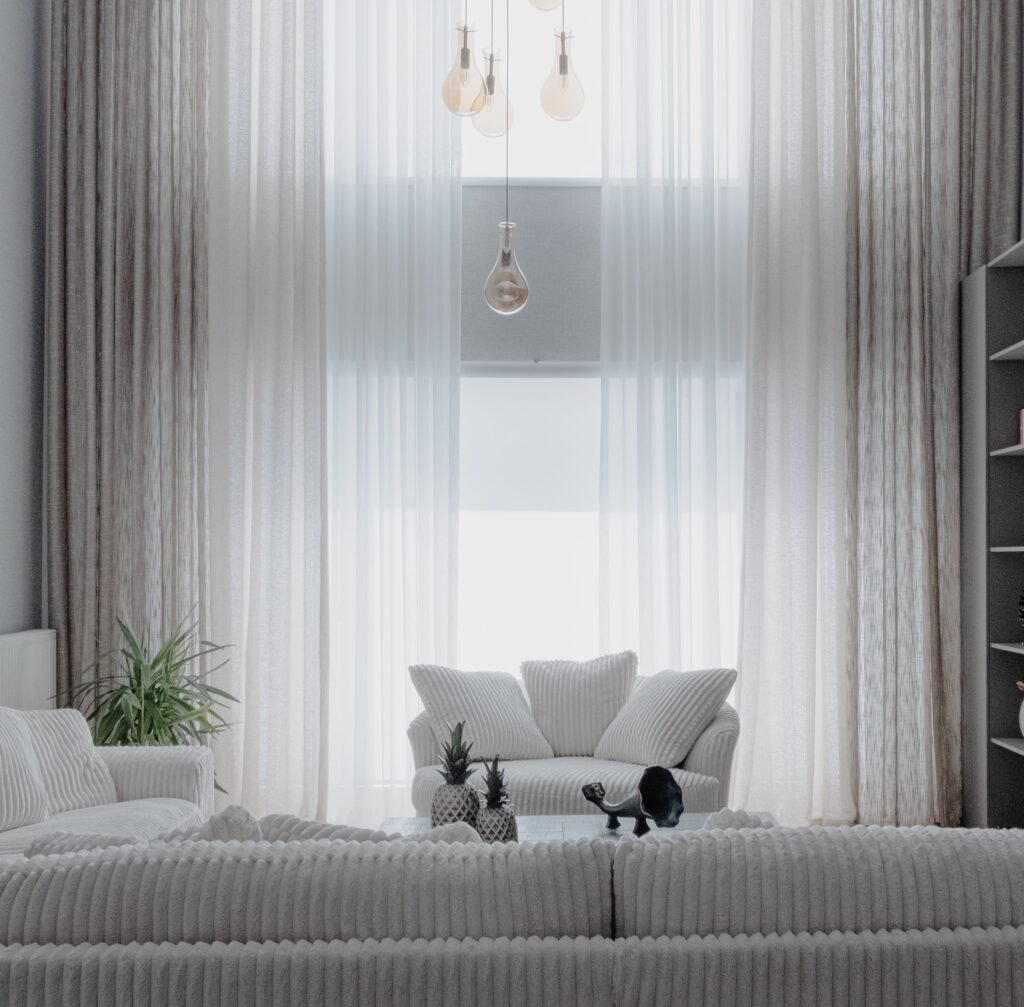
The fix is simple: let your curtains reach the floor. The ideal length is either just kissing the floor (the hem barely touches it) or pooling very slightly — an inch or two of fabric resting on the floor for a soft, relaxed look.
When I switched from sill-length curtains to floor-length ones in my bedroom, the change was instant. The long vertical line made the wall look taller, the room looked calmer, and honestly, it just looked more finished.
How to do it:
- Measure from your rod (at its new high position) all the way to the floor, then buy that length — or a couple of inches longer if you like a slight pool.
- If you’re renting and can’t move the rod, buy longer panels and hem them with iron-on hem tape. No sewing needed.
- Avoid the awkward “floating” length that stops 3–4 inches above the floor. It reads as a mistake, even when it isn’t one.
Mistake I made: I bought curtains that were 6 inches too short because I measured from the window frame instead of from the rod. They hung like a pair of high-water trousers and made the room look smaller than the old ones did. Measure from the rod, not the window — and measure twice.
Try this weekend: Measure your current curtains against the floor. If they’re short, that’s your next swap.
Trick 4: Choose Light, Airy Colors — and Match the Wall
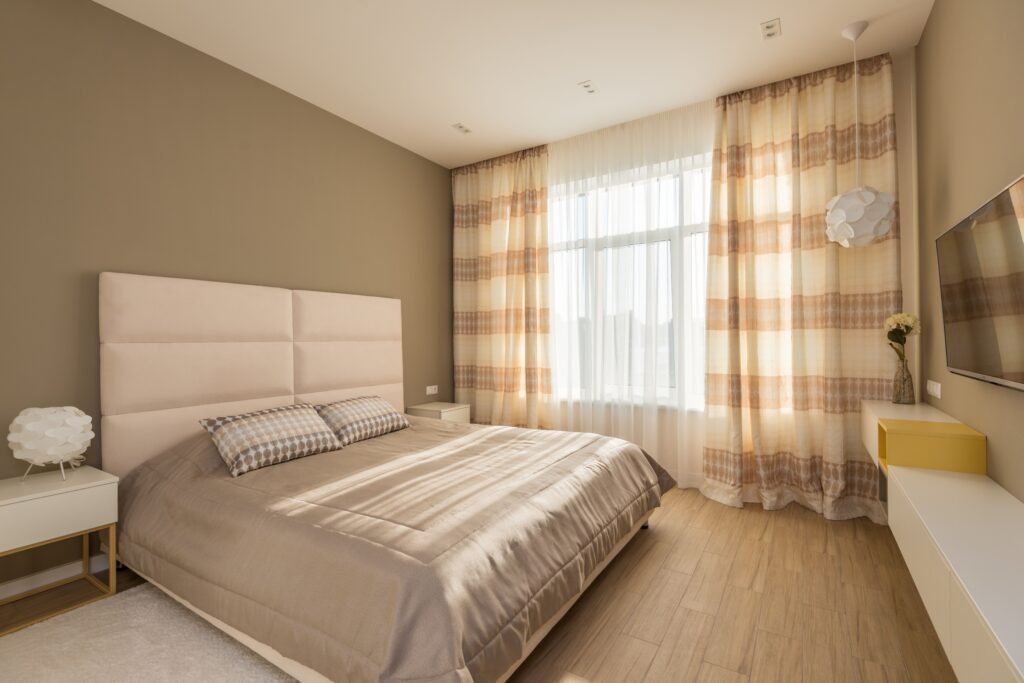
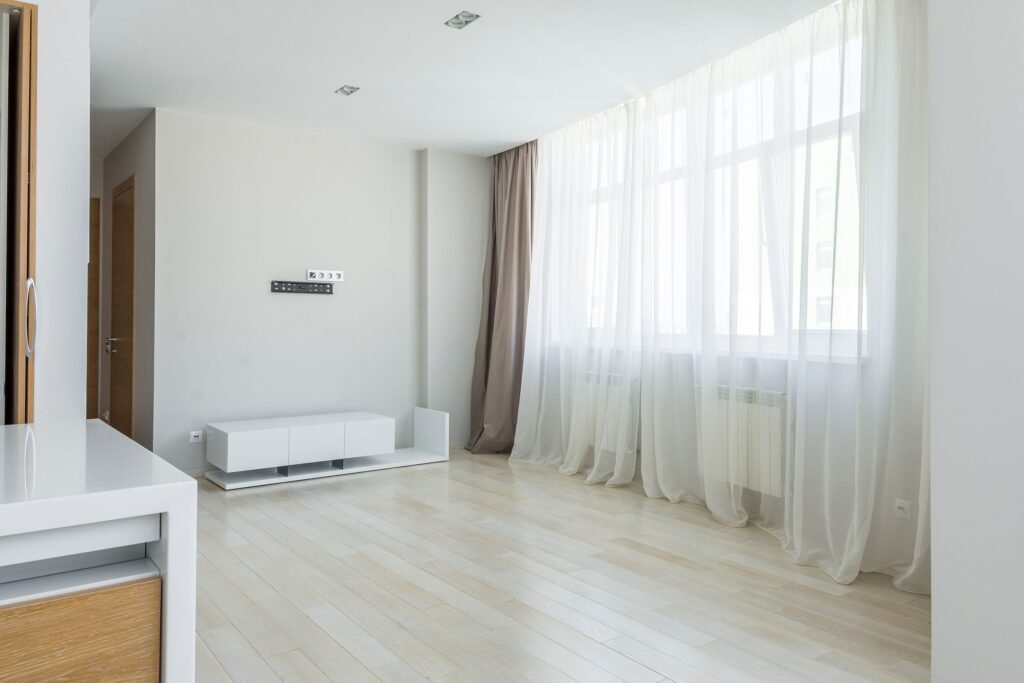
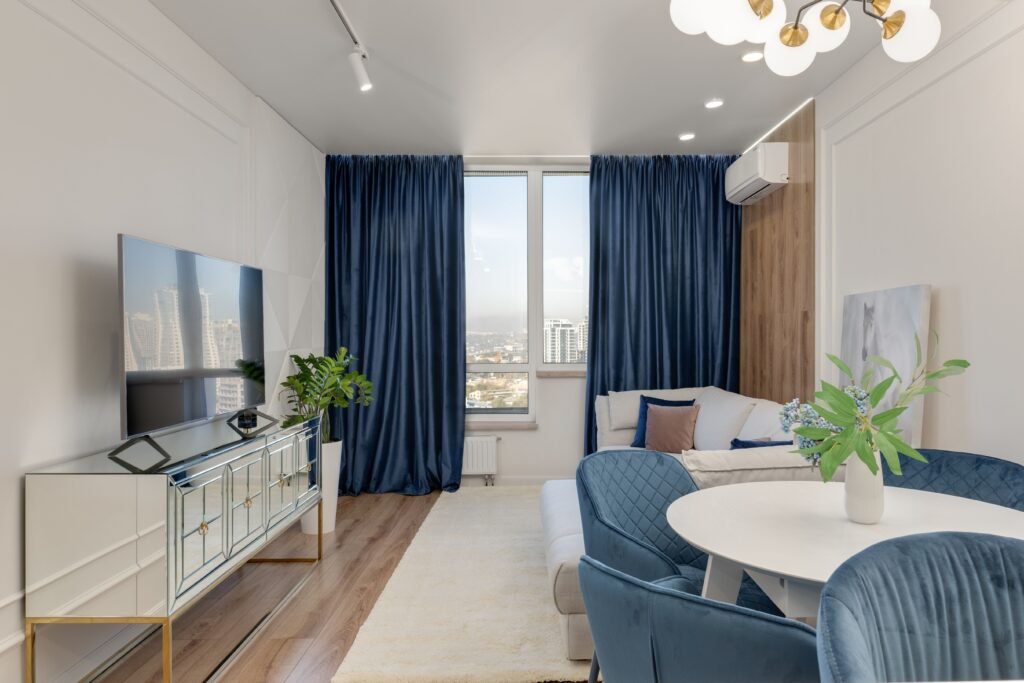
Color is doing quiet work in your room whether you notice it or not. Dark, heavy curtains on a light wall create a hard visual border that shrinks the space. Light curtains — white, cream, pale sage, soft grey, blush — blend with the wall and let the room breathe.
The trick that works best in my experience: choose curtains in a color very close to your wall color. When the curtains and walls are nearly the same shade, the eye doesn’t stop at the window. The wall just keeps going, and the room feels bigger.
That doesn’t mean everything has to be white. If your walls are warm cream, try linen or oatmeal curtains. If they’re pale grey, try soft white or light grey. The key is low contrast between the curtain and the wall.
What about blackout curtains? You can absolutely have blackout curtains in a light color — most brands make white and cream blackout panels, so you get the darkness without the heavy look.
How to do it:
- Hold fabric swatches against your wall in daylight before buying.
- If you love a bold color, use it in a small dose — a cushion or a throw — and keep the curtains light.
- For a cohesive look, echo the curtain color in one or two other places in the room.
For more on choosing colors that open up a small bedroom, my cozy small bedroom decor ideas guide walks through palettes that work in tight spaces.
Try this weekend: Hold a white sheet up beside your window for a day and notice how much brighter the room feels. That’s the effect light curtains give you permanently.
Trick 5: Keep the Pattern Small — or Skip It
Big, bold patterns on curtains can be gorgeous in a large room. In a small room, they tend to dominate everything and make the walls feel like they’re closing in. A large floral or a heavy geometric print becomes the whole room, and there’s nowhere for your eye to rest.
How to do it:
- If you love pattern, choose a small repeat and a low-contrast colorway (tone-on-tone is safest).
- Vertical stripes are your friend — they reinforce the tall, lengthening effect of high-hung curtains.
- When in doubt, go solid with texture. You can add pattern elsewhere, in cushions or a rug, where it’s easier to change.
Mistake I made: I bought bold-patterned curtains because they looked amazing folded on a shelf. Hanging in my small room, the pattern was so loud it made the walls feel closer together. I swapped them for a plain linen pair and the room instantly felt calmer and bigger. Pattern is wonderful — just keep it small in a small room.
Try this weekend: Step back and look at your curtains from the doorway. If the pattern is the first thing you see — and the only thing — it’s too big for the space.

Trick 6: Layer Sheers Under Heavier Curtains
Layering sounds fancy, but it’s really just putting two curtain panels on the same window: a sheer panel closest to the glass, and a heavier panel on the outside. And it is one of the most effective tricks for making a small room feel bigger and more finished.
Here’s why it works. During the day, you pull the heavy panels to the sides and let the sheers do the work — they filter the light, give you privacy, and keep the room bright. At night, you close the heavier panels for darkness and coziness.
I added a cheap sheer panel behind my existing curtains in the living room, and the difference during the day was lovely — soft, glowing light instead of harsh glare. The whole setup cost less than a pair of ready-made curtains.
How to do it:
- Use a double rod, or hang the sheer on a slim tension rod inside the window frame and the heavier panel on the main rod outside it.
- Keep the sheer light — white or ivory — so it glows rather than blocks.
- Choose the outer panel in your wall-matching color from Trick 4, and the layering looks intentional and airy.
Try this weekend: Hang a single sheer panel (even a cheap one) on your brightest window and see how the light changes. You can always add the outer layer later.
Trick 7: Choose Slim, Simple Hardware — and Hide the Mess
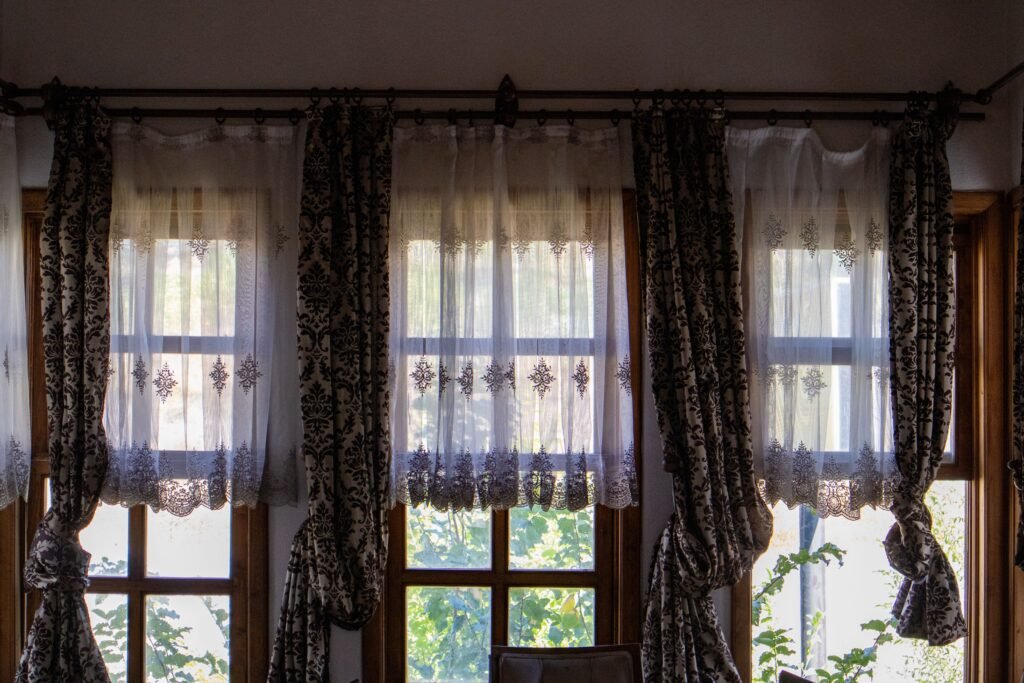
The last trick is the one nobody talks about, and it’s the finishing touch that makes the other six work. Heavy, ornate curtain rods and chunky finials draw the eye to the hardware and add visual weight above the window — exactly where you want things to feel light.
For renters, this is good news: slim tension rods and command-hook-mounted rods exist for nearly every window size, and they leave no holes behind.
How to do it:
- Pick the slimmest rod that can hold your curtain weight.
- Match the rod finish to one other metal accent in the room (a lamp base, a picture frame) so it looks intentional.
- Keep the rings or clips uniform and simple — mixed hardware looks cluttered at eye level.
Try this weekend: Look at your curtain rod the way a guest would. If the hardware is the first thing you notice, it’s too heavy for the room.
What About Curtains in a Really Tiny Room?
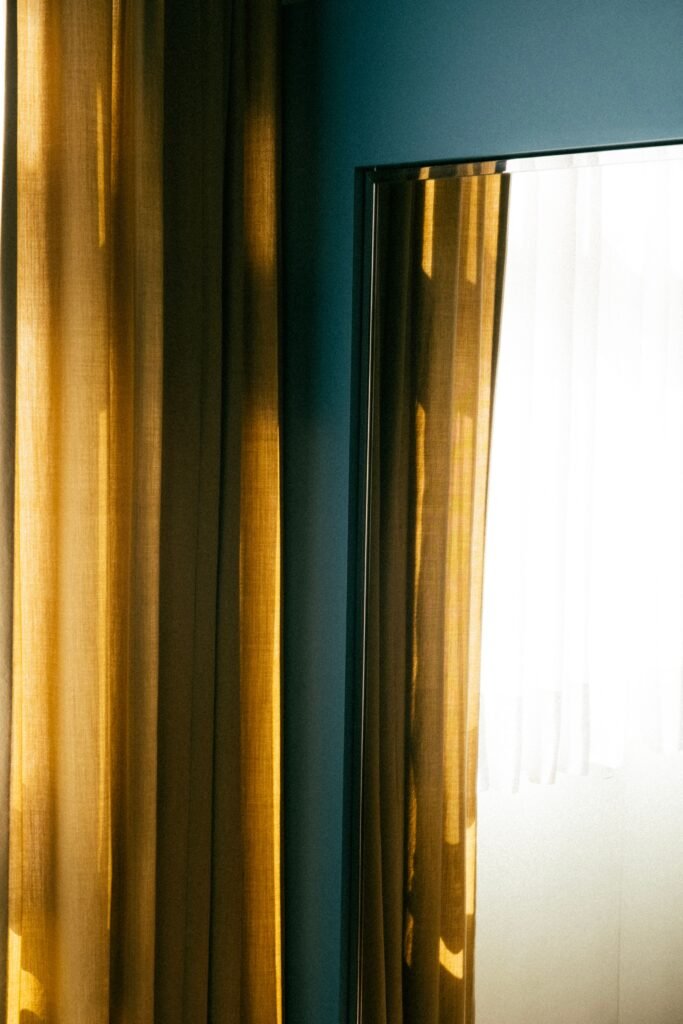
If your room is genuinely tiny — a box room, a small rental bedroom, a studio corner — you might wonder whether curtains are even worth it. They are. In fact, they matter more in a tiny room, because every visual trick counts double when space is tight.
A few extra tips for the smallest rooms:
- One panel instead of two: On a very narrow window, a single panel pulled to one side looks cleaner than two panels fighting for space.
- Skip the valance: Valances shorten the window visually. Let the full-length curtain do the work instead.
- Keep the windowsill clear: A cluttered sill competes with the curtain line. One plant or one candle is enough.
FAQs
Do curtains make a small room look bigger or smaller?
Curtains make a small room look bigger when they’re hung high, wide, and floor-length in a light color. They make it look smaller when they’re short, dark, narrow, or hung low — because they chop up the wall and block light. The hanging matters more than the curtain itself.
Should curtains touch the floor in a small room?
Yes. Floor-length curtains that just kiss the floor (or pool very slightly) create one long vertical line that makes the walls look taller. Curtains that stop at the sill or float above the floor break that line and make the room feel shorter.
What color curtains make a room look bigger?
Light colors closest to your wall color — white, cream, pale grey, soft sage — make a room look bigger because they blend with the wall instead of creating a hard border. Low contrast between curtain and wall is the key.
Are sheer curtains good for small rooms?
Yes, sheers are excellent for small rooms. They let in maximum light while giving you privacy, and they make the window feel bright and airy. Layer them under heavier panels so you can have light during the day and darkness at night.
How high should I hang curtains in a small room?
Hang the rod 4 to 6 inches below the ceiling, or at least two-thirds of the way up from the window frame to the ceiling. Higher placement draws the eye upward and makes the ceiling feel taller, which makes the whole room feel bigger.
Your Turn
Curtains turned out to be one of the easiest wins in my small rooms — a rod moved higher, a lighter color, a longer hem, and suddenly the whole space breathed differently. Now I’d love to hear from you: which of these 7 tricks are you going to try first? Is your rod too low, are your curtains too short, or is it time to finally try sheers? Tell me in the comments — I read every one, and your small room might be one weekend away from feeling twice as big.
Written by Irtza — I write cozy, budget-friendly home decor ideas for small spaces. Real homes, renter-friendly tricks, and the honest mistakes I made along the way.



2 Comments