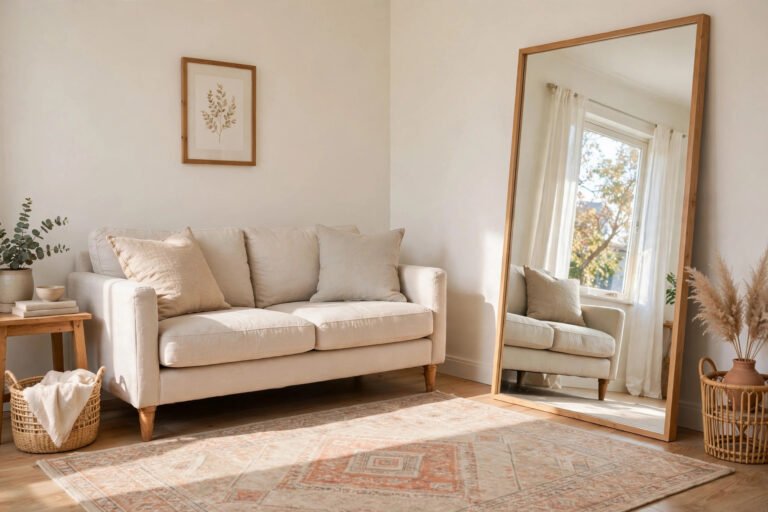
15 Small Living Room TV Wall Ideas That Save Floor Space

For years, my TV sat on a big black stand that ate a full foot of my living room floor. The stand held the TV, sure — but it also held a tangle of cables, three remotes, and a stack of things I never used. One evening I tripped over its corner in the dark, and that was it. I decided the TV was going on the wall and the floor was coming back. If your TV setup is swallowing your small living room, these 15 ideas will help you get the screen up, the clutter hidden, and your floor space back.
The short version: wall-mount the TV at seated eye level, float the storage, and hide the cables. Everything below is a variation on that — pick the one that fits your wall, your budget, and whether you rent or own.
Before You Drill: The Two Measurements That Matter
Mounting height: the center of the screen should sit at about eye level from your sofa — roughly 42 inches from the floor for most seating. Higher than that and you will be craning your neck every movie night. I mounted my first TV too high, right above a tall console, and my neck knew about it within a week.
TV size vs. wall size: a good rule is that the TV should be about two-thirds the width of the console or wall section beneath it. A huge screen on a tiny wall looks like it escaped from a cinema; a small screen floating on a big empty wall looks lost.
If the rest of your room needs a plan too, start with my small living room decor ideas — the TV wall works best when the seating is already in the right place.
1. The Minimalist Floating TV Wall
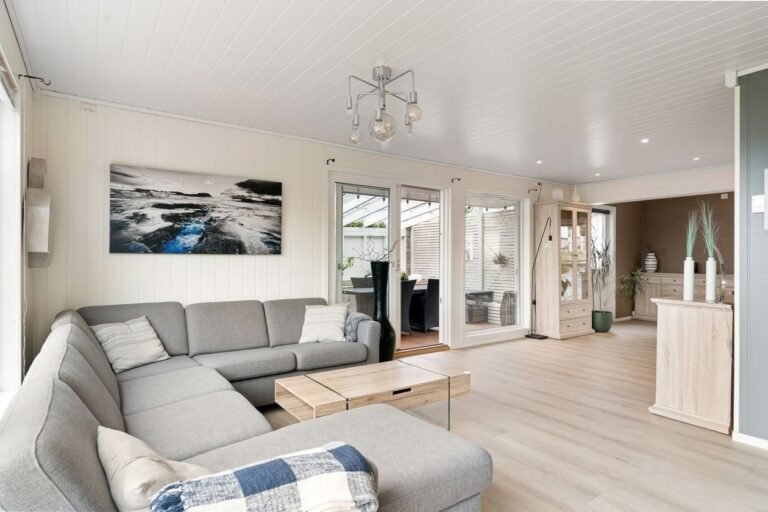
A wall-mounted screen, one low console, and nothing you don’t need. This is the easiest idea on this list and the one I recommend first, because it works in almost any small room. Keep the palette calm — white, beige, or light gray — and run the cables through the wall or a slim cord channel so the clean lines stay unbroken. For the full calm-room approach, see my minimalist living room ideas.

Try this weekend: remove everything from your current TV stand except the TV, the streaming box, and one decorative object. If the wall still looks good, you are ready for the minimalist version.
2. Wood Slat Panel Behind the TV
Vertical wood slats turn a plain TV wall into a warm, textured backdrop — and they make ceilings feel taller, which small rooms love. Light oak suits Scandinavian and modern rooms; walnut leans warmer and more traditional. The panels are practical too: they give you a cavity to hide cables and room to recess speakers.
Mistake I made: I bought peel-and-stick wood panels and stuck them up in a hurry without checking they were level. One crooked row at the bottom threw the whole wall off, and I had to peel half of them down and start again. Measure the first row twice — everything else follows it.
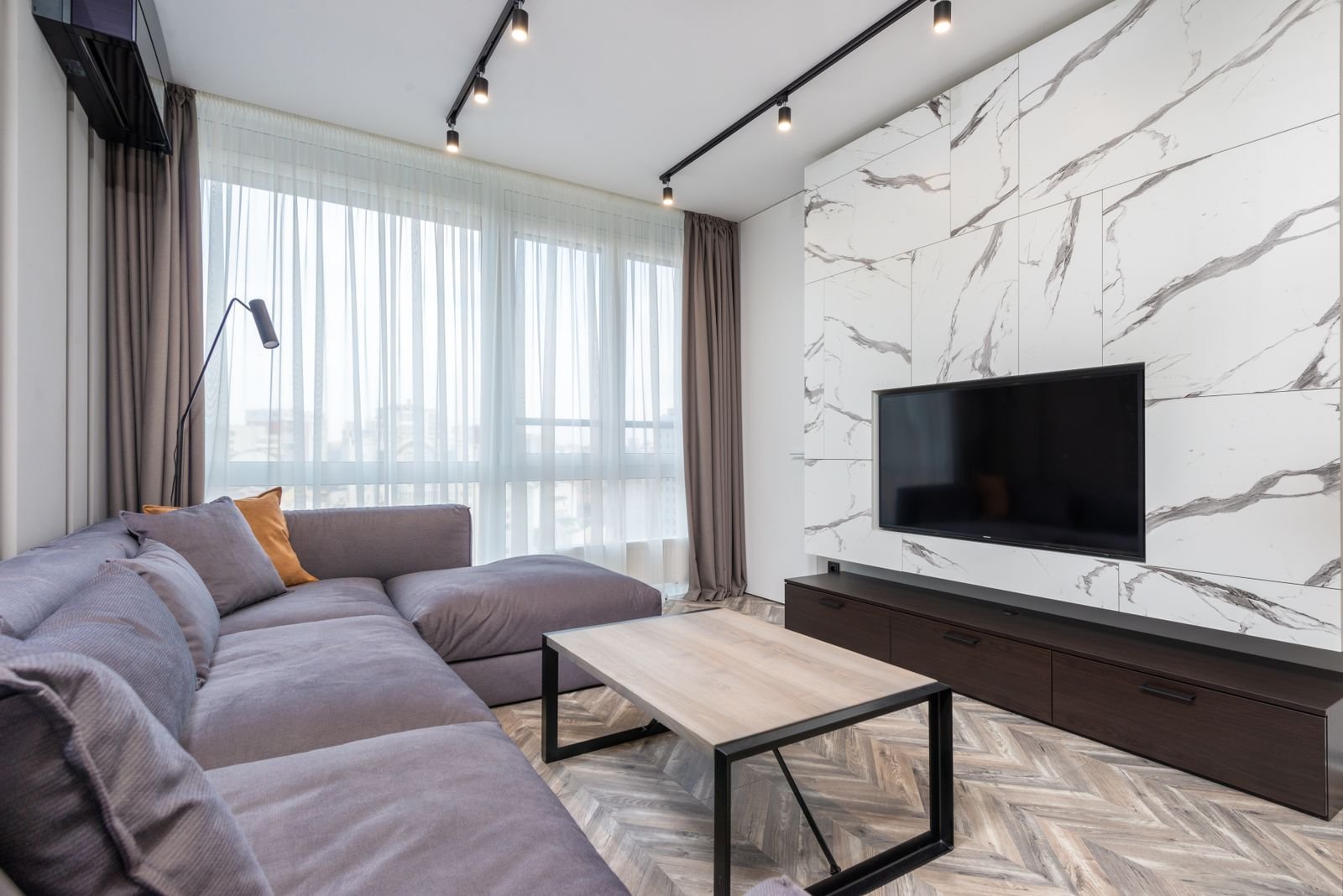
3. Marble-Look Panel for Instant Polish
Marble is the fastest route to a premium-looking TV wall, because the veining becomes the artwork and everything else can stay minimal. Real marble is heavy and expensive, but book-matched porcelain slabs and marble-look panels give you the same effect for less and are far easier to hang a mount on. The glossy surface bounces light around the room, which helps in dimmer living rooms. Just make sure the mount is anchored to studs.
4. Gallery Wall Around the TV
Surrounding the TV with framed art is the smartest way to make a black screen feel intentional. Treat the TV as one frame in a larger arrangement — hang prints and photos at the same spacing around it, and the screen reads as part of the collection rather than an interruption. Frames in one finish (all black, all wood, or all brass) look most cohesive. Mix print sizes but keep the gaps between frames consistent.
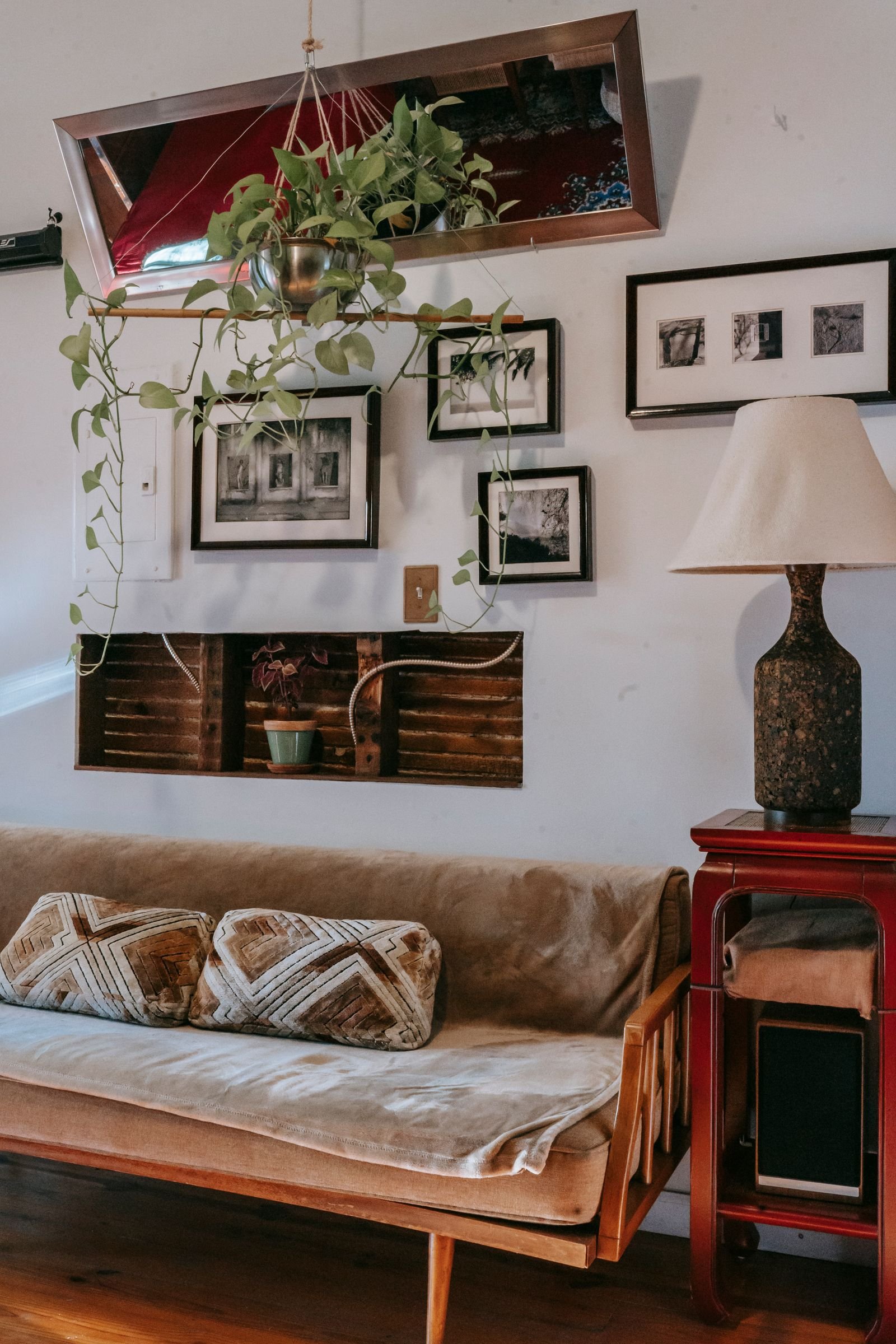
Try this weekend: lay your frames out on the floor first and photograph the arrangement from across the room. You will spot the imbalance in seconds — before a single nail goes in.
5. Floating Cabinet with Display Shelves
A wall-mounted cabinet under the TV gives you storage without the bulk of a floor-standing unit. The gap underneath makes the room feel bigger, makes cleaning easy, and creates a shelf of light if you add a slim LED strip beneath it. Flank the TV with floating display cubes for a media-wall look. Choose a depth of at least 12 inches so consoles and soundbars fit — and anchor floating cabinets to wall studs, because a console full of electronics is heavier than it looks.
6. LED Backlighting (Bias Lighting)
LED strips behind the screen are a small upgrade with an outsized effect. A soft glow behind the TV reduces the contrast between a bright screen and a dark room, which many people find easier on the eyes during evening viewing. Warm white keeps the mood cozy; color-changing strips are fun for movie nights. Stick-on LED strips are cheap, removable, and take minutes to install — this is one of the best renter-friendly ideas on the list.
Try this weekend: stick a warm-white LED strip behind your TV tonight. It takes ten minutes and changes the whole evening mood of the room.
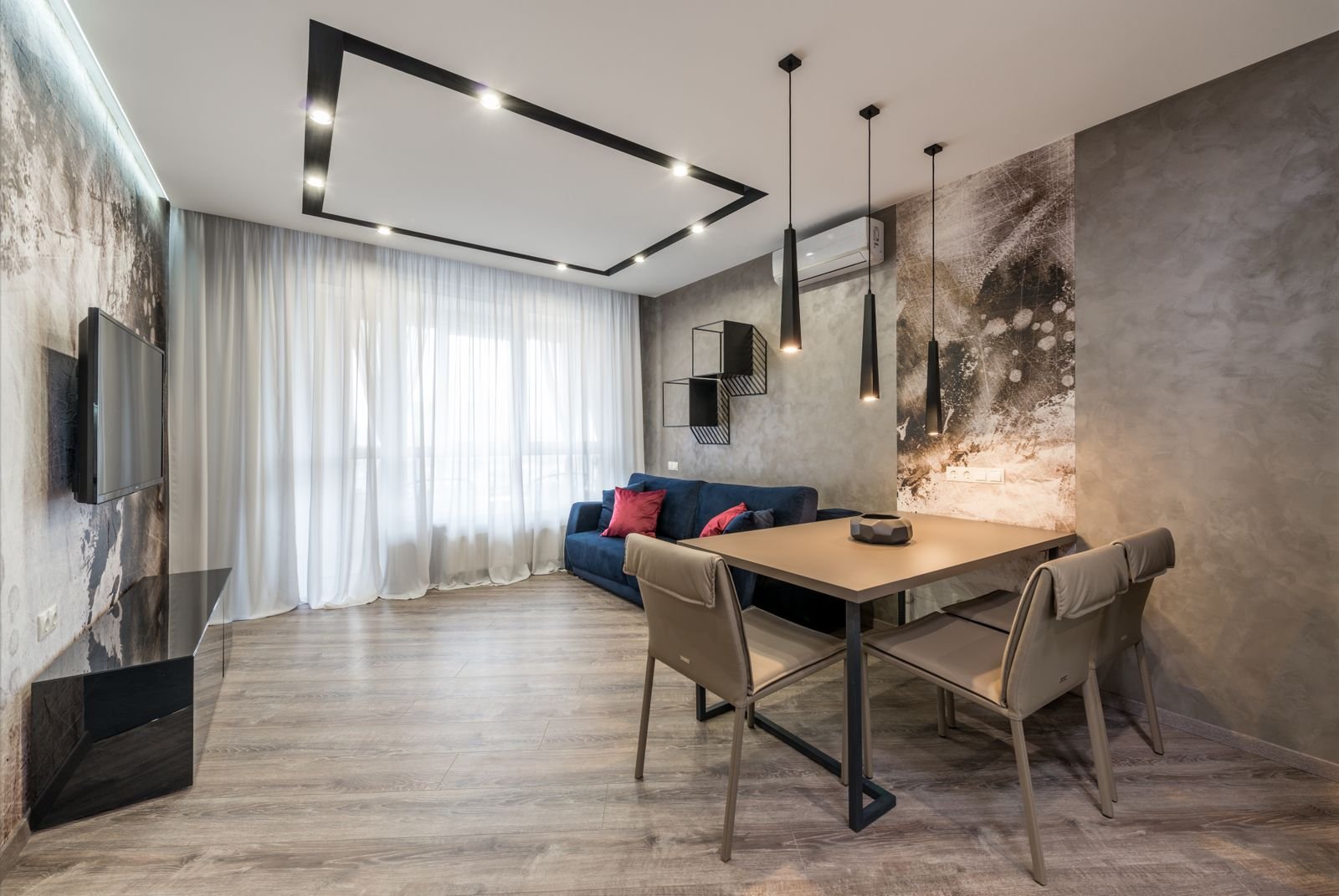
7. Dark Accent Wall Behind the TV
A dark wall behind the TV solves a real problem: a switched-off screen is a big black rectangle, and on a white wall it shouts. On charcoal, navy, or near-black, it blends in. The dark backdrop also makes the picture look richer while you watch, since there is less reflected glare around the screen. Balance the drama with lighter furniture and a rug with some contrast. Paint just the TV wall dark and keep the others light — you get the cinematic effect without shrinking the whole room.
8. Exposed Brick TV Wall
Exposed brick, concrete, and black metal turn a TV wall into an urban focal point. The raw materials have enough character on their own, so the furniture can stay simple — a leather sofa, a metal-and-wood console, and you are done. If you don’t have real brick, thin brick veneer or a concrete-effect finish gets you close. Warm lighting matters here: cool LEDs on concrete can feel cold, while warm bulbs make the same wall feel like a loft apartment.

9. Built-In Shelves Around the TV
Built-in style shelving around the media area keeps books, games, and decor in one tidy zone. A built-in storage wall makes the TV one part of a larger composition — shelves and cabinets frame the screen, hold consoles and routers, and give books and decor a home. Mixing open shelving with closed cabinets keeps the wall from looking heavy: open shelves for display, closed doors for the clutter you don’t want to see. If you want the same idea without the built-in price tag, two tall bookcases flanking the TV — like the ones in my bookshelf decor ideas — get you most of the way there.
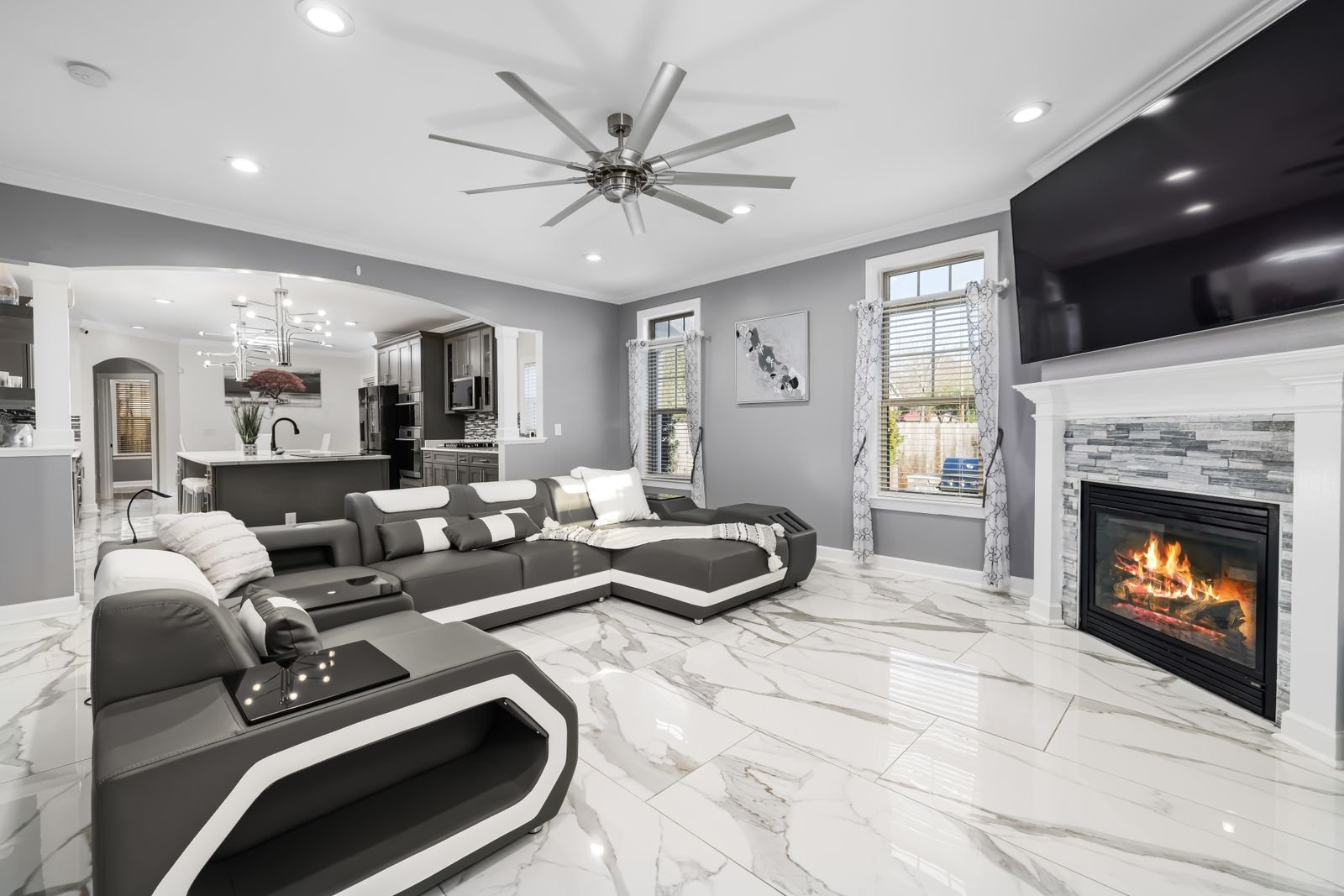
10. TV Over the Fireplace
Combining the fireplace and TV on one wall merges the room’s two biggest focal points into one, which is exactly what a small room needs. Mounting the TV above the mantel keeps seating focused in a single direction. Watch two things: heat rising into the TV (keep clearance, or use a mantel shelf to deflect it) and viewing angle — above a tall mantel, the screen can sit too high, and a tilt mount helps a lot.

Mistake I made: I hung my TV above a fireplace without checking the wall temperature first, and the screen ran warm every evening. I ended up moving it to the side wall. Check your TV’s maximum operating temperature against the wall above your fireplace before you commit — five minutes with a thermometer beats remounting a TV.
11. Hide the TV in a Cabinet
Not everyone wants a screen dominating the room. Sliding barn doors, cabinet fronts, or a motorized lift let the TV disappear when you are not watching. A simpler version: set the TV inside a bookcase or armoire so it reads as furniture. If you go this route, leave ventilation room around the screen and route an IR repeater so the remote still works with the doors closed. The payoff is a living room that looks like a living room, not a cinema, most of the day.

12. Corner TV Setup for Awkward Rooms
Corners are wasted space in most living rooms, and a corner TV setup puts them to work. A full-motion wall mount lets you angle the screen toward the sofa and push it back flat when not in use. A small corner console or floating shelf underneath handles the essentials without eating floor space. Arrange seating in an L-shape facing the corner and the room suddenly feels bigger, not smaller. One warning: a full-motion mount needs a stud or solid masonry — never mount a corner bracket on drywall alone.
Try this weekend: if your TV is on a stand in a corner already, try angling it toward the sofa and pulling the stand tight into the corner. You will free up a surprising amount of floor.
13. Open Shelves Beside the TV
Open shelves around the TV keep everything you need within reach and turn storage into decoration. The key is editing: group books and objects in odd numbers, leave some breathing room between items, and repeat one or two colors across the shelves for cohesion. A mix of shelf lengths — one long shelf above, two short ones beside — looks more designed than a uniform grid. Leave one shelf mostly empty; a little negative space makes styled shelves look intentional rather than crowded.
14. Plants and Natural Textures to Soften the Tech
Plants are the easiest way to soften a TV wall — they fill the awkward gaps beside the screen, add height variation, and make the room feel alive. A tall plant like a fiddle-leaf fig on one side, a trailing pothos from a shelf on the other, and you are done. Natural materials alongside — a rattan basket, a wooden console, a jute rug — reinforce the relaxed feel. Just keep leaves a few inches from the screen so they don’t brush it.
15. Dual-Tone Wall for Instant Structure
A dual-tone TV wall uses two contrasting colors to create energy and structure — for example, a dark panel section behind the TV with lighter surrounding walls, or a bold sofa color against pale walls. The contrast naturally frames the screen. Stick to roughly a 60/40 split between the dominant and accent tones so the wall feels deliberate, not split. Common pairings that work: white and charcoal, beige and deep green, cream and terracotta.
Hiding the Cables (The Part Everyone Skips)
A beautiful TV wall with cables dangling down the middle is like a great outfit with the tag still on. Here is what actually works, cheapest first:
- Cord covers: paintable plastic channels that stick to the wall and hide a bundle of cables. Cheap, renter-friendly, and nearly invisible once painted.
- Behind the console: run cables down behind the floating cabinet or TV stand so they never show.
- In-wall kits: if you own the place, an in-wall cable kit routes everything through the wall itself. It is the cleanest finish, and it is a one-afternoon job.
Try this weekend: gather every cable behind your TV, bundle them with one Velcro tie, and tuck them behind the console. It is the fastest visible win in this whole guide.
Renter-Friendly TV Wall Ideas (No Drilling Required)
Renting doesn’t mean living with a TV on a bulky stand. These ideas from the list need no holes at all: LED backlighting, a dark accent wall done with removable peel-and-stick panels, a leaning TV stand, a gallery wall hung with adhesive strips, and plants and textures around a TV on a low console. My rule for rentals is simple: if I can’t remove it in an afternoon without a trace, I don’t install it.
FAQs
What is the best TV wall design for a small living room?
A minimalist floating TV wall or a corner TV setup works best, because both save floor space and keep the room feeling open. A floating console with hidden cables gives you storage without the bulk of a floor-standing unit.
How high should I mount my TV on the wall?
Mount it so the center of the screen sits at eye level from your sofa — roughly 42 inches from the floor for most seating. Above a fireplace, the screen often sits higher, so use a tilt mount to angle it down toward the sofa.
How can I hide TV cables without drilling?
Use paintable cord covers that stick to the wall, run cables down behind a floating console, or bundle them with Velcro ties behind the TV stand. All three are renter-friendly and take under an hour.
Should the TV wall be dark or light?
Both work. Dark walls make a switched-off TV blend in and give a cinematic feel, while light walls make the room feel bigger and brighter. If you can’t decide, paint just the TV wall dark and keep the others light.
Are TV wall units still in trend in 2026?
Yes — modern TV wall units with built-in storage and clean lines are still very popular, because they solve the two problems small living rooms actually have: nowhere to put things, and no floor space to spare.
Your turn
Which of these 15 ideas fits your wall? Are you going minimalist with a floating console, or hiding the cables this weekend and calling it a win? Tell me in the comments which idea you will try first — and if your TV is still sitting on a big black stand, tell me what’s stopping you from wall-mounting it. I read every comment.
Written by Irtza — I write cozy, budget-friendly home decor ideas for small spaces. Real homes, renter-friendly tricks, and the honest mistakes I made along the way.