15 Lighting Ideas That Make Small Rooms Feel Bigger (2026)
The first evening in my small flat, I switched on the one ceiling light and regretted it at once. A bare, cold-white bulb lit every corner — and made the room look smaller. The walls looked closer, the ceiling lower, the whole place like a waiting room.
So I switched it off, lit the one little table lamp I owned, and sat in its warm light. I understood then: in a small room, where the light falls decides how big the room feels. You probably don't need a bigger room — you need better-placed light. These fifteen ideas made my small rooms feel bigger, warmer, and nicer to sit in.
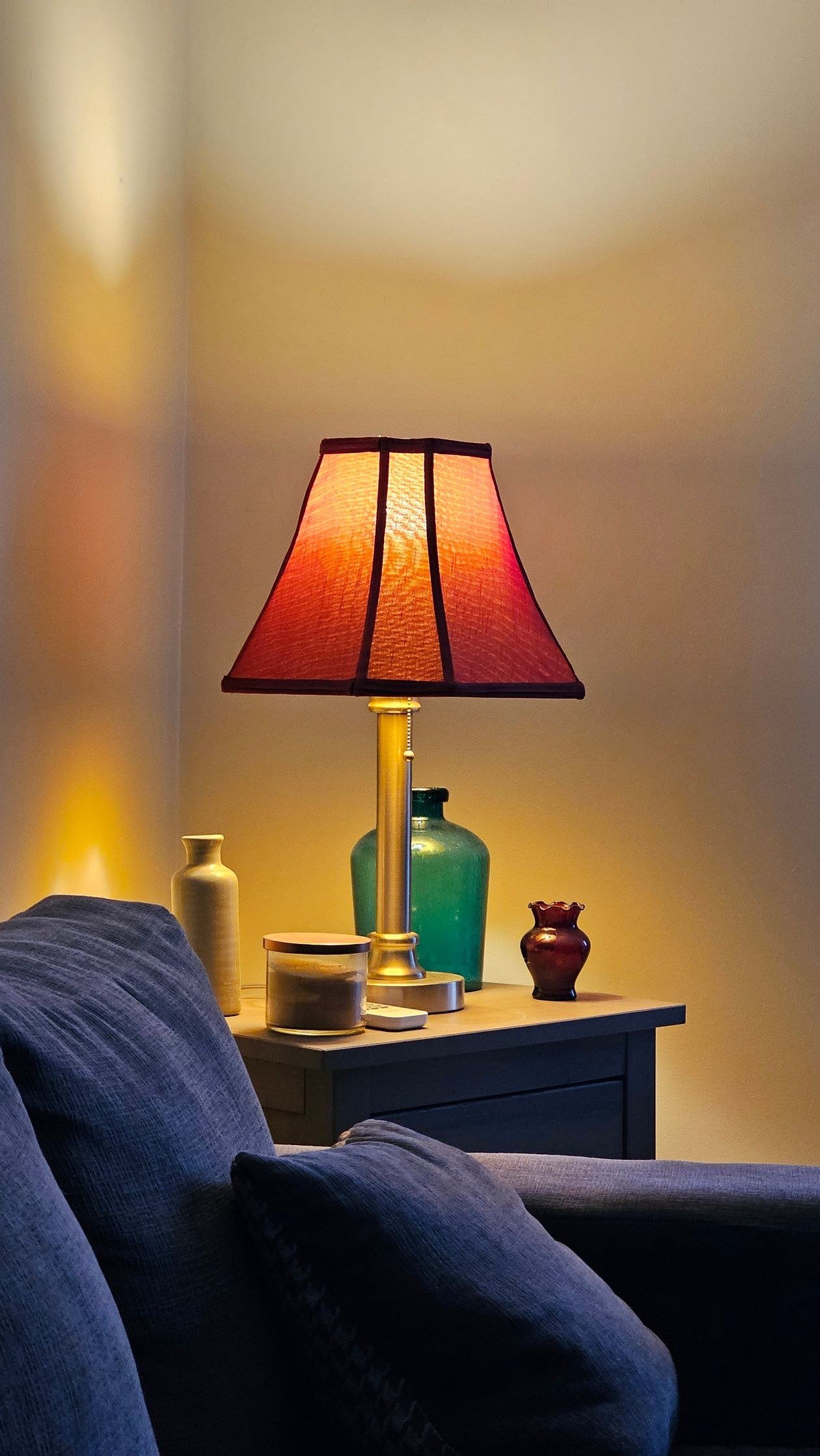
One warm lamp changed my whole living room. Photo: Pexels.
Before You Buy Anything: My One Lighting Rule
Here's the rule that fixed my rooms before I spent anything: no single light should do all the work. One bright bulb in the middle of the ceiling flattens a small room and shows every flaw. Three small, warm lights at different heights make the same room feel layered, deep, and twice as big. Think in layers — one low light, one mid light, one accent — and keep it warm white (2700K) in living and sleeping rooms.
No ceiling light? Start with my guide to lighting a small living room with no ceiling light — it covers the basics.
1. Build Three Layers, Not One Bright Bulb
Instead of one light doing the whole job, give your room three small jobs: a lamp for the seating area, a light for the dark corner, and a tiny glow somewhere pretty. Your eye reads layers as depth. Light from three heights makes your brain assume the room is big enough to hold them all; one flat overhead light says the opposite.
- Ambient: a floor lamp or soft table lamp for general glow
- Task: a small reading lamp, or a light over the kitchen counter
- Accent: fairy lights, a candle, or a strip light
2. Switch Every Bulb to Warm White (2700K)
I swapped the cool white bulb in my lamp for a warm white one, and the room went from "office at 9am" to "evening at home" in one twist. Look for 2700K on the bulb box — that's the warm, golden light that flatters small rooms. Match every bulb in one room — one cool bulb among warm ones sticks out, and your cozy small bedroom should glow, not glare.
Mistake I made: I once bought "daylight" bulbs because they sounded brighter. In my small room they were so harsh I could see every scuff — warm white fixed it in one evening.
Try this weekend: swap one bulb to warm white 2700K — you'll see the difference in five seconds.
3. Put a Lamp at Eye Level When You Sit Down
Light feels best at about eye height while you're sitting. A lamp on a side table next to the sofa, or on the nightstand next to the bed, puts a warm pool of light exactly where you are — instead of blasting down from above. My rule: the bottom of the lampshade should sit at shoulder height when you're seated — higher glares, lower pools on the floor.
- Sofa side: one table lamp on a side table, or two small ones if the sofa is long
- Bedside: a lamp on each nightstand beats one big one
4. Rescue the Dark Corner With a Floor Lamp
Every small room has one: the corner that stays dark no matter what, where the window light never reaches. Mine was the corner behind the sofa, and for months it just looked like a hole in the room. A slim floor lamp fixed it in one move — it pulls your eye into the corner, so the room has four lit corners instead of three.
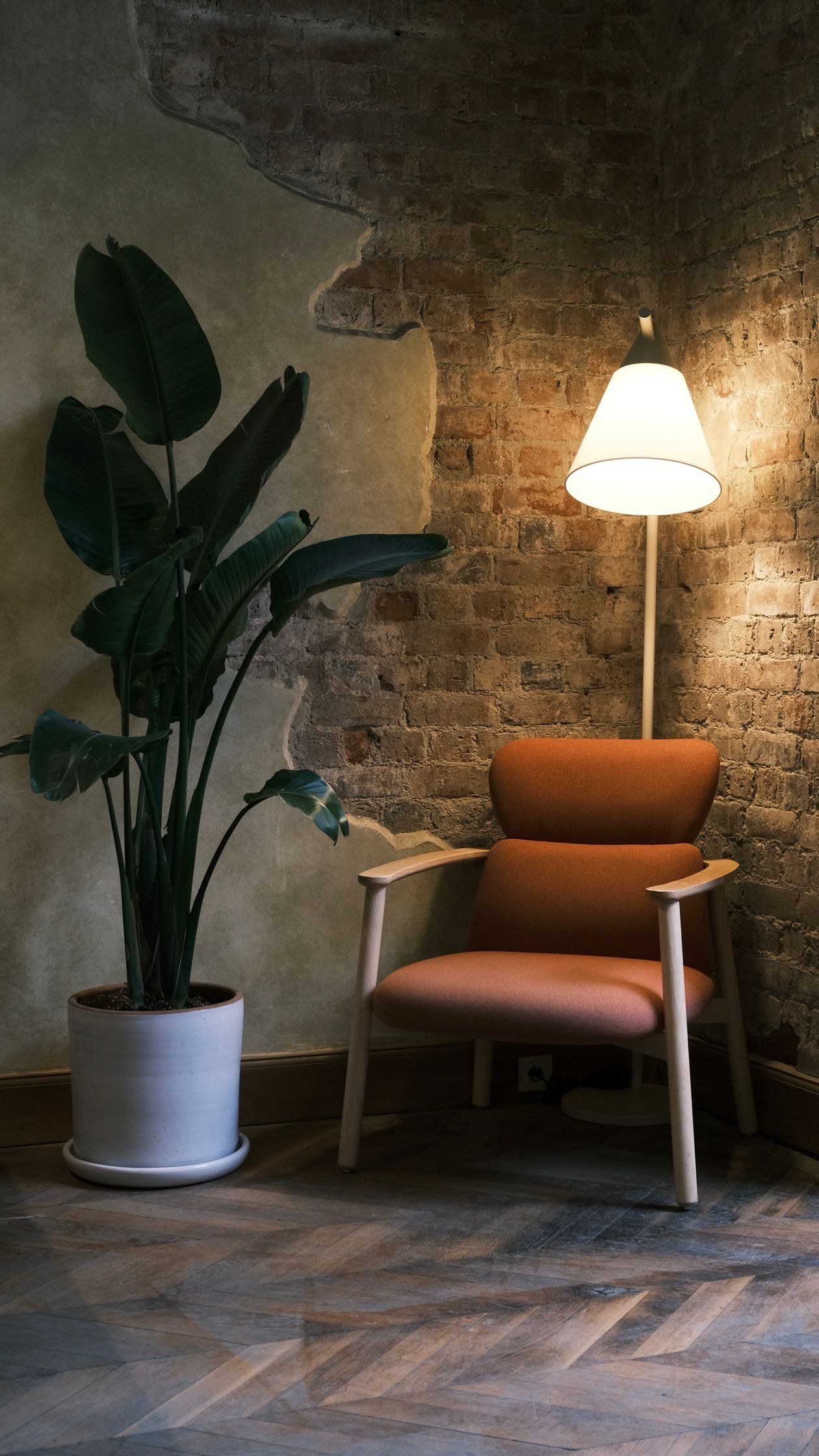
A slim floor lamp turned my darkest corner into my favourite seat. Photo: Pexels.
- Go slim and tall: a thin floor lamp takes almost no floor space, which is the whole point in a small room
- Angle it at the wall: bounced light spreads softer than light aimed into the room
Try this weekend: find the darkest corner at dusk — that's where your next lamp goes.
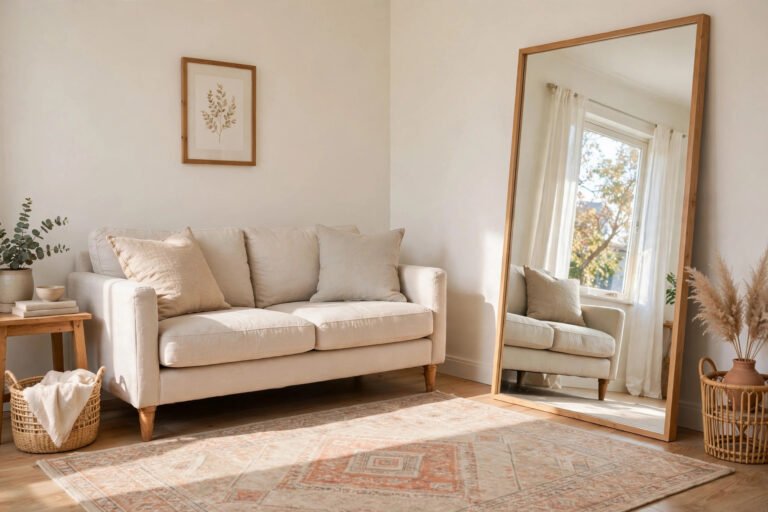
5. Bounce Light Around With a Mirror
A mirror is the cheapest way to double your light. I hung a large mirror on the wall opposite my window, and the daylight that used to stop at the windowsill suddenly travelled across the whole room. Place it opposite a window or a lamp, never opposite a blank wall — a mirror only bounces what it can see, so point it at your best light source. My small living room decor ideas show a few mirror placements that work well in tiny living rooms.
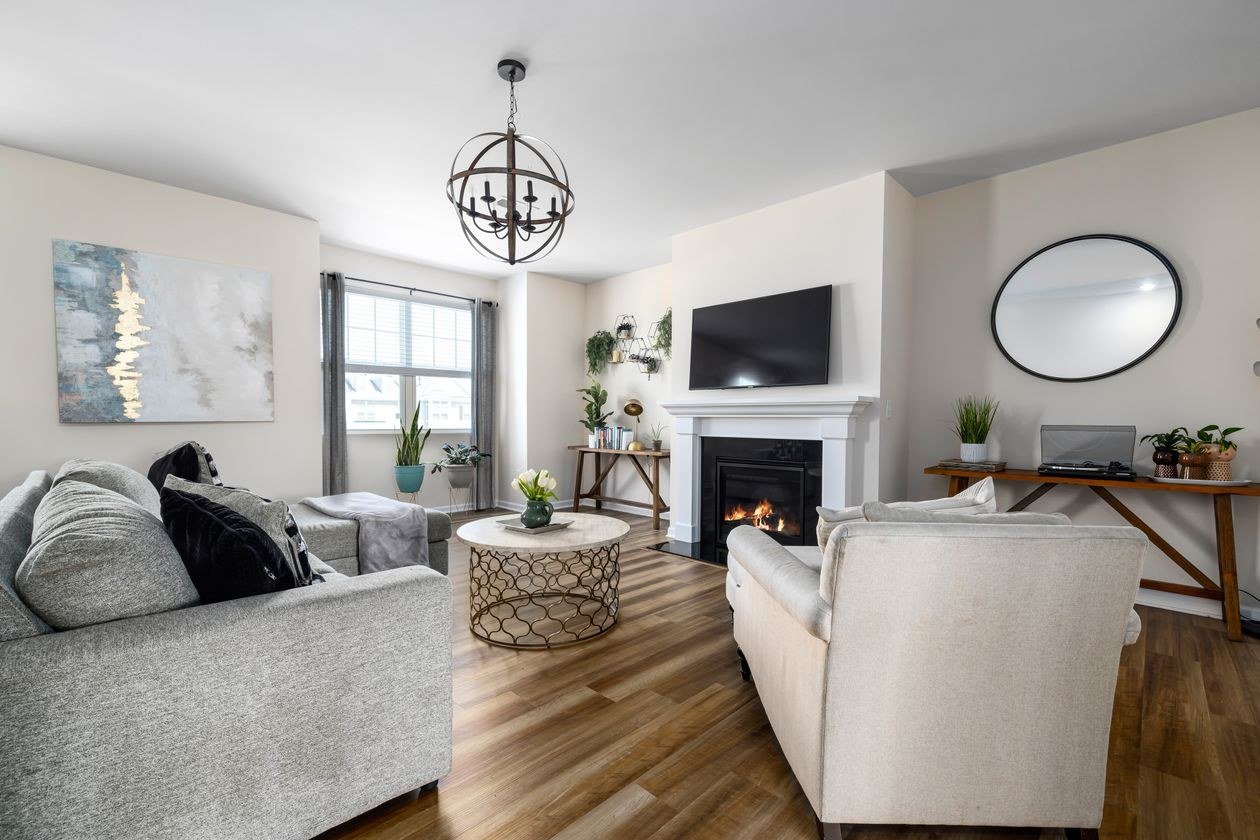
A big mirror bounces daylight around the room for free. Photo: Pexels.
- Bigger is better: one large mirror reads as a window, not a decoration
- Lean it on the floor if you rent: no nails, and it bounces light from floor to ceiling
6. Swap the Bedside Lamp for a Wall Sconce
If your nightstand is tiny, a wall sconce above it gives the same warm reading light and your whole nightstand back. No lamp base, no cord draped across the table, just light floating on the wall. Plug-in sconces mount with a small hook or adhesive strip, and one on each side of the bed makes the room feel symmetrical and calm.
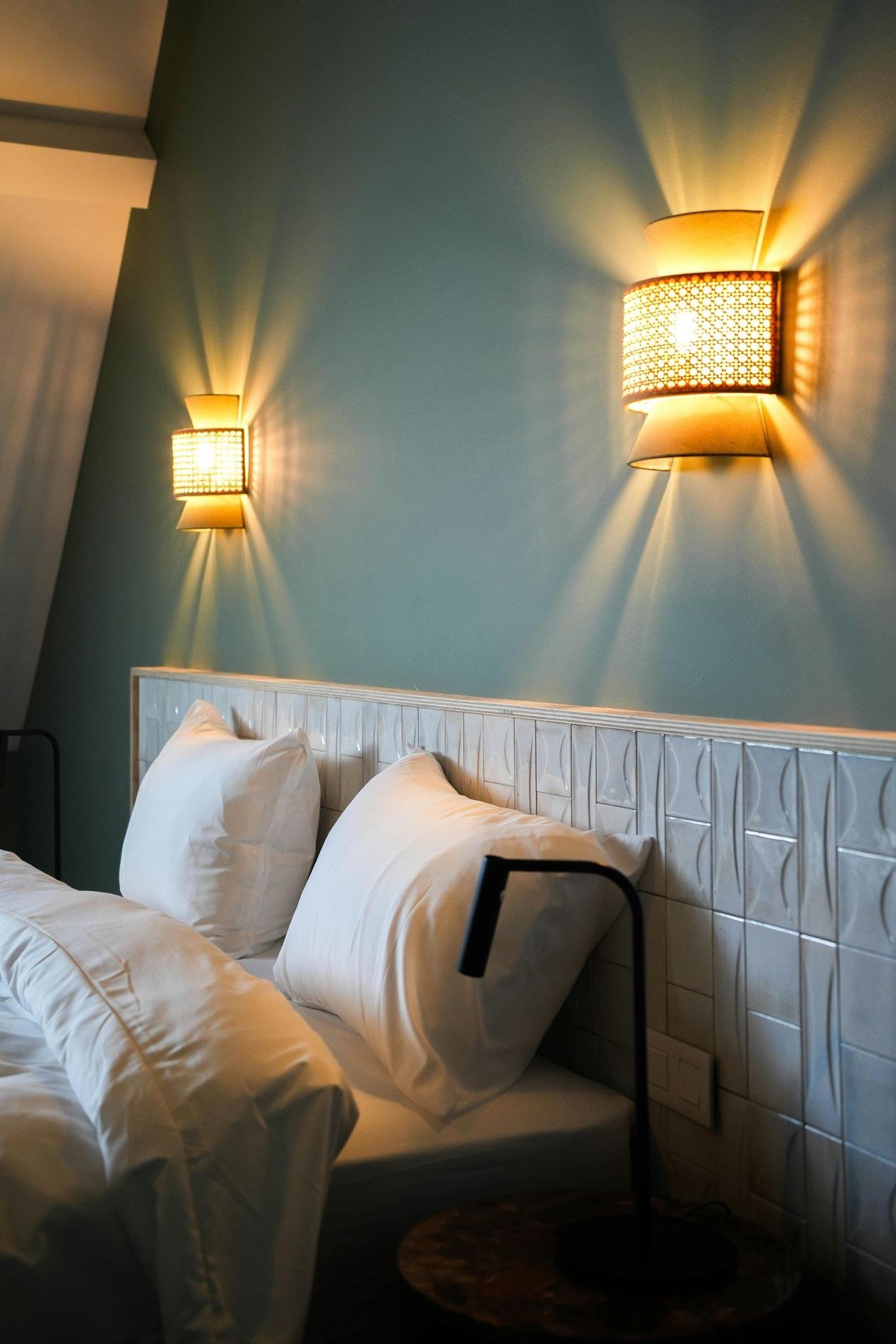
A plug-in sconce gave me my nightstand back. Photo: Pexels.
- Pick a warm bulb and a fabric shade: bare bulbs at eye level are the fastest way to ruin a bedroom
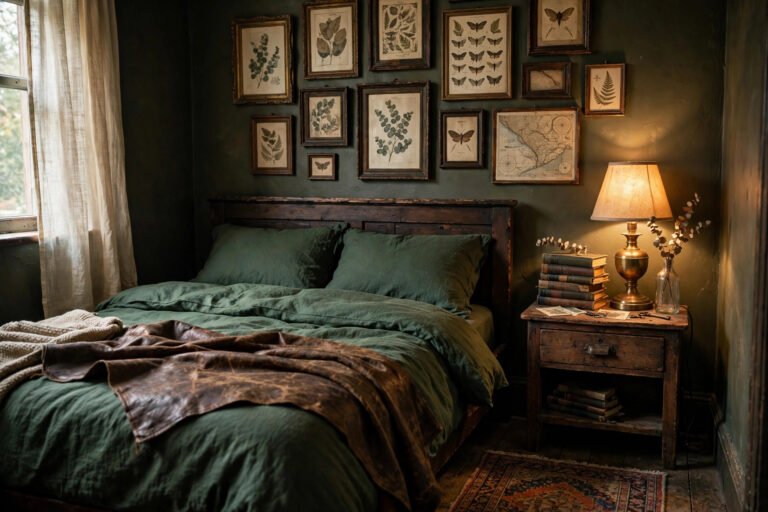
7. Use Fairy Lights Like an Adult, Not a Student
Fairy lights get a bad reputation because most people drape them in a messy zigzag and call it done. But a single neat strand, run along the top of a bookshelf or tucked behind a curtain rod, adds a soft golden glow that no bulb can copy — and it costs almost nothing. The trick is restraint: one strand, one place, warm white only — the shelf should glow, not wear jewellery.
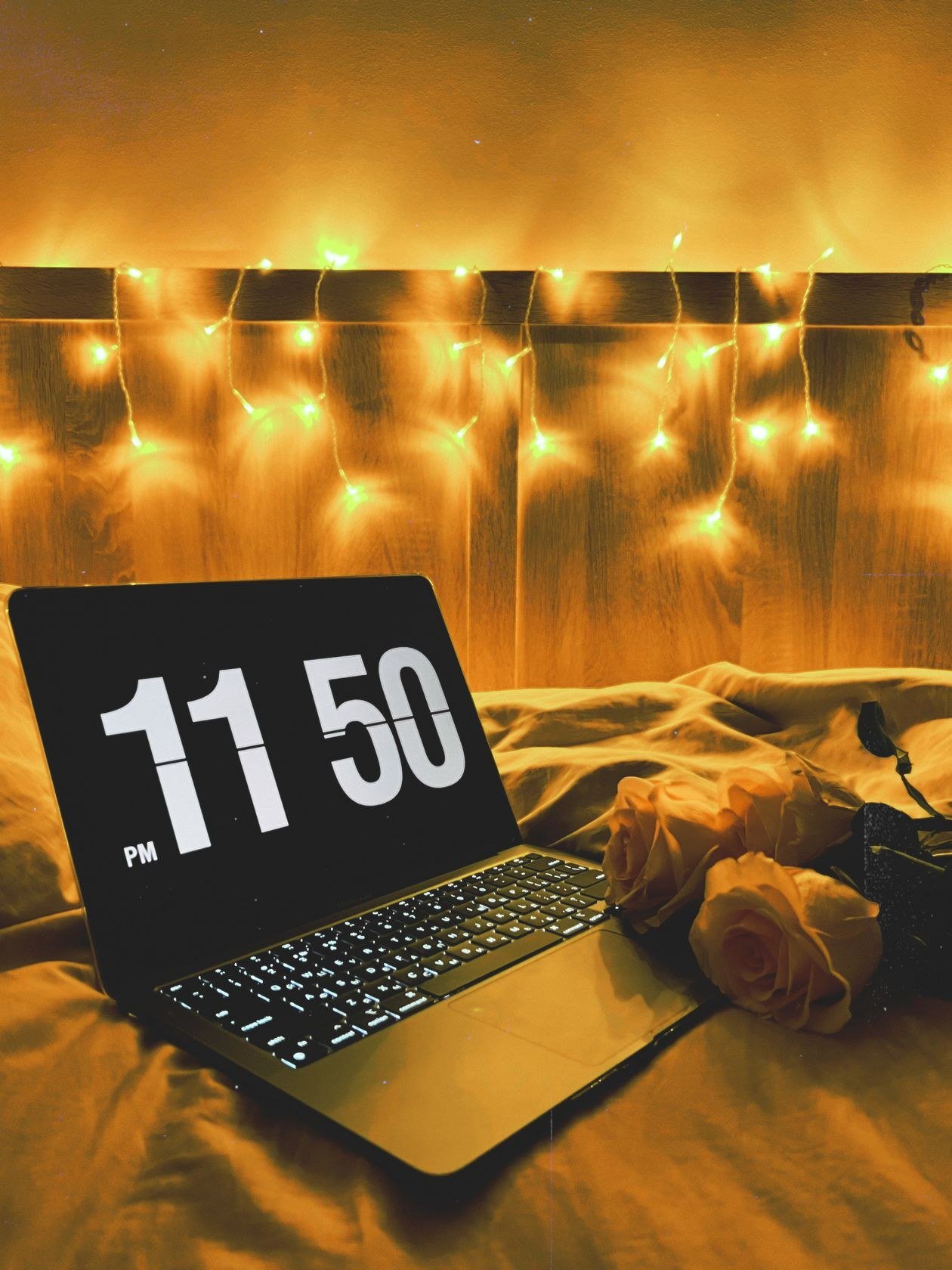
One neat strand of warm fairy lights makes the whole bed glow. Photo: Pexels.
Mistake I made: My first fairy lights were a tangled mess of cool-white LEDs across the whole wall. One warm strand along a single shelf is ten times better.
8. Add LED Strips Under Shelves and Cabinets
This is the idea that makes people ask what you changed. A thin LED strip under a kitchen cabinet, or under a floating shelf, washes the wall below in a warm glow. It makes the shelf look like it's floating, and it makes the whole wall look taller. Peel-and-stick strips come off cleanly, and the kitchen is the best place to start — under-cabinet light turns a dark counter into a workspace.

An LED strip under the cabinet made my kitchen look taller — and nobody can quite tell what changed. Photo: Pexels.
- Bookshelves second: a strip under each shelf makes books and plants glow — my minimalist living room ideas use this trick too
- Warm white only: cool strips under a shelf look like a shop fridge
Try this weekend: stick one warm LED strip under a cabinet or shelf and switch it on at dusk.
9. Put Everything on a Dimmer
Small rooms change jobs all day — bright for cleaning, soft for dinner, dim for winding down — and one fixed brightness can't do all three. A dimmer lets one lamp be three lamps. Plug-in dimmers clip onto any lamp cord, cost very little, and need no electrician — perfect for renters. Smart bulbs do the same job from your phone.
- Dim the accent lights first: fairy lights and shelf strips look best at half brightness, when they're a glow instead of a light
Try this weekend: put a plug-in dimmer on your most-used lamp and try half brightness tonight.
10. Light the Ceiling, Not the Floor
Here's a counterintuitive one: point a light up. An uplight — a floor lamp that throws its light at the ceiling, or a small light tucked on top of a tall bookcase — bounces soft light off the ceiling and fills the whole room evenly. A bright ceiling makes the room feel taller — your eye follows the light up. One uplight in the darkest corner lifts the whole ceiling; on a wardrobe it works too, and nobody sees the source.
- Keep the ceiling pale: white or cream bounces far more light
11. Hang One Pendant Low Over the Table
A pendant light hung low over a dining table does two jobs at once: it gives you a pool of warm light exactly where you eat, and it draws the eye down to the table instead of up at a bare ceiling. That low pool of light makes the table feel like its own little place. Hang it about 75cm above the tabletop — low enough to feel intimate, high enough to see across.
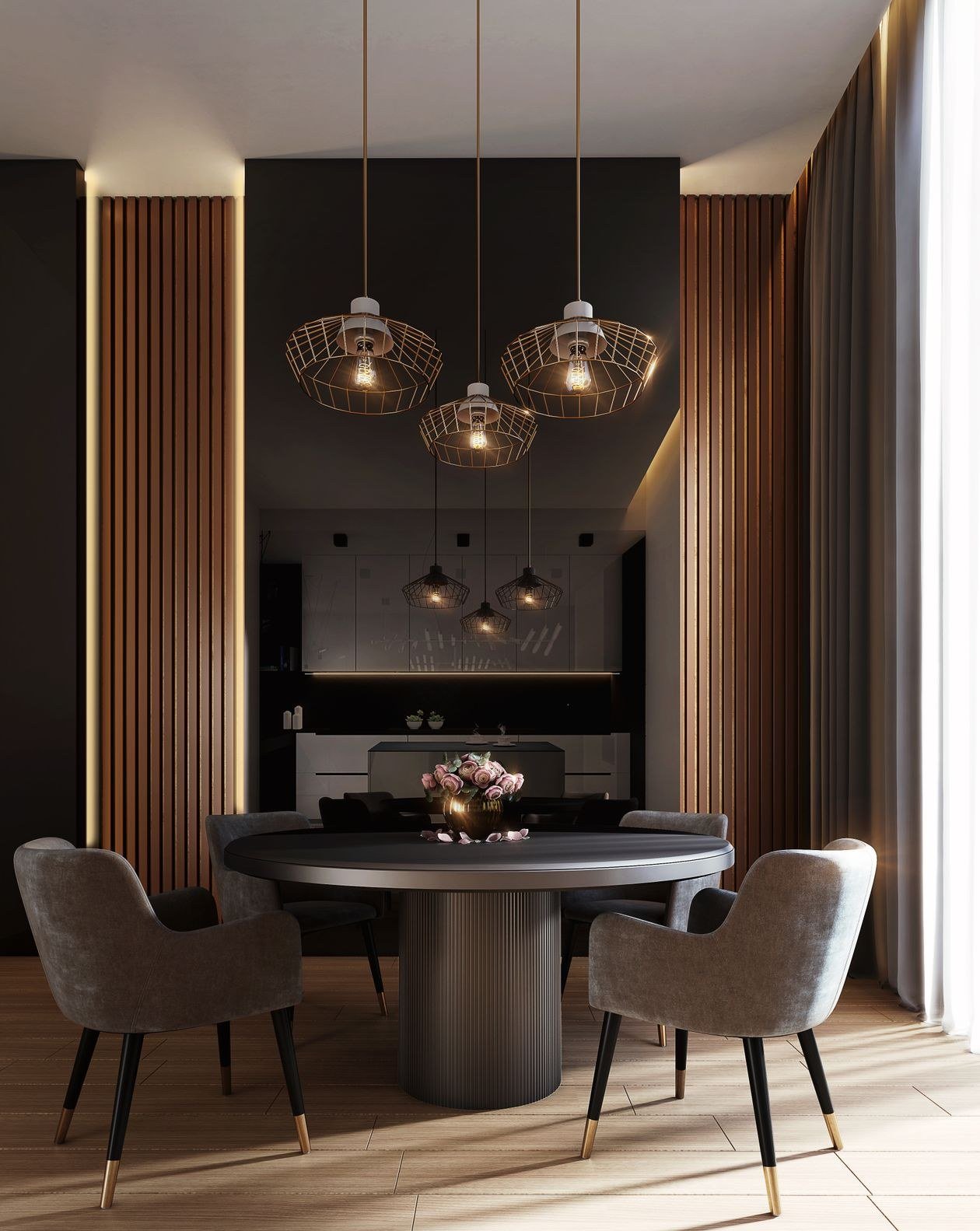
Low pendants turned my tiny table into its own little room. Photo: Pexels.
- One pendant, one table: it beats a row of spotlights every time
- Warm bulb, always: a cool bulb over a dinner table makes the food look grey and the evening feel like a canteen
12. Light Inside the Shelves, Not Just Above Them
Glass-front cabinets, open shelves, bookcases — they're all dark inside. A tiny battery light or a short LED strip inside a shelf makes your books, plants and pretty things glow, and it turns a plain shelf into the most interesting thing in the room. Battery puck lights stick inside with adhesive and switch on with a tap — no wiring. Light the things you love: one lit shelf beats a wall of dark ones.
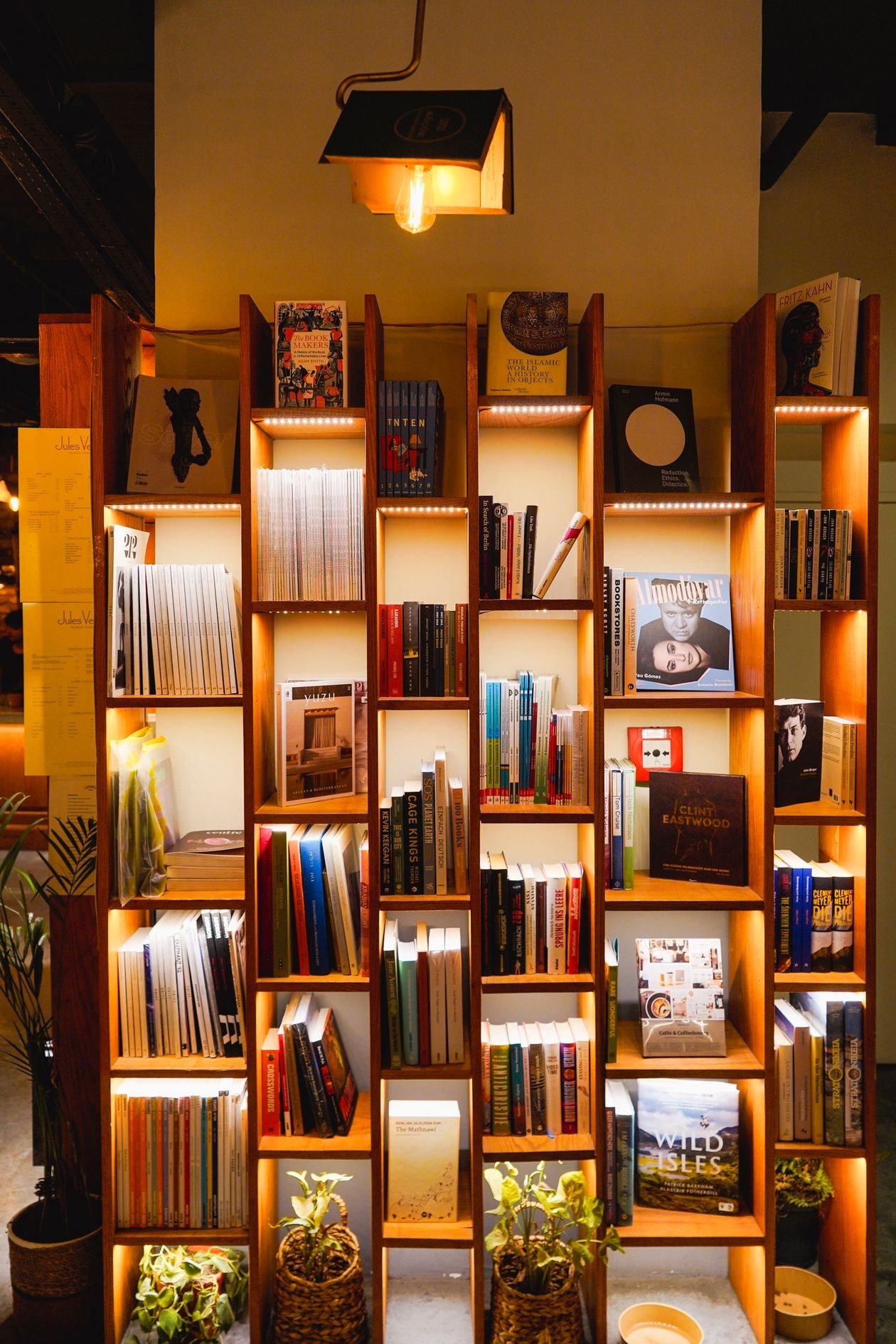
Light inside the shelf makes your books glow. Photo: Pexels.
13. Buy One Lamp You Actually Love
This one isn't technical, but it's the one I hear about most. Most small rooms have lamps that were bought because they were cheap and available. But one lamp with a beautiful shade — a warm ceramic base, a linen shade, a shape you actually like — becomes a piece of decor even when it's switched off. Spend your lamp budget on one good one instead of three forgettable ones. Put it where you'll see it daily; let cheaper lamps do the quiet jobs.
Mistake I made: I bought three identical cheap lamps because they were on sale. They were fine, but boring — three boring lamps don't add up to one beautiful one. I gave two away and bought one ceramic lamp I love.
Try this weekend: ask which lamp you'd keep if you could only keep one — upgrade that one first.
14. Let the Daylight In (and Keep It)
Artificial light gets all the attention, but the cheapest light in your home is the one coming through the window — and most small rooms waste half of it. Sheer curtains, clean glass, and a windowsill kept clear do more for a small room than any lamp you can buy. Sheer curtains soften the light without blocking it — my guide to making a small room look bigger with curtains covers exactly which ones to pick. And clean the windows — a dirty one steals a surprising amount of light.
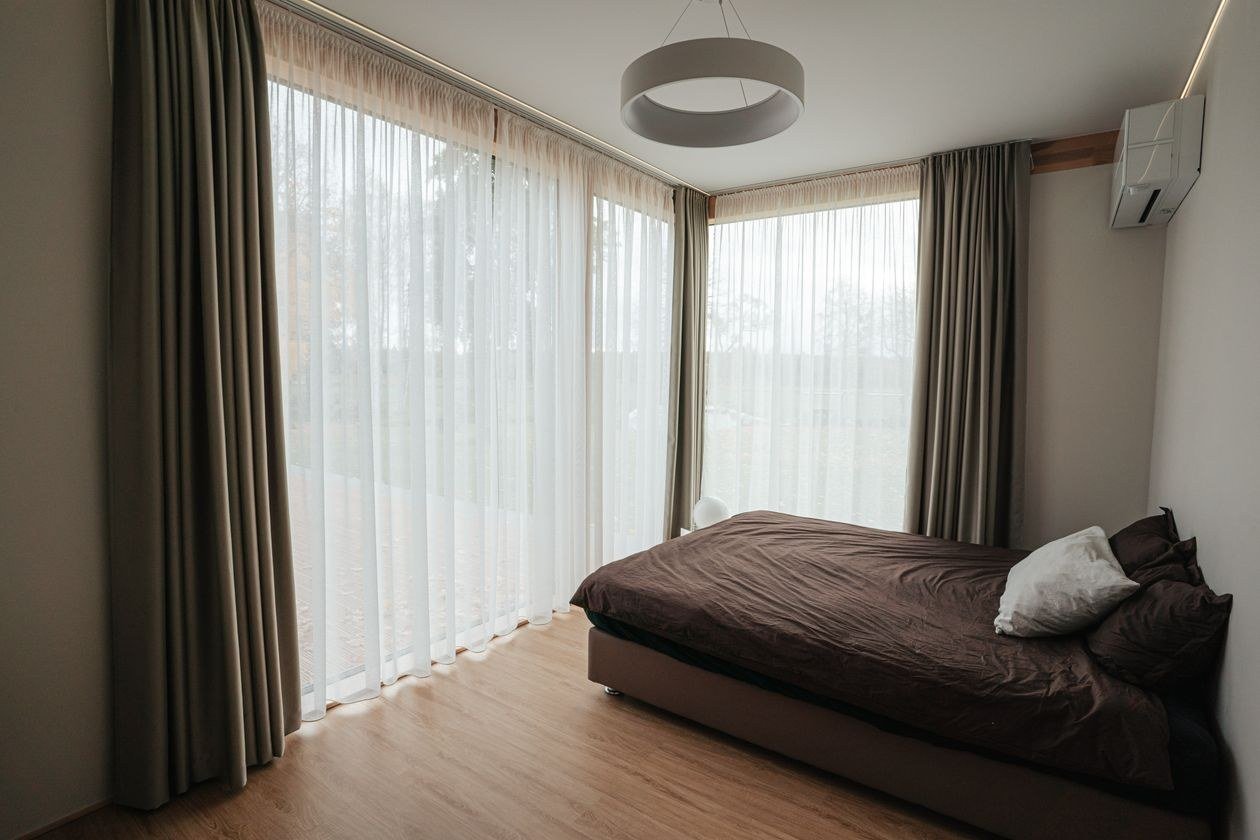
Sheer curtains let the daylight do the work. Photo: Pexels.
- Keep the sill clear: one plant, one candle, done
15. Do the Dusk Walk-Through (My Five-Minute Audit)
This ties all the others together, and it costs nothing. One evening, walk through your home at dusk and look at each room with fresh eyes. Where is it dark? Where is it glaring? Which corner do you never sit in, and why? Note the dark spots — that's your shopping list, usually just one lamp or one strip. Note the glare, too — usually one bulb that's too cool or too bright.

The dusk walk found every dark corner in my flat. Photo: Pexels.
- Do it once a season: light needs change as the days get shorter
Try this weekend: do the dusk walk tonight and write down the one lighting change each room needs most.
FAQs About Lighting Small Rooms
How many lights does a small room need?
At least three: a low lamp, a mid-height light, and one small accent glow. One ceiling light flattens a small room; three small lights give it depth.
What colour temperature is best for a small living room?
Warm white, 2700K. It flatters skin, wood and fabric, and makes a small room feel cozy. Save cool white for a desk where you need to concentrate.
Can I make a small room feel bigger with light if I rent?
Yes — plug-in lamps, peel-and-stick LED strips, battery fairy lights, leaning mirrors and plug-in dimmers need no drilling, no wiring and no landlord permission.
Do mirrors really make a room look bigger?
They make it look brighter, which your brain reads as bigger. A large mirror opposite a window or lamp bounces real light — but it must face a light source, not a blank wall.
Should small rooms have overhead lighting at all?
They can, but never as the only light. Keep it dim and warm and let the lamps do the real work — and with no ceiling light at all, the layered approach here works on its own.
Your Turn
Lighting is the fastest way I know to make a small room feel bigger — no new furniture, no paint, no permission needed. Which of these fifteen ideas will you try first — the warm bulb swap, the mirror, or the dusk walk-through? Leave a comment and tell Irtza — I read every one.
Written by Irtza — I write cozy, budget-friendly home decor ideas for small spaces. Real homes, renter-friendly tricks, and the honest mistakes I made along the way.